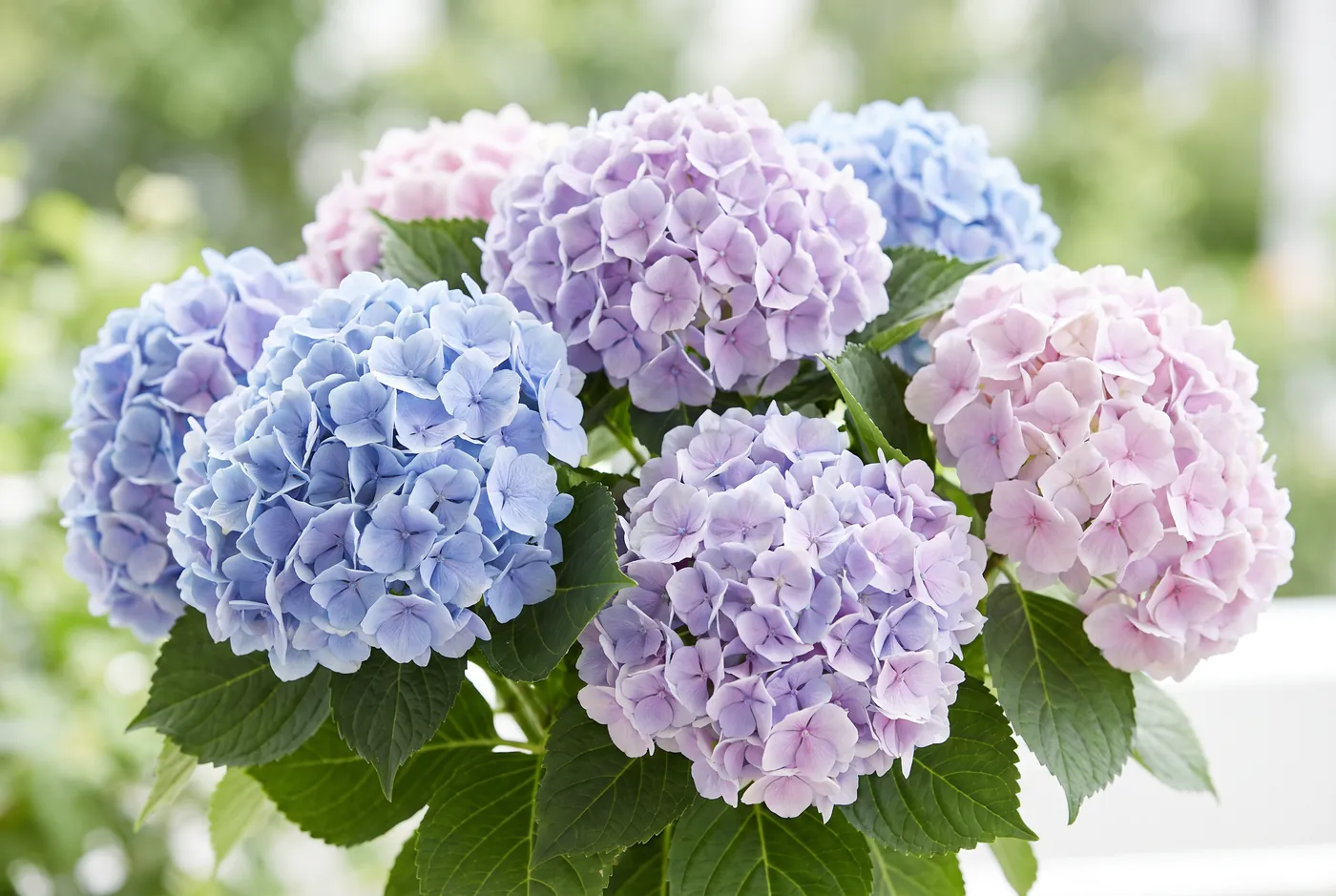
About Hydrangeas
Hydrangeas are spectacular flowering shrubs known for their large, showy flower heads composed of numerous small flowers. These voluminous blooms create instant impact in both gardens and arrangements. Native to Asia and the Americas, hydrangeas have become garden favorites worldwide for their stunning summer displays.
The name hydrangea comes from Greek words meaning "water vessel," referring to the plant's need for plenty of water and the cup-like shape of its seed capsules. Interestingly, hydrangea flower color can change based on soil pH, with acidic soil producing blue flowers and alkaline soil producing pink ones.
Primary Meanings
- Gratitude: Heartfelt thanks and appreciation
- Grace: Beauty and elegance
- Abundance: Generosity and prosperity
- Understanding: Deep emotional understanding
Hydrangeas Colors and Their Meanings
Blue Hydrangeas
Apology, gratitude, understanding
Pink Hydrangeas
Heartfelt emotion, romance, sincerity
White Hydrangeas
Purity, grace, bragging (Victorian)
Purple Hydrangeas
Desire for understanding, abundance
Green Hydrangeas
Renewal, rebirth, good fortune
Popular Hydrangeas Types
Mophead Hydrangeas
Large, round flower clusters
Lacecap Hydrangeas
Flat flower heads with outer ring of larger florets
Panicle Hydrangeas
Cone-shaped flower clusters
Oakleaf Hydrangeas
Elongated clusters, oak-like leaves
Care Instructions
Water
Heavy drinkers! Check water daily, keep stems submerged.
Trim
Recut stems at angle, smash woody stems slightly.
Temperature
Keep cool, mist petals occasionally.
Revive
If wilting, submerge entire flower head in water for 30 min.
Remove Leaves
Strip most foliage to reduce water loss.
Best Occasions for Hydrangeas
- Thank You: Express heartfelt gratitude
- Apologies: Blue hydrangeas for seeking forgiveness
- Weddings: Create lush, romantic arrangements
- Anniversaries: Celebrate enduring love
- Sympathy: Offer comfort and understanding
Interesting Hydrangeas Facts
- Hydrangeas can change color based on soil pH
- They're native to Asia and the Americas
- The name means "water vessel" in Greek
- Some varieties can reach 15 feet tall
- Dried hydrangeas retain their color and shape beautifully
- They're the 4th wedding anniversary flower
How to Buy Good Hydrangeas
Feel the head. A good hydrangea is firm and papery with florets that spring back, and it should feel heavy for its size because it is full of water. If it feels light, dry or crisp at the edges it is already dehydrated and will not recover well. Check the cut end of the stem is clean rather than brown and dried out.
Season, Availability and What Drives the Price
The main outdoor season is summer into early autumn, and that is when hydrangeas are cheapest and strongest. Greenhouse and imported stems cover the rest of the year at a premium. Color is worth understanding: the blue and pink of mophead hydrangeas is driven by soil acidity and aluminium availability, so blue stems are genuinely harder to produce consistently and are often priced accordingly. Antique or green-toned hydrangeas are late-season blooms that have matured on the plant, and they dry better than any other.
What to Use Instead
For the same job of filling a large space quickly, no other flower is as efficient, which is why hydrangeas dominate wedding work. Massed spray chrysanthemums or a cluster of carnations will cover volume more cheaply but without the single-head drama. Peonies give similar bulk in season at a much higher price.
Safety Around Pets and Skin
Hydrangeas contain cyanogenic glycosides and are mildly toxic to cats, dogs and horses if eaten in quantity, generally causing vomiting and lethargy rather than anything worse. The buds and leaves hold the most. Not a flower to have within a dog's reach.
Florist Tips for Hydrangeas
Submerge the whole head to revive a wilted one
This is the trick that surprises people. Hydrangeas take up water through the flower head as well as the stem. Float the entire head face-down in a sink of cool water for twenty to thirty minutes and a limp hydrangea will usually come back completely.
Recut and split the stem
The woody stem blocks easily. Cut at a sharp angle and split the bottom two centimetres upwards to open more surface to the water.
Let them dry on purpose
Leave a late-season hydrangea in a vase and let the water run out rather than topping it up. It will dry with its color largely intact and last for months.
Common Questions About Hydrangeas
Why did my hydrangea wilt within hours?
The stem is woody and blocks quickly, and hydrangeas lose water through the head faster than almost any other cut flower. Recut the stem, split the base, and submerge the whole head in cool water for half an hour. Recovery is usually complete.
Can I change a hydrangea from pink to blue?
On a growing plant, yes, over time. Blue comes from aluminium the plant can only take up in acidic soil. On a cut stem, no. The color is already set.
Do hydrangeas dry well?
Better than almost anything. Use stems cut late in the season, when the heads have started to feel papery on the plant, and simply let the vase water evaporate.