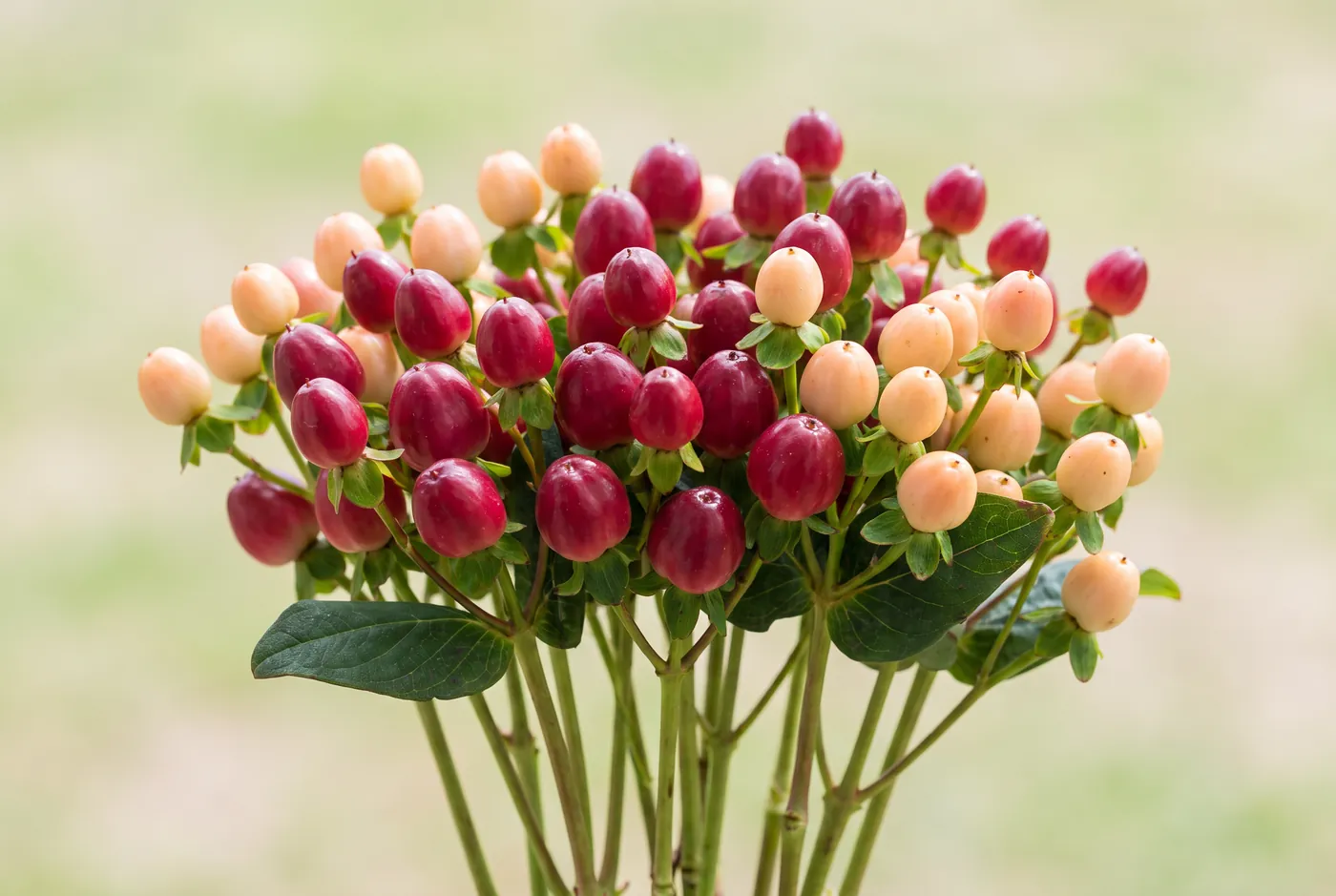
About Hypericum
Hypericum is sold for its berries rather than its flowers, which is unusual enough on its own. Clusters of glossy oval berries in red, peach, cream, green or near-black sit at the top of straight stems, and florists use them wherever an arrangement needs texture instead of another round bloom.
The yellow flowers come first and are cut off before it reaches you. The plant is St John's wort, the same genus sold as a herbal remedy, though the cut-flower varieties are bred for berry size and colour rather than for anything medicinal.
Primary Meanings
- Protection: Long hung over doorways at midsummer
- Superstition: Traditionally believed to ward off ill will
- Abundance: From the heavy clusters of fruit
- Warding Off Sadness: From its use as St John's wort
Hypericum Colors and Their Meanings
Red Hypericum
The classic; heavy use at Christmas
Peach Hypericum
Soft warmth; the wedding favourite
Cream Hypericum
Understated texture
Green Hypericum
Unripe berries, used deliberately
Chocolate Hypericum
Near-black; dramatic in autumn work
Popular Hypericum Types
Coco Series
The commercial standard, large berries and long stems
Magical Series
Bred for uniform colour and heavy fruiting
Pinky Flair
Soft pink berries with variegated foliage
St John's Wort
The garden species, grown for flowers rather than fruit
Care Instructions
Strip the Leaves
The foliage fails long before the berries do.
Deep Water
Woody stems, so give them depth and recut.
Split the Stem
Crush or split the base like any woody stem.
Cool Room
Berries shrivel in heat before they drop.
Best Occasions for Hypericum
- Mixed Bouquets: Texture where another flower would be too much
- Christmas: Red berries with eucalyptus and pine
- Weddings: Peach and cream berries in textural bouquets
- Autumn Arrangements: The chocolate and dark red varieties
Interesting Hypericum Facts
- The berries are the product; the yellow flowers are cut off before sale
- It is St John's wort, the same genus used as a herbal remedy
- Berries come in green, cream, peach, pink, red and near-black
- The leaves fail well before the berries, so most stems are stripped
- Berry colour is fixed at cutting and does not develop further in the vase
How to Buy Good Hypericum
Look for berries that are firm, glossy and evenly sized, with no wrinkling at the stem end, which is the first sign of age. Color will not change after cutting, so what you see is final: green berries stay green. Check whether the foliage is still on, and if it is, whether it is clean, because hypericum leaves spot and yellow fast and a stem sold with tired leaves has been standing a while. Berries that rub off when handled mean the stem is finished.
Season, Availability and What Drives the Price
Grown under cover and available every week of the year, with a marked demand peak at Christmas for the red varieties and through the summer wedding season for peach and cream. Price is steady outside those windows. The unusual colors, particularly the chocolate and deep pink varieties, cost meaningfully more than plain red because fewer growers plant them.
What to Use Instead
For texture rather than another bloom, eucalyptus seed pods do a similar job in gray-green. Brunia gives small silver spheres. Rose hips are the seasonal autumn alternative and read as more rustic. Skimmia offers dense buds through winter. For red berries at Christmas, ilex holly berries are the traditional choice, though they drop far more readily than hypericum does.
Safety Around Pets and Skin
Hypericum is toxic to cats, dogs and horses. It contains hypericin, the same compound that makes St John's wort active, which causes drooling, vomiting, diarrhoea and notably photosensitivity, meaning a light-colored animal can develop skin reactions after sun exposure. The berries look edible and that is the risk. Keep stems away from pets, and note this is one of the more genuinely hazardous things in a common mixed bouquet.
Florist Tips for Hypericum
Strip every leaf on arrival
The foliage fails first and drags the water quality down with it. Bare stems of berries last far longer and look cleaner anyway.
Green berries stay green
They do not ripen in the vase. If you want red, buy red, and do not wait for it to turn.
Buy it for autumn and Christmas work early
Red hypericum tightens up sharply in December. Ordering ahead is the difference between getting it and being offered something else.
Common Questions About Hypericum
Are hypericum berries the flower?
No. Hypericum flowers yellow first, and growers cut the flowers off so the plant puts its energy into fruiting. What you buy is the berry stage, which is the point of the crop.
Is hypericum the same as St John's wort?
Same genus. The herbal remedy comes from Hypericum perforatum; the cut flower is usually Hypericum androsaemum, bred for berries rather than medicinal content. Both contain hypericin and both are toxic to pets.
Are the berries poisonous?
To pets, yes. They contain hypericin, which causes vomiting, drooling and photosensitivity in cats and dogs. They look edible, which is exactly why they are worth keeping out of reach.