About Dusty Miller
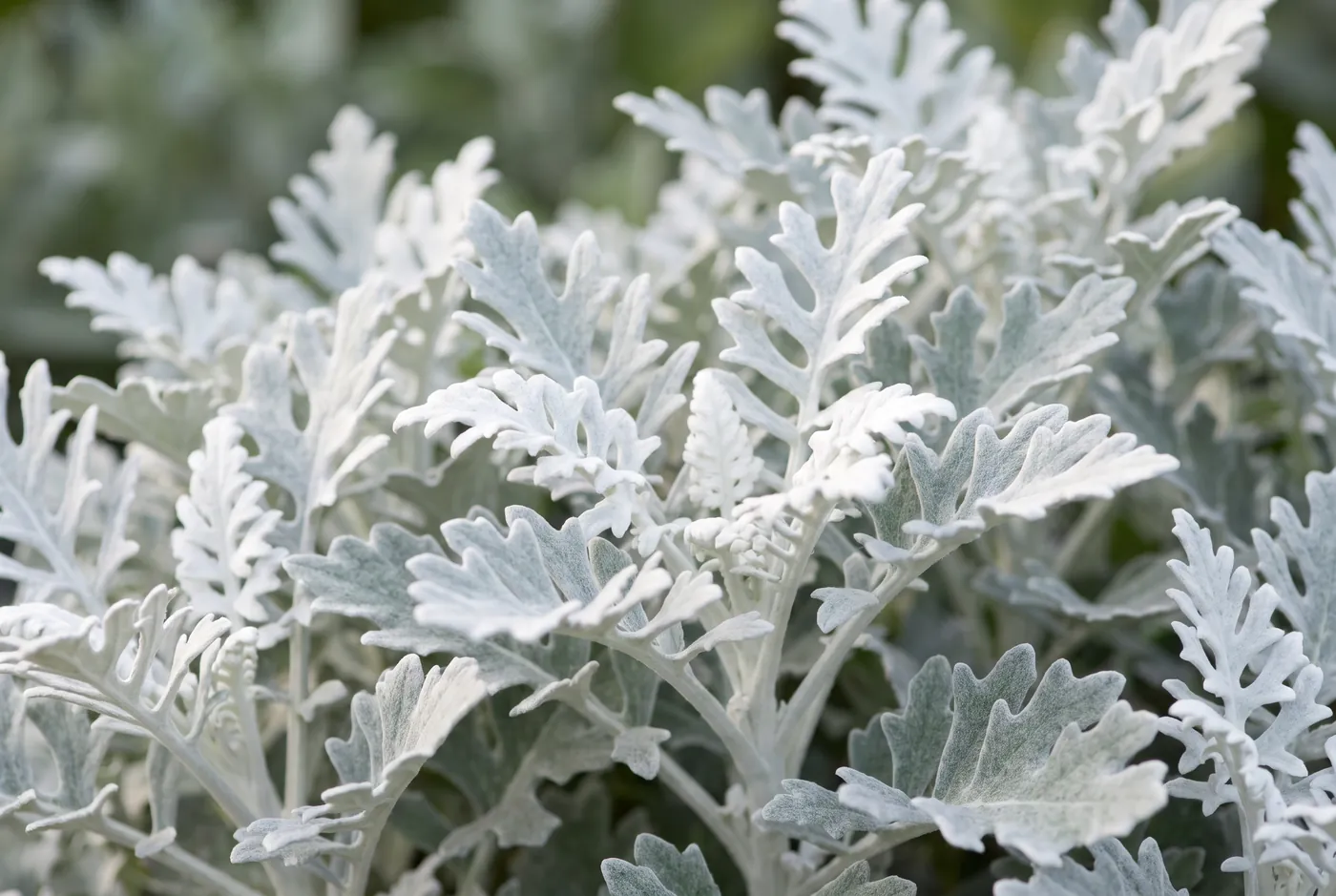
Dusty miller is grown for its leaves and nothing else: deeply cut, almost white, covered in a dense felt of fine hairs that gives it the dusty look and the name. It became the defining foliage of soft, muted wedding palettes and is still everywhere.
The silver is a survival adaptation. The plant comes from Mediterranean coasts, and the felt reflects sunlight and reduces water loss. It does flower, small and yellow, and most florists cut those off, because they are a completely different colour from the leaves and spoil the effect.
Primary Meanings
- Protection: The felt shields the plant from sun and salt
- Endurance: It grows on exposed coasts in poor ground
- Softness: The obvious association with the texture
- Supporting Role: Its function in arrangements
Dusty Miller Colors and Their Meanings
Silver White
The classic; New Look and similar
Silver Grey
Older leaves and finer varieties
Pale Sage
Younger growth, greener beneath the felt
Popular Dusty Miller Types
Silver Dust
Finely cut lacy leaves, the most common
New Look
Broader rounded leaves, whiter and denser
Cirrus
Wide oak-like leaves, very pale
Silver Ragwort
The wild species, Jacobaea maritima
Care Instructions
Shallow Water
Stems rot quickly in depth.
Do Not Wet the Leaves
Water marks the felt permanently.
Cut the Flowers Off
The yellow flowers ruin the silver effect.
Cool and Dry
Damp air flattens the felt.
Best Occasions for Dusty Miller
- Weddings: The signature foliage of muted palettes
- Bouquets: Softens and lightens any colour scheme
- Winter Arrangements: Silver reads as frost
- Bedding: Widely used as a garden edging plant
Interesting Dusty Miller Facts
- The silver is a felt of fine hairs that reflects sun and conserves water
- It is grown for foliage; the yellow flowers are usually cut off
- It has been reclassified repeatedly and may be sold as Senecio or Jacobaea
- Water marks the felted surface permanently
- It comes from Mediterranean coasts and tolerates salt and poor soil
How to Buy Good Dusty Miller
Look for even, unmarked silver across every leaf. Water spots and handling marks show as darker patches in the felt and do not recover, so a bunch that has been misted or rained on is spoiled for close work. Stems should be firm rather than limp. Check whether flower buds are forming at the tips, because those need cutting off and a bunch full of them gives you less usable foliage than it appears to.
Season, Availability and What Drives the Price
Cut year-round as foliage, and cheap throughout. Demand is driven almost entirely by wedding work, so summer prices firm up a little, but it never becomes expensive. It is also sold as a bedding plant through spring and summer in every garden center, and a single garden plant produces more cutting material than most people need.
What to Use Instead
Eucalyptus gives blue-gray rather than silver-white and brings scent. Lamb's ear is the closest match for felted texture and is softer still. Lavender foliage gives a similar silver at a finer scale with fragrance. Olive reads silver-green and trails. For the specific near-white lacy leaf, artemisia is the only real alternative and is much harder to buy.
Safety Around Pets and Skin
Dusty miller is toxic to cats, dogs and horses. It contains pyrrolizidine alkaloids, the same class of compounds found in ragwort, which cause liver damage with significant or repeated ingestion. Acute cases cause vomiting and lethargy. This is worth knowing because it looks harmless and turns up in a great many mixed bouquets. Keep it away from animals that chew, and note that it is genuinely dangerous to horses.
Florist Tips for Dusty Miller
Never let water touch the leaves
The felted surface marks permanently where water sits, leaving dark patches. Water into the vase carefully and never mist it.
Cut the flower buds off
It flowers small and yellow, which fights the silver completely. Pinch the buds out as soon as you see them, both in the vase and in the garden.
Grow one plant and stop buying it
A single garden plant produces more cuttable silver foliage than most people use in a year, and it survives poor soil and drought without attention.
Common Questions About Dusty Miller
Why is dusty miller silver?
The leaves are covered in a dense felt of fine white hairs. It is an adaptation to hot, exposed Mediterranean coasts: the felt reflects sunlight and slows water loss. Underneath, the leaf tissue is green.
Is dusty miller poisonous?
Yes, to cats, dogs and horses. It contains pyrrolizidine alkaloids, related to those in ragwort, which damage the liver with repeated or significant ingestion. It looks harmless and appears in many mixed bouquets, so it is worth being aware of.
Should I let dusty miller flower?
Not if you want the foliage. The flowers are small and yellow and clash badly with the silver leaves, and flowering diverts the plant's energy. Pinch the buds out as they appear.