About Yarrow
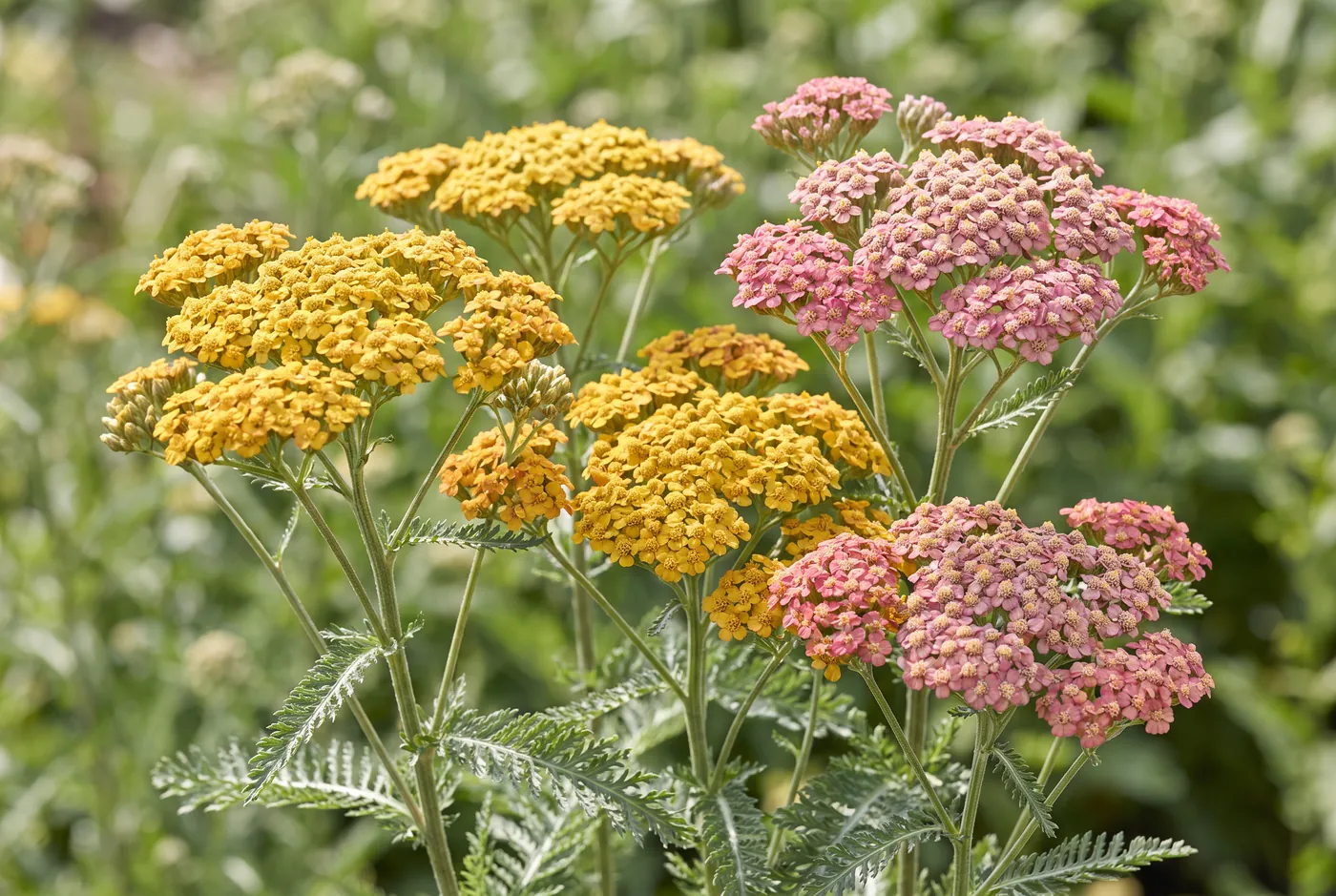
Yarrow is a flat horizontal plate of hundreds of tiny flowers on a straight stem, above feathery ferny foliage. It comes in mustard yellow, dusty pink, terracotta, cream and deep red, and the muted, slightly faded look of those colours is exactly why it fits modern arrangements so well.
The botanical name is Achillea, after Achilles, who is supposed to have used it to staunch his soldiers' wounds. That is not just legend attached after the fact: yarrow was carried as a battlefield wound herb for centuries and was still in use in the First World War.
Primary Meanings
- Healing: From its long history treating wounds
- Courage: The Achilles association
- Everlasting Love: From how well it dries
- Protection: Hung in houses against illness across Europe
Yarrow Colors and Their Meanings
Mustard Yellow Yarrow
Moonshine and Cloth of Gold
Dusty Pink Yarrow
The muted tone florists prize
Terracotta Yarrow
Walther Funcke and similar
Cream Yarrow
The Pearl; small white pompoms
Deep Red Yarrow
Fades attractively as it dries
Popular Yarrow Types
Achillea filipendulina
Tall mustard yellow, the classic drying type
Achillea millefolium
The wild species and its coloured cultivars
The Pearl
Small white double pompoms rather than plates
Summer Berries
A mixed range of pinks, reds and creams
Care Instructions
Strip Foliage
The ferny leaves rot fast in water.
Change Water
It fouls water more than most.
Dries Perfectly
Hang it and it keeps shape for years.
Tolerant
Heat and dry air suit it.
Best Occasions for Yarrow
- Summer Bouquets: Flat texture against round flowers
- Dried Work: One of the best drying flowers there is
- Rustic Weddings: The muted palette suits the style
- Herb Gardens: Grown as much for use as for looks
Interesting Yarrow Facts
- Achillea is named for Achilles, who used it on soldiers' wounds
- It was still carried as a wound herb into the First World War
- The flat plates are hundreds of tiny individual flowers
- It dries with almost no loss of shape, though colours soften
- The foliage is finely divided, giving the species name millefolium, thousand leaf
How to Buy Good Yarrow
Look for plates where most of the tiny flowers are open and the color is even across the whole head, since yarrow fades from the center outward as it ages. Stems should be rigid and the ferny foliage clean rather than yellowing at the base. Crush a leaf: fresh yarrow has a sharp herbal smell. Judge the color carefully, because the muted shades are meant to look faded and it is easy to mistake genuinely old stock for the intended tone.
Season, Availability and What Drives the Price
Early summer into autumn is the field crop and when it is cheapest, with dried yarrow available all year. It is inexpensive throughout, partly because it grows readily and partly because it is still thought of as a herb rather than a flower in much of the trade. Terracotta and deep red cultivars cost a little more than the standard mustard yellow. Demand rises with dried and rustic wedding work rather than with holidays.
What to Use Instead
Sedum gives flat plates with more substance in autumn. Statice provides color that never fades in a smaller form. Ammi and Queen Anne's lace give flat white umbels with far more air in them. Solidago covers yellow in a plume rather than a plate. For a flat horizontal plane in muted colors that also dries perfectly, yarrow is close to unique and very cheap for what it does.
Safety Around Pets and Skin
Yarrow is toxic to cats, dogs and horses. It contains achilleine and volatile oils, causing vomiting, diarrhoea, drooling and in some cases increased urination and skin sensitivity to sunlight. It also causes contact dermatitis in some people who handle it regularly. It looks like a harmless herb and turns up in many summer bunches, so it is worth knowing that it is genuinely on the ASPCA toxic list.
Florist Tips for Yarrow
Hang it upside down and forget it
Yarrow is one of the easiest and best drying flowers. Small bunches hung in a dry airy place keep their shape for years. The colors soften rather than vanish, which is generally an improvement.
Strip the ferny leaves
The finely divided foliage breaks down quickly and turns vase water cloudy and smelly within a couple of days. Take it all off below the waterline.
The faded look is deliberate
Modern yarrow cultivars are bred for muted, dusty colors. A stem that looks like it has already faded is often exactly what the grower intended.
Common Questions About Yarrow
Why is yarrow called Achillea?
After Achilles, who according to legend used it to treat his soldiers' wounds. That is more than mythology: yarrow was genuinely carried as a battlefield wound herb for centuries and was still being used for that purpose in the First World War.
Can you dry yarrow?
Yes, and it is one of the best. Hang small bunches upside down somewhere dry and airy. It holds its shape almost perfectly and the colors soften to a muted tone that many people prefer to the fresh flower.
Is yarrow safe around pets?
No. It is on the ASPCA toxic list for cats, dogs and horses, causing vomiting, diarrhoea and drooling. It looks like an innocuous herb and appears in many summer bouquets, so it is worth being aware of.