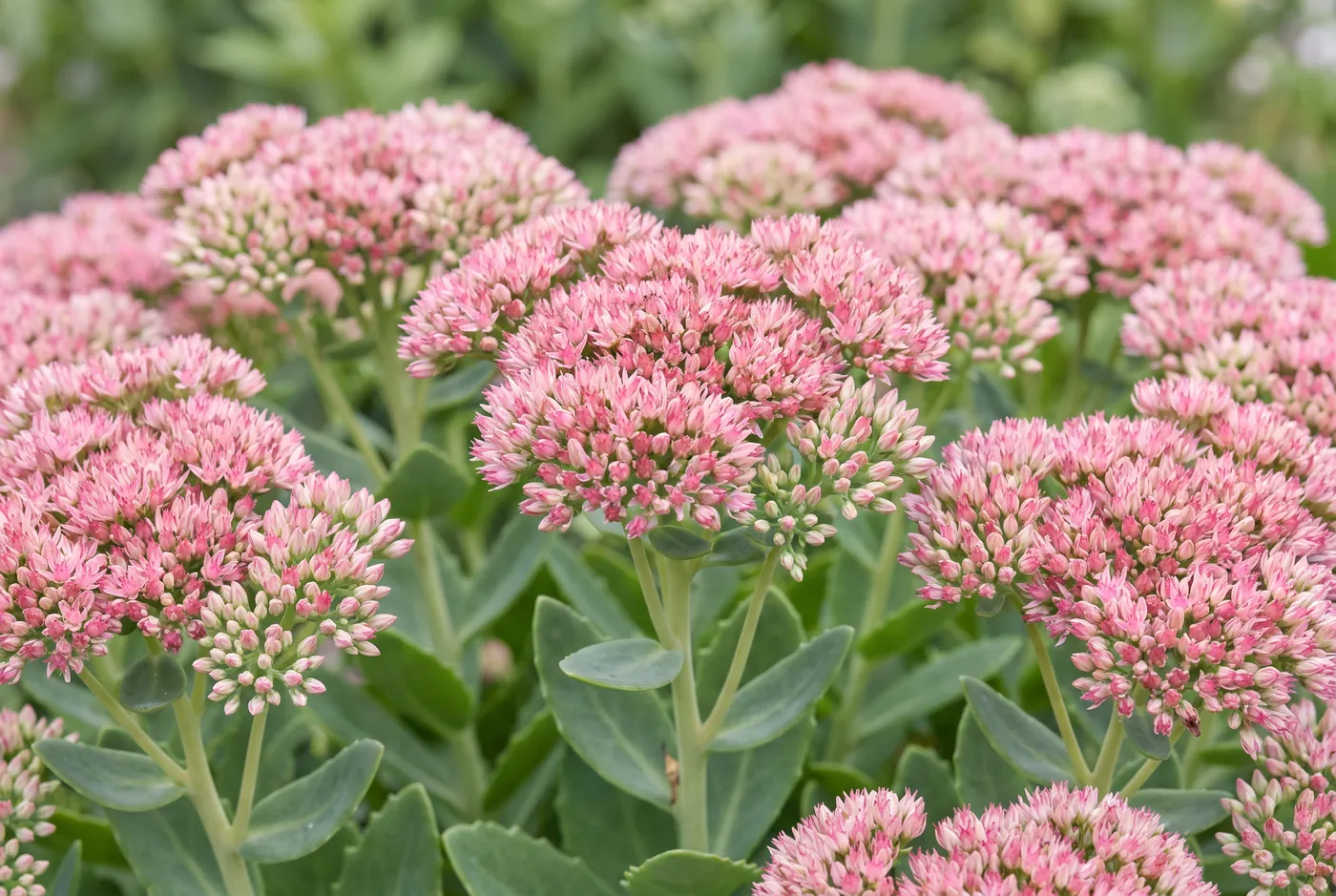
About Sedum
Sedum is a flat dense plate of hundreds of tiny star-shaped flowers on a thick succulent stem, and it changes colour as the season goes: pale green in bud, dusty pink as it opens, then deepening through rose to a rich rust brown that holds all winter. Florists buy it at whichever stage suits.
It is a succulent, which is why the stems and leaves are fleshy and why it lasts so long cut. It is also one of the best late-season nectar plants there is, and a garden clump in September is usually covered in bees.
Primary Meanings
- Tranquillity: The traditional meaning
- Peace: From its calm, unhurried presence
- Endurance: It holds its heads right through winter
- Welcome: It was once grown on roofs to bring luck to a house
Sedum Colors and Their Meanings
Dusty Pink Sedum
The classic opening colour
Pale Green Sedum
The bud stage, used deliberately
Deep Rose Sedum
Full colour in early autumn
Rust Brown Sedum
The winter stage; dried and structural
Popular Sedum Types
Autumn Joy
Hylotelephium 'Herbstfreude'; the classic and most grown
Matrona
Darker stems and grey-purple foliage
Purple Emperor
Deep bronze-purple leaves throughout
Creeping Sedums
Low-growing stonecrops, grown as ground cover
Care Instructions
Shallow Water
Succulent stems rot easily in depth.
Strip Lower Leaves
Fleshy leaves foul water fast.
Dries Standing
Leave it and it dries in place.
Recut Cleanly
Thick stems need a sharp clean cut.
Best Occasions for Sedum
- Autumn Arrangements: Its natural season and best colour
- Textural Bouquets: Flat plates against round flowers
- Dried Work: The rust stage lasts all winter
- Wildlife Gardens: One of the best late nectar sources
Interesting Sedum Facts
- It is a succulent, which is why the stems are thick and fleshy
- The heads change colour through green, pink, rose and finally rust
- It is one of the best late-season nectar plants for bees
- Old English roofs were planted with stonecrop for luck
- The genus was reclassified; garden sedums are now Hylotelephium
How to Buy Good Sedum
Decide which stage you want before you buy, because sedum does not go backwards. Green heads are tight and structural, pink is the classic, and rust is the winter look. Whichever you choose, the head should be dense with no gaps and the fleshy stems firm rather than soft or translucent at the cut end, which means rot has started. Strip the lower leaves before it goes anywhere near water.
Season, Availability and What Drives the Price
Late summer into autumn, peaking through September and October, and it is one of the cheaper autumn stems. Because it holds its rust color right through winter it is also sold dried well beyond the fresh season. Supply is largely from field growers rather than glasshouses, so a wet autumn genuinely affects what is available. It is rarely expensive.
What to Use Instead
Hydrangea heads give similar mass with a softer texture and dry comparably well. Yarrow provides flat plates of tiny flowers in a wider color range. Achillea and sedum are often used interchangeably in autumn work. For the specific succulent thickness and the color change through the season, nothing else does it, which is why it turns up every September.
Safety Around Pets and Skin
Sedum is generally regarded as non-toxic to cats and dogs and is not on the ASPCA's main hazard list. Some species can cause mild stomach upset if eaten in quantity, as most succulents can, but there is no significant toxin. It is a safe plant to have in a garden with animals, and it is one of the better choices for a wildlife garden generally.
Florist Tips for Sedum
Pick the stage, not the flower
Sedum is really four products depending on when it is cut. Green for structure, pink for classic autumn, rose for depth, rust for winter. Tell a florist which you want rather than just asking for sedum.
Strip the fleshy leaves
Succulent foliage rots fast in water and turns it cloudy within a day. Take everything off below the waterline before it goes in.
Leave it to dry in the vase
Let the water run out and it dries standing up, holding its shape and rust color for months. It is one of the easiest flowers to dry by neglect.
Common Questions About Sedum
Why does my sedum change color?
That is the plant, not the vase. Sedum heads open pale green, color through dusty pink to deep rose as the flowers open, then age to rust brown. The stage at which it was cut determines what you get, and it will continue developing slowly in water.
Is sedum a succulent?
Yes. The thick fleshy stems and leaves store water, which is why cut stems last two to three weeks and why they rot if stood in deep water.
Can you dry sedum?
Easily. Let the vase water run out and the heads dry standing upright, keeping their shape and their rust color for months. It is one of the simplest flowers to dry.