About Morning Glory
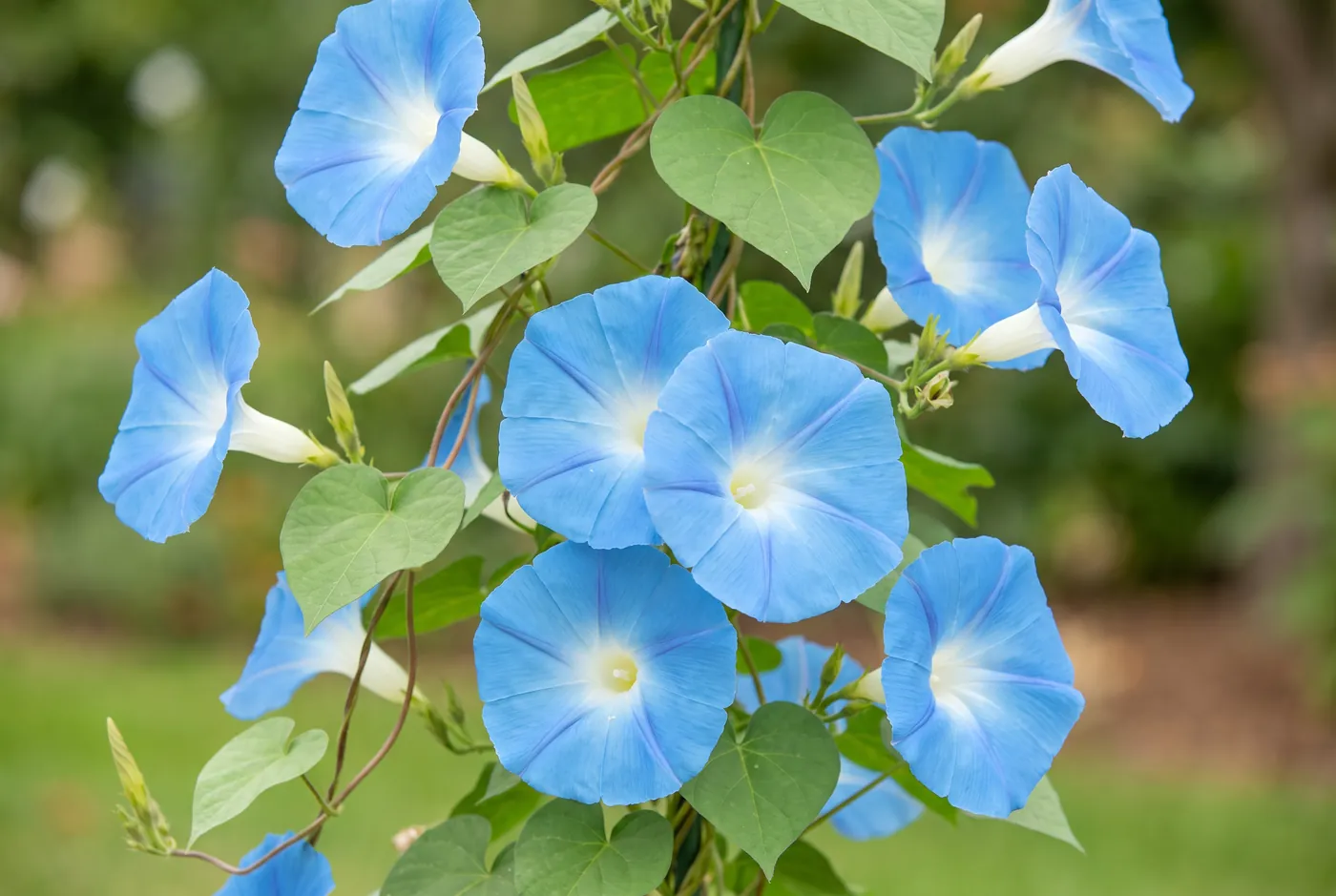
Morning glory is a wide flat trumpet, most famously a pure sky blue with a white throat, opening at dawn on a twining vine and closing by early afternoon. Each individual flower lasts exactly one morning, and the plant simply produces another the next day.
It is one of September's birth flowers, alongside the aster. It is also completely impractical as a cut flower for the obvious reason, and the seeds carry compounds serious enough that some seed is treated to deter misuse.
Primary Meanings
- Affection: The Victorian meaning
- Mortality: From a flower that lasts a single morning
- Unrequited Love: The traditional association
- Renewal: It produces new flowers every day
Morning Glory Colors and Their Meanings
Sky Blue Morning Glory
Heavenly Blue; the famous one
Purple Morning Glory
Grandpa Ott and similar
White Morning Glory
Pearly Gates; also the night-blooming moonflower
Pink Morning Glory
Softer garden varieties
Chocolate Morning Glory
Unusual bred shades
Popular Morning Glory Types
Heavenly Blue
Ipomoea tricolor; the classic sky blue
Grandpa Ott
Deep purple with a red star; an heirloom variety
Moonflower
Ipomoea alba; white, opens at dusk, strongly scented
Bindweed
Convolvulus; the invasive weed relative, not the same plant
Care Instructions
Not a Cut Flower
Each bloom lasts one morning.
See It Early
Open at dawn, closed by afternoon.
Grow It
Easy from seed on any support.
Seeds Are Toxic
Genuinely, and treated seed more so.
Best Occasions for Morning Glory
- September Birthdays: One of the month's birth flowers
- Garden Planting: Its only practical use
- Fences and Trellises: It covers a support in a single season
- Evening Gardens: Moonflower, the night-blooming relative
Interesting Morning Glory Facts
- It is one of two September birth flowers, with the aster
- Each flower lasts a single morning and the vine produces more the next day
- Moonflower is the same genus but opens at dusk and is strongly scented
- The seeds contain LSA and are genuinely toxic; some are chemically treated
- Ipomoea also includes the sweet potato
How to Buy Good Morning Glory
There is nothing to buy cut. Each flower opens at dawn and is finished by early afternoon, so no cut trade exists and none is possible. What you buy is seed, which is cheap and widely available. Soak it overnight before sowing, since the coat is hard, and give it a support before it needs one because it grows fast. For a September birthday, asters are the month's other birth flower and are a real cut flower.
Season, Availability and What Drives the Price
Midsummer until the first frost, flowering more heavily as the season goes on. It is grown from seed each year in most climates. There is no commercial cut flower activity at all, and any florist asked for morning glory will suggest something else, usually asters or a blue delphinium if the color is the point.
What to Use Instead
Asters are September's other birth flower and are widely available. For the sky blue specifically, delphinium and nigella are the realistic cut alternatives. Clematis gives a large flat climber's flower in a vase, briefly. Moonflower, the same genus, is worth planting alongside it since it opens as the morning glories close and carries a strong evening scent.
Safety Around Pets and Skin
The seeds are toxic and this is not a token warning. They contain lysergic acid amide, and eating them causes nausea, vomiting, hallucinations and cardiovascular effects. Some commercial seed is deliberately treated with chemicals to make misuse unpleasant, which makes it more dangerous rather than less if eaten. Keep seed packets away from children and pets. The plant is also on the ASPCA toxic list for cats and dogs.
Florist Tips for Morning Glory
Plant moonflower with it
Ipomoea alba is the same genus and opens at dusk, just as the morning glories close, with a powerful scent. Grown on the same support you get flowers around the clock.
Do not confuse it with bindweed
Field bindweed looks similar and is a serious perennial weed with roots that go down metres. Morning glory is an annual and dies at the first frost. They are different genera.
Soak the seed
The seed coat is hard and germination is patchy without an overnight soak or a light nick with a knife. It is the difference between a full trellis and a few straggly vines.
Common Questions About Morning Glory
Can you buy morning glory as a cut flower?
No. Each bloom opens at dawn and closes by early afternoon, so it cannot be cut, shipped or arranged. For a September birthday, the aster is the month's other birth flower and is widely available.
Are morning glory seeds poisonous?
Yes, genuinely. They contain lysergic acid amide and cause nausea, vomiting and hallucinations. Some commercial seed is treated with chemicals specifically to deter misuse, which makes eating it worse rather than safer. Keep packets away from children.
What is moonflower?
Ipomoea alba, the same genus as morning glory but opening at dusk rather than dawn, with large white flowers and a strong sweet scent. Grown together on one support they give flowers morning and evening.