About Muscari
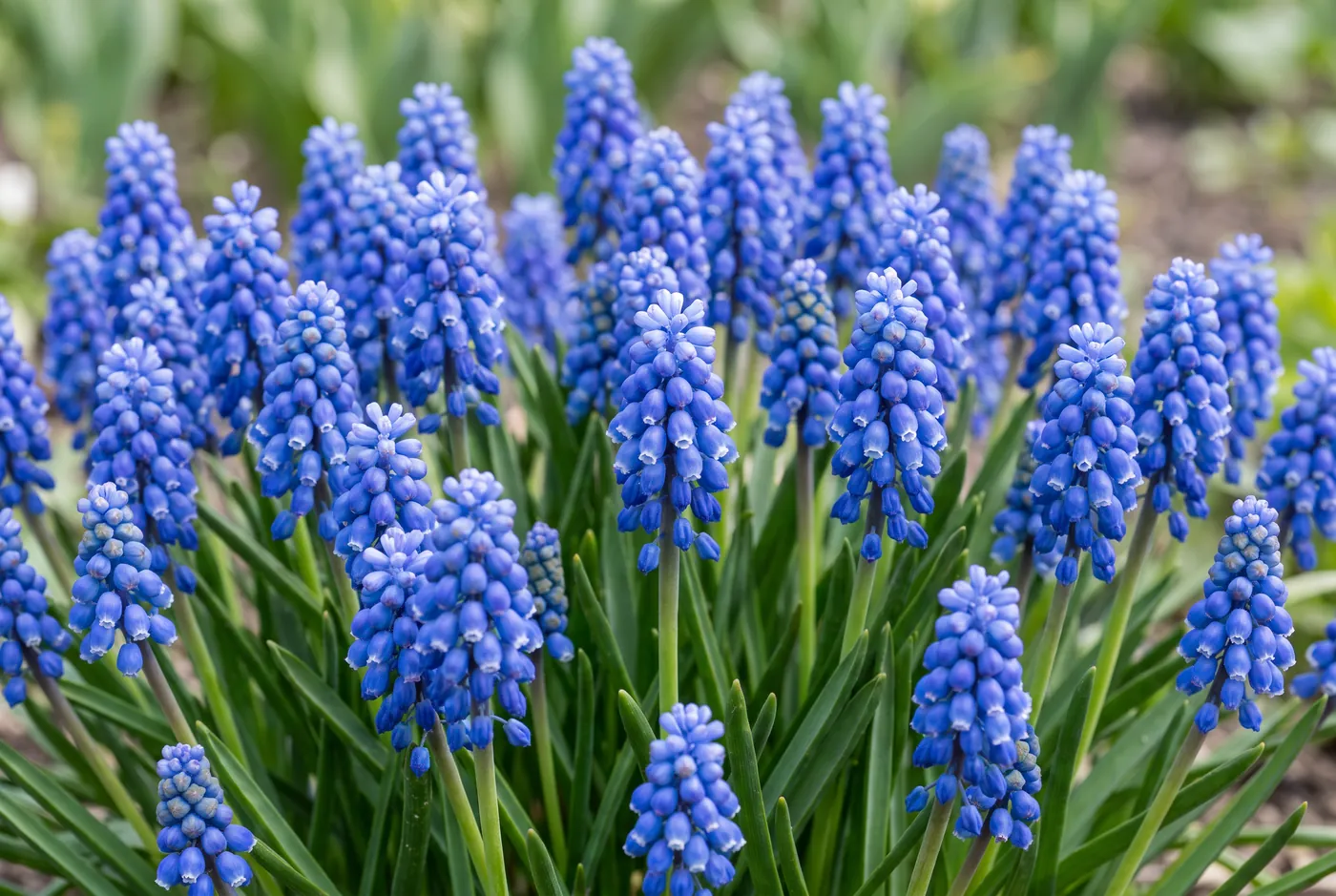
Muscari is the small, dense, cobalt blue spike that looks like a tiny bunch of grapes turned upside down. It is sold as grape hyacinth, which causes endless confusion, because it is not a hyacinth: it is a different genus with a much milder scent and a far smaller flower.
It is one of the truest blues available in spring, and the stems are very short, which shapes how you can use it. Florists buy it for low arrangements, bud vases and bridal work rather than anything tall.
Primary Meanings
- Constancy: The traditional meaning attached to blue spring bulbs
- Trust: From the reliability of its return each year
- New Beginnings: One of the earliest bulbs to flower
- Usefulness: The Victorian meaning it carried
Muscari Colors and Their Meanings
Cobalt Blue Muscari
The classic; a genuinely true blue
Pale Blue Muscari
Valerie Finnis and similar varieties
White Muscari
Purity; used in bridal work
Two-Tone Muscari
Pale tips over dark bases, the usual form
Popular Muscari Types
Armeniacum
The standard deep blue grape hyacinth
Valerie Finnis
Soft powder blue, much used by florists
White Magic
Pure white form
Plumosum
Feathered sterile flowers, a wispy purple haze
Care Instructions
Shallow Water
Very short stems; an inch is plenty.
Keep Cold
It lasts markedly longer somewhere cool.
Use Small Vases
Bud vases and low bowls suit the length.
Keep the Bulb On
Sold with bulbs attached, it lasts longer.
Best Occasions for Muscari
- Early Spring: February through April, its whole window
- Bridal Work: Small blue accents where nothing else will do
- Bud Vases: Table arrangements suited to short stems
- Easter: With daffodils and hyacinths
Interesting Muscari Facts
- It is not a hyacinth; grape hyacinth is a common name, not a botanical one
- Muscari comes from the Greek for musk, after the faint scent
- The stems are very short, which limits it to low arrangements
- It is one of very few true blues available in early spring
- Sold with bulbs still attached it lasts considerably longer
How to Buy Good Muscari
Look for spikes where the lower florets are open and the top third is still tight and paler, which is the normal two-tone look and means it has days left. The color should be strong and even, not washed out. If it is sold with the bulbs still attached, take that option: bulb-on muscari lasts noticeably longer than cut stems and can be planted out afterwards. Check the short stems are firm rather than translucent at the base.
Season, Availability and What Drives the Price
February through April, and that is effectively all of it. It is forced from bulbs by Dutch growers to arrive early, and it disappears once the spring bulb season ends. It is cheap per stem but sold in small bunches, so the cost of enough to make an impression is higher than it first appears. Demand from wedding work for the true blue keeps spring prices firmer than the volume alone would suggest.
What to Use Instead
Hyacinth is the obvious relative, far larger and far more strongly scented. For blue specifically, delphinium and larkspur arrive later in the year and give height. Scilla and chionodoxa are close spring alternatives at a similar scale. Nigella provides true blue in summer. For a small dense blue spike in February there is very little else, which is why florists keep buying it despite the length.
Safety Around Pets and Skin
Muscari bulbs are toxic to cats and dogs, as most spring bulbs are, causing vomiting, drooling and diarrhoea. The flowers themselves are low risk but the bulb is not, and since muscari is frequently sold with the bulb attached that is a real consideration. Keep bulb-on arrangements out of reach and do not leave loose bulbs where an animal can dig at them.
Florist Tips for Muscari
Buy it with the bulbs on
Muscari sold bulb-attached lasts longer than cut stems, looks intentional in a glass vase, and can be planted in the garden afterwards where it will come back for years.
Do not fight the stem length
It is short and always will be. Use bud vases, low bowls or a tight posy rather than trying to make it work in a tall arrangement.
Keep it cold
It is a forced spring bulb and responds well to a cold room or even a night in the fridge, which noticeably extends it.
Common Questions About Muscari
Is muscari the same as a hyacinth?
No. Grape hyacinth is only a common name. Muscari is a separate genus with much smaller flowers, a far milder scent and very short stems. True hyacinths are Hyacinthus, with dense fat spikes and a powerful fragrance.
Why are muscari stems so short?
That is simply how the plant grows. It is a small early bulb that flowers close to the ground. Use it in bud vases and low arrangements rather than trying to give it height.
Can I plant muscari sold with bulbs attached?
Yes, and it is worth doing. Once the flowers finish, plant the bulb in the garden with the foliage left to die back naturally and it will flower again the following spring, then spread.