About Magnolia
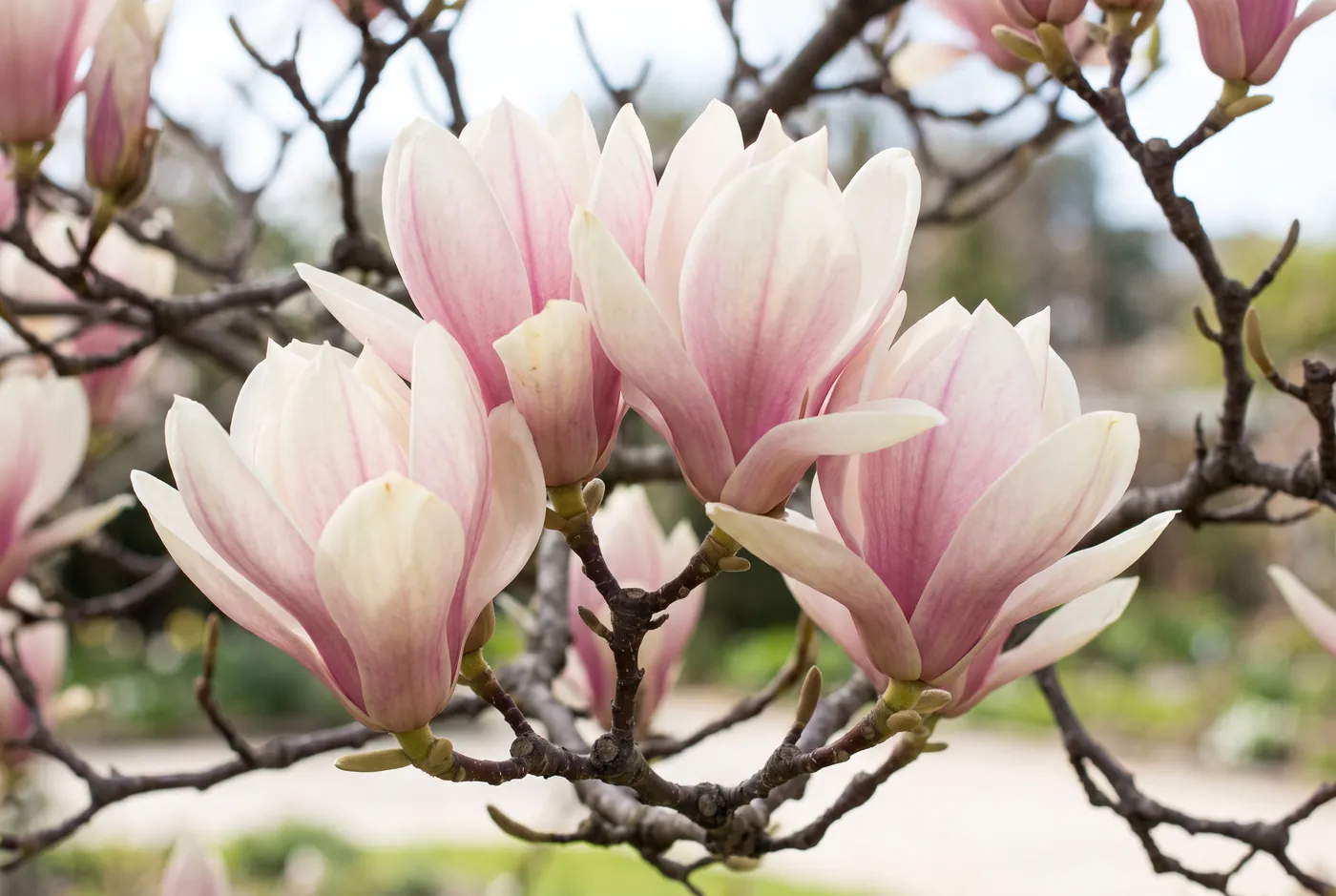
Magnolia flowers are enormous, waxy and held on bare branches before any leaf appears, which is why a single branch fills a room. The petals, properly tepals, are thick enough to feel like something manufactured, and they bruise brown at the slightest handling.
The genus is older than bees. Magnolias evolved before bees existed and are pollinated by beetles instead, which is why the flower parts are so tough: they are built to survive being crawled over by something with jaws.
Primary Meanings
- Dignity: The classic meaning, from its bearing
- Perseverance: An ancient genus that has outlasted almost everything
- Nobility: The Victorian association
- Feminine Beauty: Strong in the American South, where it is emblematic
Magnolia Colors and Their Meanings
Pink Magnolia
The classic saucer magnolia
White Magnolia
Purity; star and southern magnolias
Deep Purple Magnolia
Genie and similar dark cultivars
Cream Magnolia
Southern magnolia, the huge summer flower
Bronze Foliage
The felted leaf backs, used on their own
Popular Magnolia Types
Saucer Magnolia
Magnolia x soulangeana; the pink spring classic
Star Magnolia
Many narrow white tepals, earliest to flower
Southern Magnolia
Magnolia grandiflora; huge cream summer flowers, glossy leaves
Magnolia Foliage
The leaves alone, brown-backed, sold for wreaths
Care Instructions
Split the Branch
Woody; split the cut end or it will not drink.
Handle by the Wood
Tepals bruise brown wherever they are touched.
Deep Water
Heavy branches need depth and a stable vase.
Cool Slows It
Warmth opens the flowers within a day or two.
Best Occasions for Magnolia
- Spring Statements: One branch is a complete arrangement
- Weddings: Large installations, arches and pedestals
- Christmas: The brown-backed foliage in wreaths and garlands
- Southern Events: Emblematic across the American South
Interesting Magnolia Facts
- Magnolias evolved before bees and are pollinated by beetles
- The tough tepals are an adaptation to beetle damage
- Fossil magnolias date back roughly 95 million years
- It is the state flower of Mississippi and Louisiana
- The brown felted leaf backs are used as a material in their own right
How to Buy Good Magnolia
Buy branches in tight furry bud with at most one or two flowers opening. Magnolia opens quickly indoors and an open flower bruises the moment anything touches it, so a branch in full bloom will not survive being carried home. Check the buds are plump and evenly distributed rather than only at the tips. Look closely at any open tepals for brown edges or finger marks, because that damage is permanent and spreads. The cut end should be fresh and pale.
Season, Availability and What Drives the Price
Deciduous magnolias flower in early spring, before the leaves, and that is when branches are sold. Southern magnolia is a different proposition: it flowers in summer and its glossy brown-backed foliage is cut year-round and sold as a material in its own right, particularly heavily at Christmas. Branch prices are high and set by length. Supply is short and weather-dependent, since a hard frost at the wrong moment can wipe out a season's flowers overnight.
What to Use Instead
Cherry blossom gives the same spring branch effect with smaller, denser flowers and is usually easier to buy. Camellia offers a similar waxy formality on evergreen wood. Forsythia is the cheap substitute for scale. For the huge single flower specifically, there is nothing else at that size on a branch, which is why magnolia is priced the way it is.
Safety Around Pets and Skin
Magnolia is not listed as toxic to cats or dogs and does not appear on the ASPCA hazard list. It is a safe branch to bring into a house with animals. The practical risks are mechanical: a tall heavy branch in a light vase, and large fallen tepals that a dog may decide to chew.
Florist Tips for Magnolia
Never touch the open flowers
The tepals bruise brown wherever they are handled, and it shows within hours. Carry and arrange the branch by the wood only.
Buy it in bud, always
Magnolia in full flower has almost no life left and will not travel. Furry closed buds are what you want; they open indoors within a couple of days.
Keep the foliage after Christmas
Southern magnolia leaves, with their brown felted backs, dry perfectly and are worth keeping for wreaths and garlands long after the greenery around them has gone.
Common Questions About Magnolia
Why did my magnolia flowers turn brown?
Almost certainly handling. The thick tepals bruise wherever they are touched and the marks go brown within hours. Handle branches by the wood, and buy them in bud so they open in the vase rather than in transit.
Are magnolias really older than bees?
Yes. The genus predates the evolution of bees and is pollinated by beetles instead. The unusually tough flower parts are thought to be an adaptation to beetles chewing their way around the bloom.
What is the difference between saucer and southern magnolia?
Saucer magnolia is deciduous, flowers pink on bare branches in early spring, and is what is usually sold as cut branches. Southern magnolia is evergreen, flowers cream in summer, and is cut mainly for its glossy brown-backed foliage.