About Bells of Ireland
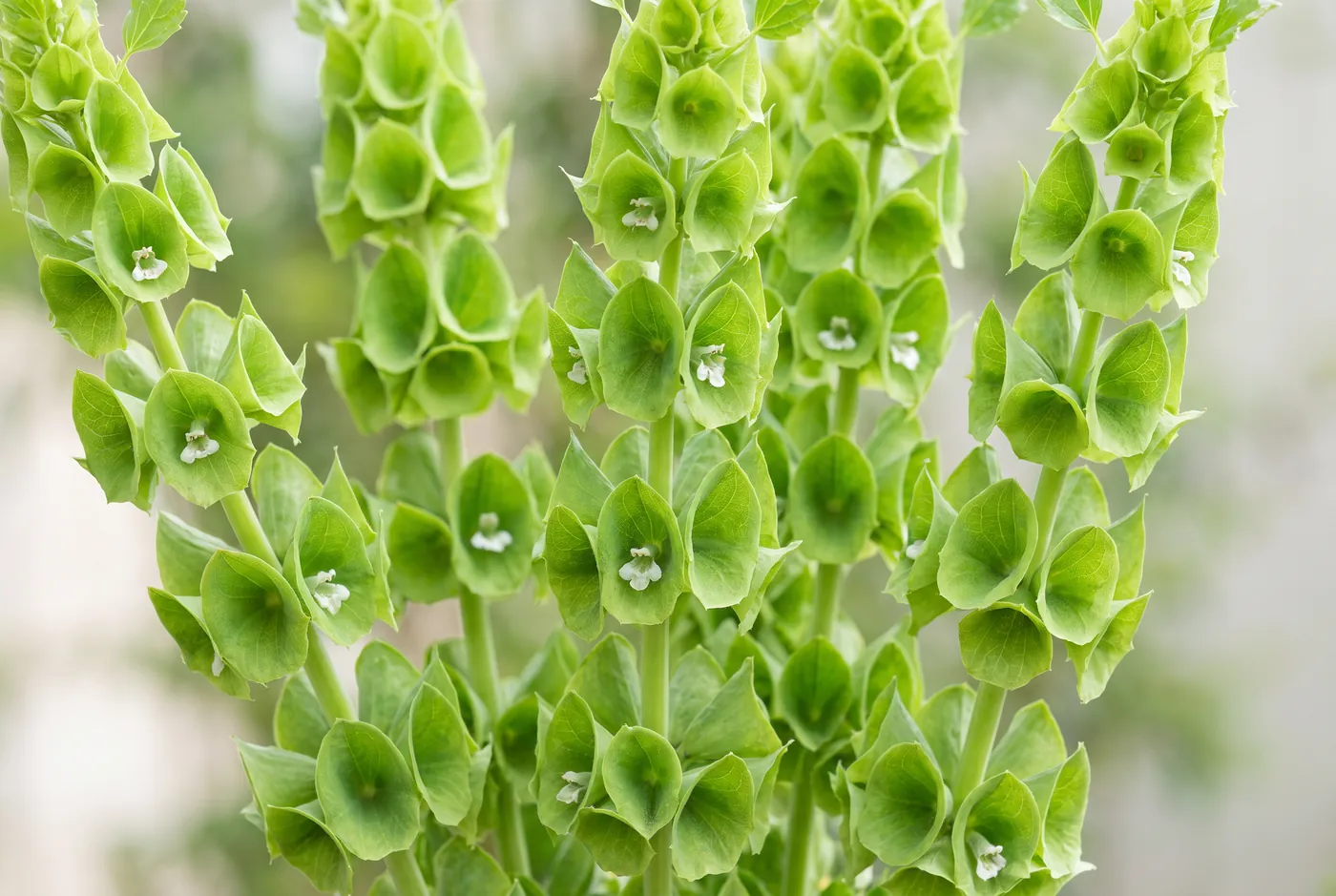
Bells of Ireland is a tall spire of bright apple-green cups arranged up a stiff stem, and it is one of the few genuinely green flowers a florist sells. The bells are calyces rather than petals, and inside each one sits a tiny white flower that most people never notice.
It is not Irish. It comes from Turkey and the Caucasus, and the botanical name Molucella refers, wrongly, to the Moluccas. The name is about the colour and the luck it is supposed to bring, not about origin.
Primary Meanings
- Good Luck: The meaning behind the name
- Gratitude: Commonly given as thanks
- Wishes Granted: The traditional association
- Renewal: From the fresh green colour
Bells of Ireland Colors and Their Meanings
Apple Green Bells
The classic and only real colour
Pale Green Bells
Younger stems, softer tone
Straw Dried Bells
It dries to a pale parchment
Popular Bells of Ireland Types
Molucella laevis
The species, and effectively the only one grown
Pixie Bells
A shorter, more compact cutting variety
Dried Bells
Sold dried, faded to straw
Care Instructions
Store Upright
Stems curve toward light and set that way.
Deep Water
Tall stems drink heavily.
Watch the Spines
Small sharp spines hide behind each bell.
Dries to Straw
It dries well but loses the green.
Best Occasions for Bells of Ireland
- St Patrick's Day: The obvious association, whatever the origin
- Weddings: Height and green structure
- Good Luck Gifts: New jobs, new homes, exams
- Large Arrangements: Vertical line without adding colour
Interesting Bells of Ireland Facts
- The green bells are calyces; the true flowers are tiny and white inside them
- It is from Turkey and the Caucasus, not Ireland
- The stems curve toward light and set permanently in that position
- Small sharp spines sit hidden behind each bell
- It dries well but fades from green to pale straw
How to Buy Good Bells of Ireland
Look for bells that are crisp bright green with no yellowing or translucent patches, since that is where they go first. The bells should be evenly spaced along a straight rigid stem, and any stem that has begun to curve will keep that curve. Feel carefully for the small spines tucked behind each bell, which are easy to catch a finger on. Check whether the tiny white flowers inside are still fresh, because once they brown the stem is aging even if the bells look fine.
Season, Availability and What Drives the Price
Summer into early autumn is the main crop, with imports covering parts of the rest of the year at a higher price. Demand spikes hard around St Patrick's Day, which falls well outside the natural season and pushes March prices up sharply. It is moderately priced in summer and one of the few reliable sources of true green in an arrangement, which is what keeps it in the trade.
What to Use Instead
For green structure, amaranthus in its green form gives trailing rather than upright line. Green hypericum and green trick dianthus give texture at a smaller scale. Snapdragons and stock provide the same vertical spike in other colors. For a green flower specifically, green chrysanthemums and green hydrangea are the alternatives, though neither gives a spire.
Safety Around Pets and Skin
Bells of Ireland is not listed as toxic to cats or dogs. The genuine hazard is physical rather than chemical: small sharp spines sit hidden behind each bell and catch fingers easily when you strip a stem. Handle it deliberately rather than running a hand down the stem, which is how most people get caught.
Florist Tips for Bells of Ireland
Watch for the hidden spines
Every bell conceals a small spine at its base. Running a hand down the stem to strip it is the fastest way to find them. Work from the top and pull each bell deliberately.
Keep it upright from the start
The stems bend toward light and set. Stored flat, or left leaning in a bucket, they will curve permanently. Sometimes that curve is useful, but it is not reversible.
It dries, but not green
Hung upside down it dries reliably and holds its shape, but the color goes to pale straw. If you want green, use it fresh.
Common Questions About Bells of Ireland
Is bells of Ireland actually Irish?
No. It comes from Turkey, Syria and the Caucasus. The botanical name Molucella wrongly refers to the Moluccas. The common name is about the green color and the luck it symbolises, not its origin.
Are the green bells the flowers?
No, they are calyces, the structure that would normally sit beneath a flower. The true flowers are tiny and white and sit inside each bell, which is why the green lasts so much longer than a petal would.
Why did my stems curve?
They bend toward light and set permanently in that position, in the same way snapdragons and gladiolus do. Store and transport them upright and away from a strong one-sided light source.