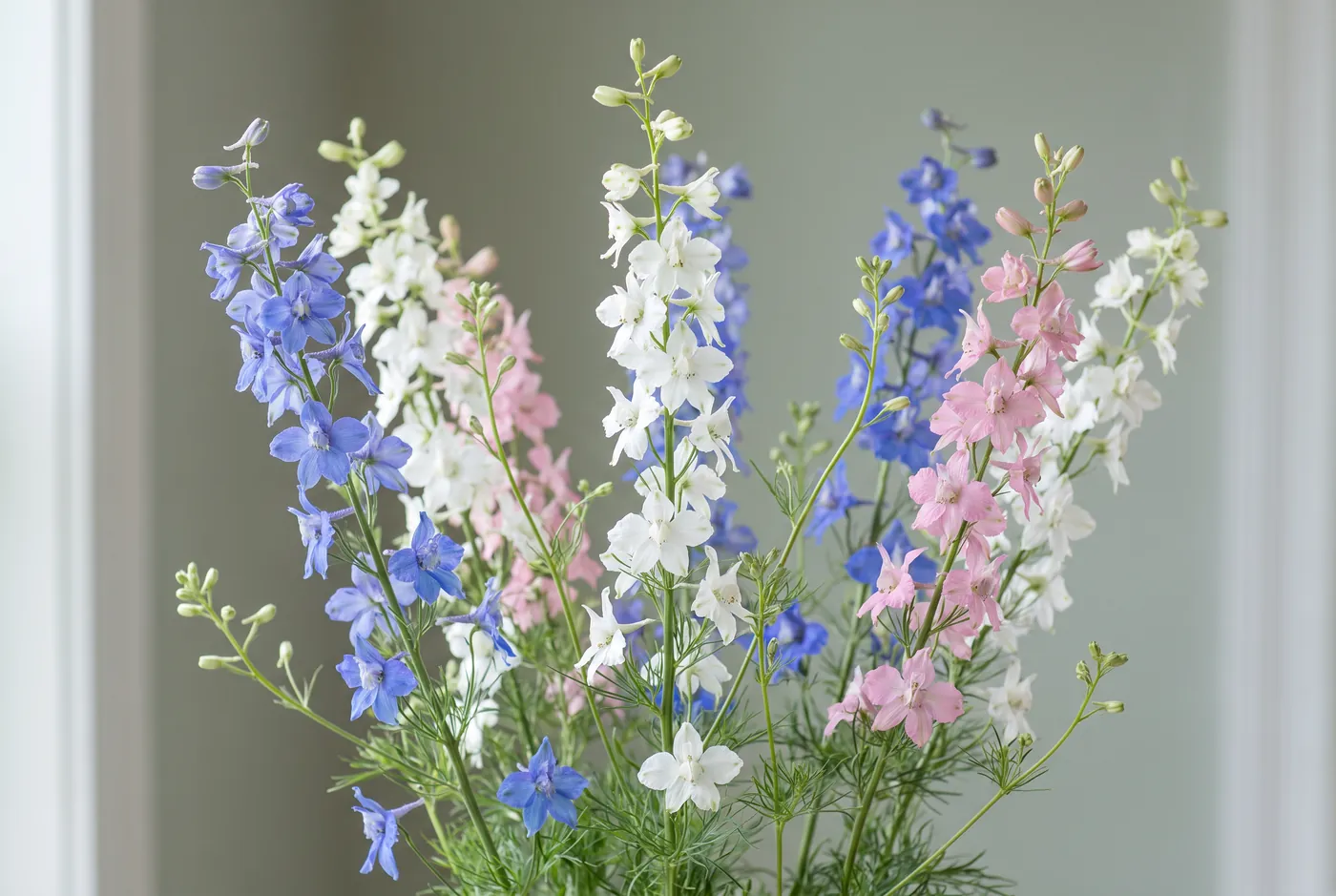
About Larkspur
Larkspur is the annual cousin of the delphinium: looser, airier, cheaper and far easier to get hold of. Tall spikes carry loosely spaced florets in blues, pinks, whites and lilacs, and where delphinium reads formal and dense, larkspur reads like a meadow.
It is the birth flower for July, and it dries better than almost any flower there is, holding its colour when most blues fade to grey. It is also, like every delphinium, genuinely poisonous.
Primary Meanings
- Open Heart: The principal meaning, shared with delphinium
- Lightness: From the airy, dancing form of the spike
- Strong Bonds: Traditionally given between close friends
- Fickleness: The Victorian meaning for the pink form specifically
Larkspur Colors and Their Meanings
Blue Larkspur
The classic, and the reason it is grown
White Larkspur
Happiness and a joyful nature
Pink Larkspur
Fickleness in the old language, simply pretty now
Lilac Larkspur
First love and gentleness
Deep Purple Larkspur
Dignity; the strongest colour in the range
Popular Larkspur Types
Giant Imperial
The tall florist standard, dense enough for arrangements
Sublime Series
Bred for cutting; long straight spikes
Rocket Larkspur
The looser cottage-garden type
Delphinium
The perennial relative; denser, taller and dearer
Care Instructions
Wash Your Hands
All parts are poisonous. Wash after handling.
Store Upright
Tips curve if laid flat, permanently.
Deep Water
Hollow stems drink heavily.
Hang to Dry
Upside down in a dry room; it keeps its colour.
Best Occasions for Larkspur
- July Birthdays: The birth flower for the month
- Summer Weddings: The airy blue that is otherwise hard to find
- Dried Arrangements: It holds colour better than almost anything
- Cottage Bouquets: The meadow look, with cosmos and zinnias
Interesting Larkspur Facts
- It is the birth flower for July
- The name comes from the spur on each floret, shaped like a lark's claw
- It holds its colour dried better than most flowers, including the blues
- It was historically used against head lice, which indicates how toxic it is
- Botanically it is Consolida, split out from Delphinium in the last century
How to Buy Good Larkspur
Shake it, exactly as you would a delphinium. Larkspur shatters, and florets that drop in the shop will drop all over your table. Buy with the bottom third to half open and the rest in colored bud. The stems are hollow and crush easily, so check the base is round rather than flattened. If you are buying specifically to dry it, take it slightly further open than you otherwise would, because it will not open much once hung.
Season, Availability and What Drives the Price
Early to midsummer is when larkspur is grown in quantity, and it is noticeably cheaper than delphinium throughout, because it is an annual that crops fast rather than a perennial that takes a season to establish. Imports fill parts of the rest of the year at higher prices and shorter stem lengths. Summer wedding demand is what moves the price, particularly for the blues, which are the reason most people buy it in the first place.
What to Use Instead
Delphinium is the obvious step up: denser, taller, deeper blue and considerably more expensive. Snapdragons and stock give the same vertical line in other colors, and stock brings scent. Veronica works at a smaller scale for table arrangements. For drying specifically, statice and limonium hold color comparably well and cost less, though neither has the height or the blue.
Safety Around Pets and Skin
Larkspur is poisonous, and this needs saying as plainly as it does for delphinium. All parts contain diterpene alkaloids affecting the nervous system, and it is toxic to people, cats, dogs, horses and livestock. Symptoms include vomiting, muscle weakness, tremors and, in serious cases, cardiac effects. Historically it was used to kill head lice, which gives a fair sense of its potency. Wash your hands after handling and keep it away from animals and children. The dried stems remain toxic.
Florist Tips for Larkspur
This is the flower to dry
Hang it upside down somewhere dry and dark and it keeps its color better than almost anything, including the blues, which normally fade to gray. Dried larkspur from July still looks right at Christmas.
Shake before buying
It shatters like delphinium. If florets fall at a gentle shake in the shop, they will carpet your table at home.
Keep it out of a draft
Moving air causes shattering faster than heat does. Avoid vents and open windows.
Common Questions About Larkspur
What is the difference between larkspur and delphinium?
Larkspur is the annual, botanically Consolida; delphinium is the perennial. Larkspur is looser, airier, cheaper and dries better. Delphinium is denser, taller and a stronger blue. Larkspur is the July birth flower. Both are equally poisonous.
How do I dry larkspur?
Hang small bunches upside down in a dry, dark, airy place for two to three weeks. It holds its color exceptionally well, which is unusual for a blue flower, and the dried stems last for years.
Is larkspur poisonous?
Yes, seriously so. All parts contain alkaloids toxic to people, pets and livestock, and drying does not reduce it. Wash your hands after handling and keep it well away from animals and children.