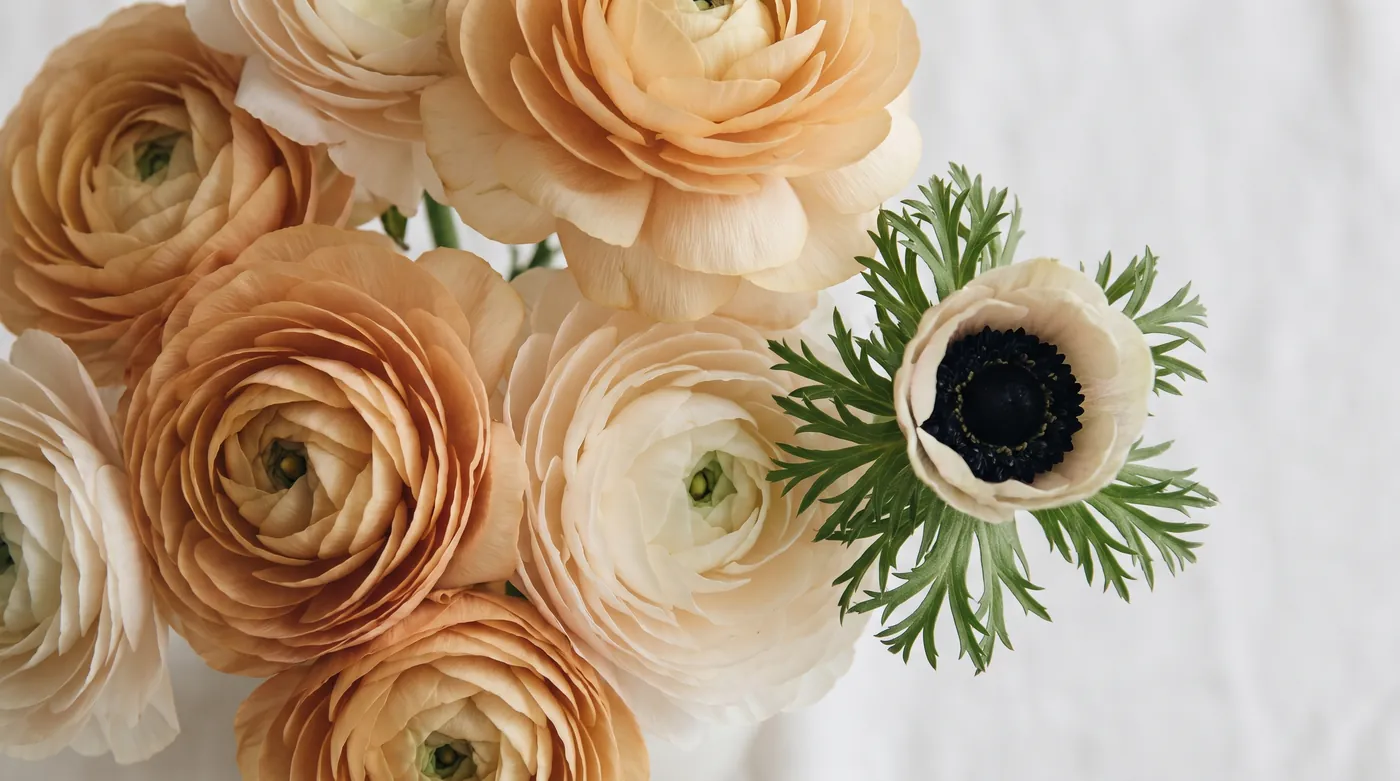
Layered ranunculus beside a black centered anemone

7 flowers in this family

Everything in this guide that belongs to Ranunculaceae

Anemones

Anemones

Anemone coronaria
5-7 days

Anemones
Large violet clematis flowers with pale centres on a vine

Clematis

Clematis hybrids
2-5 days

Clematis
Tall blue delphinium spikes against a pale background

Delphiniums

Delphinium spp.
5-8 days

Delphiniums
Nodding hellebore flowers in plum, cream and green

Hellebores

Helleborus orientalis and niger
5-10 days if seared, hours if not

Hellebores
Airy larkspur spikes in blue, white and pink

Larkspur

Consolida ajacis
5-8 days

Larkspur
Blue nigella flowers surrounded by fine thread-like foliage

Nigella

Nigella damascena
5-7 days for flowers, years for pods

Nigella
Ranunculus

Ranunculus

Ranunculus asiaticus
7-10 days

Ranunculus

Short lived, and here is why

Nearly everything in this family is a short vase life flower. Clematis gives you two to five days. Anemones, larkspur, delphinium and nigella sit around five to eight. Ranunculus does better at seven to ten, and that is the top of the range rather than the middle.

Soft, water-filled stems are the reason. They are quick to draw air, quick to soften and quick to foul water, and none of them has the woody reinforcement that lets a rose or a chrysanthemum keep working. Cool storage buys more here than flower food does. These are flowers that reward being kept cold and sold fast.

Hellebores are the special case and worth the trouble. Cut in bud they wilt within hours, but the same stem seared in boiling water for half a minute, or slit up the side, will then stand for a week or more. Cut them late instead, once the seed pods are visibly forming at the center, and they last without any of that. A florist who learns the hellebore trick gets a flower nobody else on the street is offering.
Relatives you already know

The name comes from the Latin for little frog, because so many of the buttercups grow in wet ground. The common meadow buttercup is the plant the entire family is named around, and the childhood game of holding one under a chin works because the petal surface is genuinely mirror-like, with a layer of air beneath the pigment that reflects yellow light upward.

Beyond the flower trade this family is better known to gardeners than to cooks, which is a direct result of the toxicity. There are no food crops here at all, which sets it apart from most families this size.

It does supply columbine, monkshood, love-in-a-mist and the winter aconite, plus the traveler's joy scrambling through hedgerows, which is a wild clematis. If a customer wants a cottage garden look, a disproportionate amount of what they are picturing is in this one family.