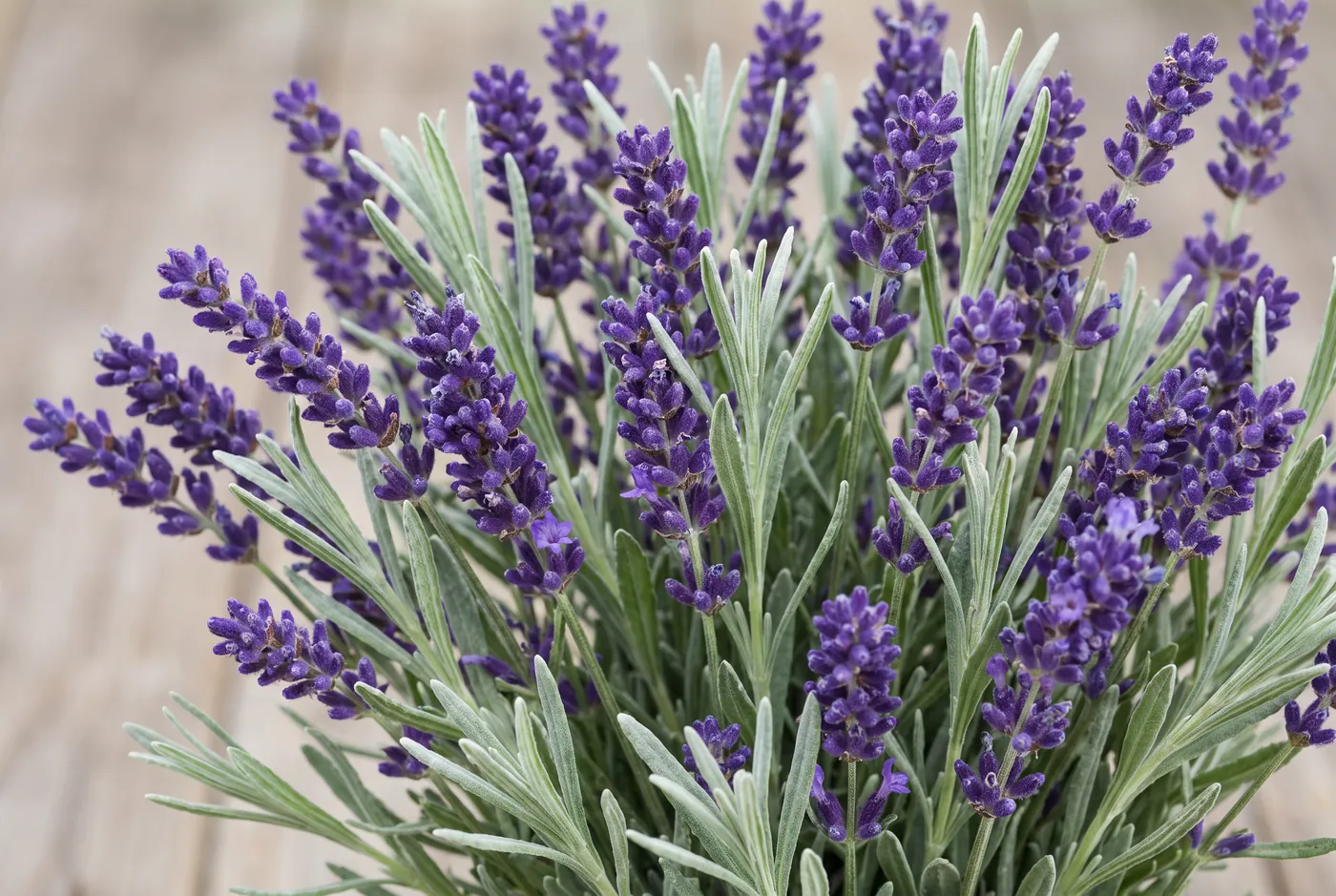
About Lavender
Lavender is an aromatic flowering plant known for its distinctive purple blooms and calming fragrance. Native to the Mediterranean region, this herbaceous perennial has been cherished for centuries for its beauty, scent, and therapeutic properties.
Beyond its ornamental appeal, lavender has been used in perfumes, culinary dishes, and traditional medicine. The delicate purple spikes create stunning visual displays in gardens and bouquets, while the soothing scent promotes relaxation and tranquility.
Primary Meanings
- Serenity: Lavender represents peace and calmness, making it perfect for creating relaxing environments
- Devotion: Symbolizes deep love and commitment in relationships
- Purity: Associated with cleanliness and virtue throughout history
- Healing: Represents restoration and wellness, both physical and emotional
Lavender Colors and Their Meanings
Purple Lavender
Royalty, elegance, and spiritual devotion
Blue Lavender
Tranquility, peace, and serenity
Pink Lavender
Grace, innocence, and youthful energy
White Lavender
Purity, innocence, and new beginnings
Popular Lavender Types
English Lavender
Lavandula angustifolia
French Lavender
Lavandula dentata
Spanish Lavender
Lavandula stoechas
Lavandin
Lavandula x intermedia
Care Instructions
Water
Change water every 2-3 days to keep stems fresh
Trim Stems
Trim stems at a 45-degree angle before placing in vase
Light
Keep in a cool location away from direct sunlight
Remove Leaves
Remove any leaves that fall below the waterline
Air Circulation
Ensure good air circulation around the arrangement
Best Occasions for Lavender
- Weddings and bridal bouquets: Weddings and bridal bouquets
- Spa and wellness gifts: Spa and wellness gifts
- Mother's Day arrangements: Mother's Day arrangements
- Sympathy and remembrance: Sympathy and remembrance
- Housewarming presents: Housewarming presents
Interesting Lavender Facts
- Ancient Romans used lavender to scent their baths, giving it the name from 'lavare' meaning 'to wash'
- Queen Elizabeth I consumed lavender tea to treat her migraines
- Lavender honey is one of the most prized varieties in the world
- The scent of lavender can help reduce anxiety and improve sleep quality
- Lavender plants can live for up to 20 years with proper care
- Over 450 lavender varieties exist worldwide
How to Buy Good Lavender
For fresh lavender, look for spikes where roughly half the tiny florets are open and the rest still budded, with strong silver-green foliage. For dried, the color should still be deep rather than gray, and the buds should stay on the stem when you run a hand up it . Heavy shedding means it is old or was dried badly.
Season, Availability and What Drives the Price
Fresh cut lavender is a summer crop, harvested from roughly June through August. Dried lavender is available all year and is the form most people actually buy, because it holds color and scent for months. English lavender has the sweeter, classic scent; the lavandin hybrids grown for oil are more camphorous and yield more, which is why cheap lavender products often smell sharper than expected.
What to Use Instead
For the same slim purple vertical, veronica and liatris fill the role in an arrangement. For scent, rosemary gives a comparable herbal note and dries just as well. Neither has lavender's specific association.
Safety Around Pets and Skin
Lavender is mildly toxic to cats and dogs, it contains linalool and linalyl acetate, which cause vomiting and lethargy if a quantity is eaten. Worth being more careful with concentrated lavender essential oil, which is considerably more hazardous to cats than the plant itself and should not be diffused around them.
Florist Tips for Lavender
Cut it for drying before it fully opens
Harvest when about half the florets are open. Cut later and the buds drop as it dries; cut earlier and the color is weak.
Dry it upside down in the dark
Small bunches, hung head-down somewhere dark and airy. Light bleaches the color out faster than anything else.
Squeeze a dried bunch to wake it up
Rolling the buds between your fingers releases the oils and brings the scent back months later.
Common Questions About Lavender
How long does dried lavender keep its scent?
Six months to a year, and longer if kept out of direct light. Squeezing or rolling the buds releases fresh oil and revives the fragrance.
Is lavender safe for cats?
The plant is mildly toxic and causes stomach upset if eaten. Lavender essential oil is a greater concern and should not be diffused in a room a cat cannot leave.
When should I cut lavender for drying?
When about half the florets on the spike have opened. Later than that and the buds shed as it dries.