About Clematis
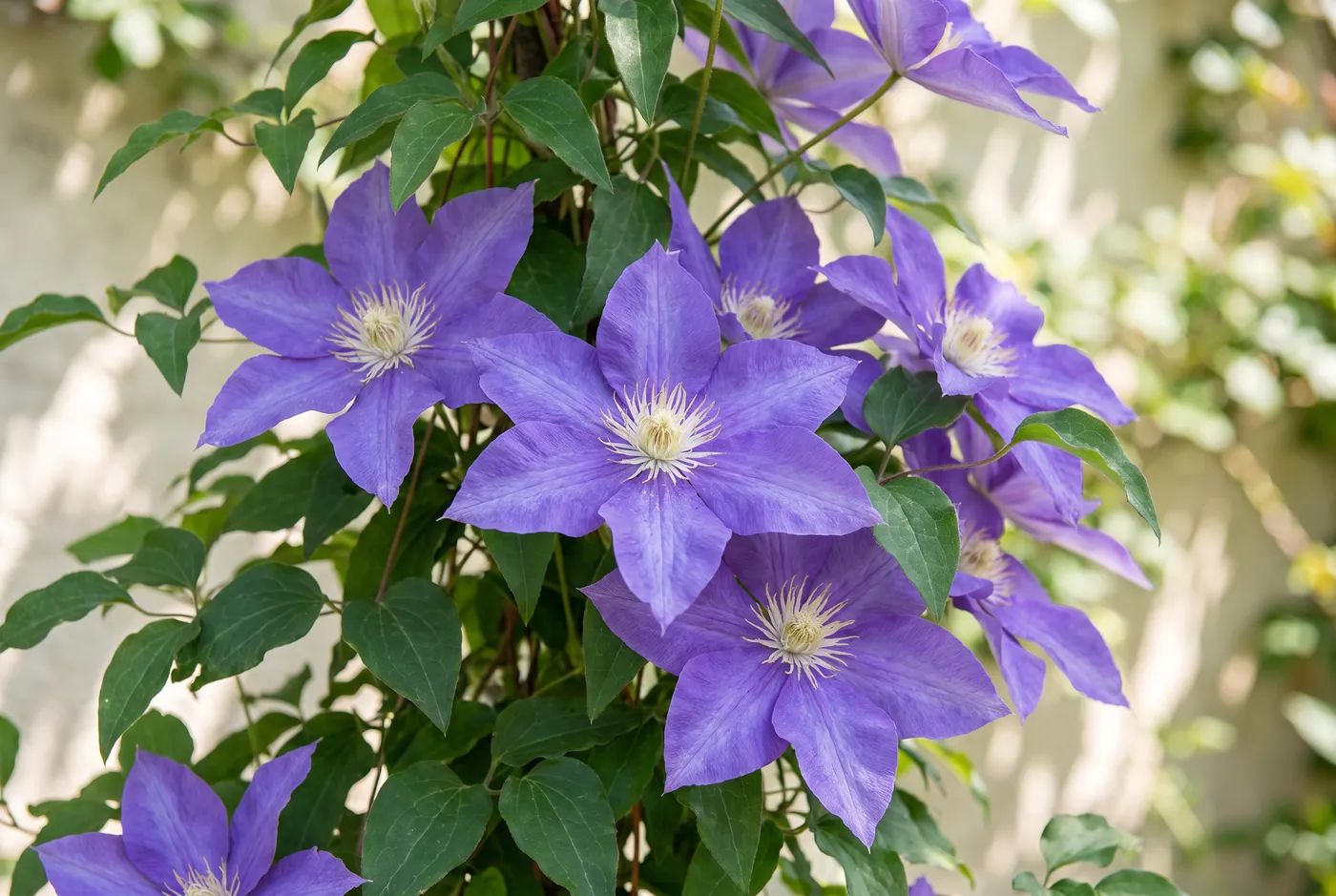
Clematis is a climber with large flat open flowers, in violet, white, deep purple, pink and wine red, some the width of a hand. It has moved into high-end wedding work over the last decade, usually with a length of vine left on so it trails, and it is expensive and short-lived in that role.
The coloured parts are sepals rather than petals, which is a recurring theme among flowers that hold their colour. And the silvery seed heads that follow, called old man's beard on the wild species, are cut and sold in their own right.
Primary Meanings
- Ingenuity: The Victorian meaning, from how it climbs
- Mental Beauty: The traditional association
- Aspiration: From its habit of climbing toward light
- Travellers' Joy: The country name for the wild species
Clematis Colors and Their Meanings
Violet Clematis
The classic large-flowered hybrid
White Clematis
Purity; heavily used in bridal work
Wine Red Clematis
Niobe and similar; dramatic
Pale Pink Clematis
Nelly Moser and the softer hybrids
Silver Seed Heads
Old man's beard; cut in autumn
Popular Clematis Types
Large-Flowered Hybrids
The showy garden and cut types
Clematis montana
Masses of small spring flowers on a huge vine
Clematis vitalba
Travellers' joy; the wild species with the seed heads
Viticella Group
Smaller nodding flowers, very free and reliable
Care Instructions
Cut Into Water
It wilts fast; carry a bucket to the plant.
Sear the Stem
Boiling water for 20 seconds helps considerably.
Keep Cool
Heat halves an already short life.
Keep the Seed Heads
They dry into silver plumes.
Best Occasions for Clematis
- Luxury Weddings: Trailing vine in high-end bouquets
- Summer Arrangements: Where a large flat flower is wanted
- Garden Planting: Its main and best use
- Autumn Dried Work: The silvery seed heads
Interesting Clematis Facts
- The coloured parts are sepals rather than true petals
- The seed heads of the wild species are called old man's beard
- Pruning is governed by three groups, and getting it wrong loses a year of flowers
- It climbs by twisting its leaf stalks rather than by tendrils
- It wants its roots shaded and its top in sun, which is why gardeners plant something over the base
How to Buy Good Clematis
If a florist has clematis at all it will be by order and expensive. Take stems with flowers fully open, because buds rarely develop once cut, and check the sepals are firm rather than limp or translucent at the edges. If you are cutting from a garden, carry a bucket to the plant, take a length of vine rather than a single flower, and sear the cut end in boiling water for twenty seconds before conditioning. It makes a real difference to an otherwise very short life.
Season, Availability and What Drives the Price
Late spring through summer depending on which group the variety belongs to, with montana flowering in a huge rush in May and the large-flowered hybrids through summer. There is very little commercial cut trade because it does not last, so what exists is specialist and priced accordingly. Autumn brings the seed heads, which are sold more readily than the flowers and last indefinitely.
What to Use Instead
Anemones give a similar large flat open face with a dark center at a fraction of the cost and last far longer. Lisianthus provides ruffled flowers on trailing stems for bridal work. Passion flower gives another climber's bloom, equally short-lived. For trailing vine in a bouquet, jasmine vine and smilax do the structural job. For the seed heads, nigella and scabiosa pods are the everyday alternatives.
Safety Around Pets and Skin
Clematis is toxic to cats, dogs and horses. It contains protoanemonin, the same irritant found across the buttercup family, which causes drooling, vomiting, diarrhoea and mouth ulceration. The sap also irritates human skin. The taste is bitter enough that most animals stop quickly, which limits serious cases, but it is on the ASPCA list and worth respecting.
Florist Tips for Clematis
Sear the stem
Twenty seconds of the cut end in boiling water, then straight into cold, transforms how long clematis lasts. It is the same trick that makes hellebores work.
Know your pruning group before you cut
Group 1 flowers on old wood and should barely be pruned; group 3 is cut almost to the ground each spring. Getting it wrong costs you a whole year of flowers, and it is the single most common clematis mistake.
Cut the seed heads in autumn
The silvery whorled seed heads are as good as the flowers and last indefinitely. They are also far easier to buy than the blooms.
Common Questions About Clematis
Why does cut clematis wilt so fast?
The stems are woody and hollow and struggle to draw water. Searing the cut ends in boiling water for about twenty seconds before conditioning helps considerably, but even then two to five days is realistic, which is why it is rare in shops.
What are clematis pruning groups?
Three categories that determine when you cut. Group 1 flowers on last year's wood and needs almost no pruning; group 2 flowers on both and gets a light tidy; group 3 flowers on new growth and is cut hard each spring. Pruning a group 1 in spring removes that year's flowers entirely.
What is old man's beard?
The silvery, whorled seed heads that follow the flowers, most conspicuous on the wild species Clematis vitalba. They are cut and sold as a dried product and last indefinitely.