About Hellebores
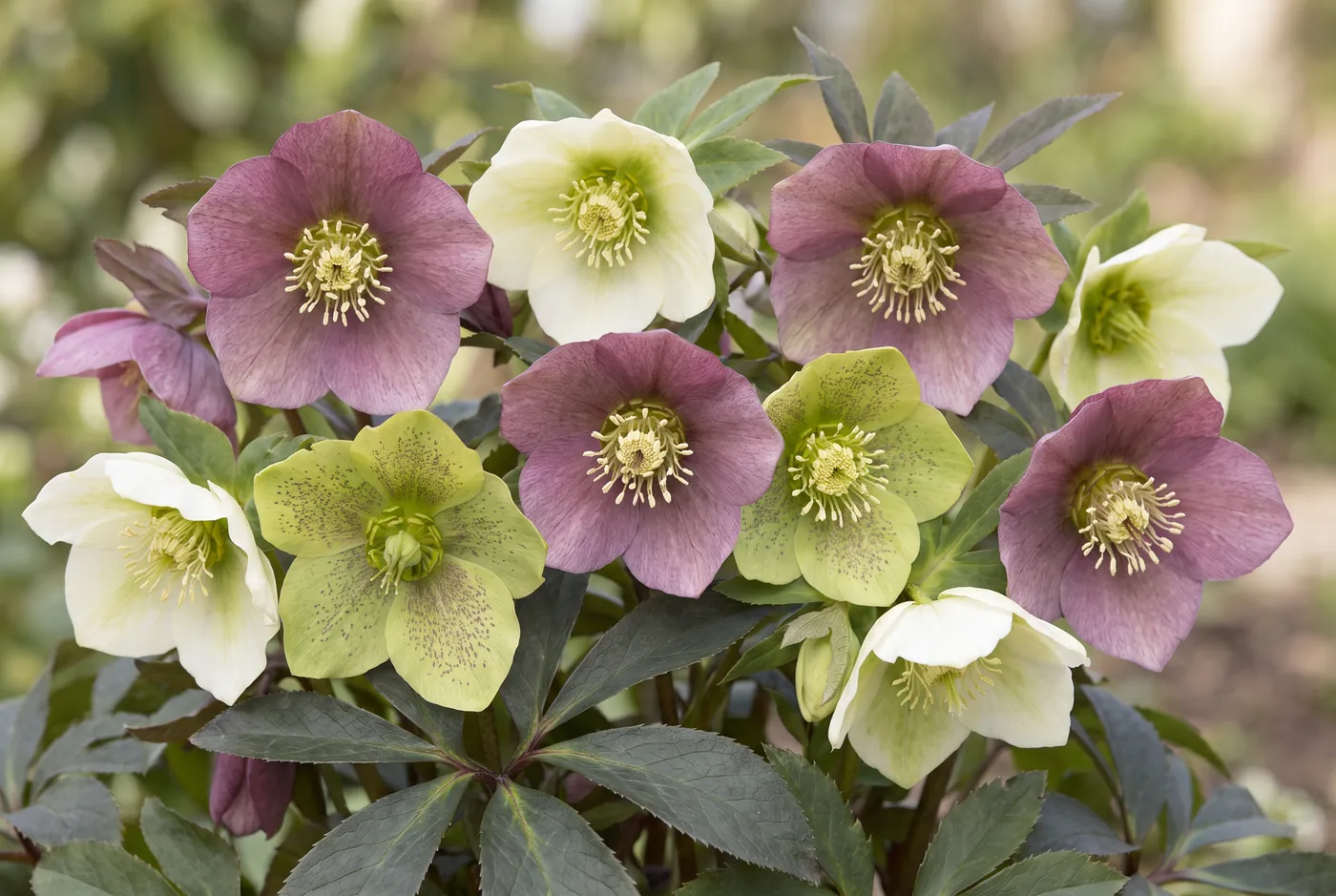
Hellebores flower when nothing else does, from Christmas through to early spring, in a colour range that runs from pure white through dusty pink and plum to near-black and a curious speckled green. The flowers nod downward on short stems, and the petals are not petals at all but sepals, which is why the colour lasts for months rather than days.
They are one of the very few genuine cut flowers of midwinter, and they are notorious for wilting almost immediately unless you know the trick. It is a real trick, it works, and almost nobody is told about it.
Primary Meanings
- Serenity: The modern association, from its quiet colouring
- Relief from Anxiety: From its long medicinal history
- Scandal: The Victorian meaning, owing to its toxicity
- Tranquillity: Commonly given for peace and calm
Hellebores Colors and Their Meanings
White Hellebore
Christmas rose; the earliest to flower
Plum Hellebore
Depth; among the most sought after
Dusty Pink Hellebore
The soft muted tone florists prize
Near-Black Hellebore
Dramatic and expensive
Green Hellebore
Corsican and speckled forms
Popular Hellebores Types
Helleborus niger
Christmas rose; pure white, flowers earliest
Helleborus orientalis
Lenten rose; the wide colour range, later flowering
Helleborus argutifolius
Corsican hellebore, green flowers and spiny leaves
Double Hybrids
Many-petalled forms, the most expensive
Care Instructions
Sear the Stem
Boiling water for 30 seconds. This is the trick.
Cut Mature Flowers
Wait until seed pods have begun to form.
Deep Cold Water
After searing, straight into deep water.
Wash Your Hands
All parts are toxic and the sap irritates.
Best Occasions for Hellebores
- Midwinter Arrangements: One of very few real winter cut flowers
- Christmas: The white Christmas rose specifically
- Winter Weddings: The muted colour range suits the season
- Sympathy: For its quiet, unshowy character
Interesting Hellebores Facts
- The coloured parts are sepals, not petals, which is why they last for months
- It flowers in midwinter, often through snow
- All parts are toxic and it was historically used as a poison and a purgative
- Cut stems wilt immediately unless the ends are seared in boiling water
- Flowers cut after seed pods form last far longer than young ones
How to Buy Good Hellebores
Look for flowers that are mature rather than freshly opened, which is the opposite of the usual advice. A hellebore whose center shows developing seed pods has set its stem and will last; one picked in first bloom will wilt no matter what you do. The sepals should be firm and slightly waxy, not papery. Check the stems are firm right to the cut. If a florist is selling hellebores they have usually already seared them, so ask, because it changes what you need to do at home.
Season, Availability and What Drives the Price
December through March, with Helleborus niger, the Christmas rose, opening earliest and the orientalis hybrids following through late winter. Supply is mostly from specialist growers rather than the big wholesalers, so availability varies enormously by region and by florist. Prices are high for a winter flower and highest for doubles and the near-black forms, which are slow to propagate. It is worth ordering ahead rather than expecting to find it in stock.
What to Use Instead
For the same nodding flat-faced flower, anemones cover late winter and early spring at far lower cost. Ranunculus arrives shortly after with a similar color range and a much easier temperament. For midwinter specifically the honest alternatives are forced bulbs, amaryllis or paperwhites, none of which look remotely similar. Nothing else combines that muted color palette with genuine winter flowering.
Safety Around Pets and Skin
Every part of a hellebore is toxic, to people, cats, dogs and horses. It contains cardiac glycosides and other irritants, and ingestion causes drooling, vomiting, abdominal pain, diarrhoea and in serious cases effects on heart rhythm. The sap also causes contact dermatitis in many people. Historically it was used deliberately as a poison and a violent purgative. Wear gloves if you handle quantities, wash your hands afterwards, and keep both plants and cut stems away from animals.
Florist Tips for Hellebores
Sear the stem ends in boiling water
This is the single thing that makes hellebores work as a cut flower. Stand the cut ends in freshly boiled water for about thirty seconds, then put them straight into deep cold water. Without it they wilt within hours; with it they last a week.
Cut them late, not early
A hellebore picked in first bloom will collapse. One picked after the seed pods have started to swell in the center has matured its stem and lasts far longer.
Float them if all else fails
Short-stemmed or wilting hellebores work beautifully floated face-up in a shallow bowl of water, which is how they are most often photographed.
Common Questions About Hellebores
Why do my hellebores wilt straight away?
Two reasons and both are fixable. Sear the cut ends in boiling water for about thirty seconds before arranging, and cut flowers that have already begun to form seed pods rather than ones in first bloom. Young stems have not matured enough to hold water.
Is a hellebore a rose?
No, despite Christmas rose and Lenten rose. It is in the buttercup family, unrelated to roses. The names come from the flower's shape and its timing around Christmas and Lent.
Are hellebores poisonous?
Yes, all parts, to people and to pets. They contain cardiac glycosides and irritant compounds, and the sap causes skin reactions in many people. Wear gloves when cutting and keep them away from animals and children.