About Nigella
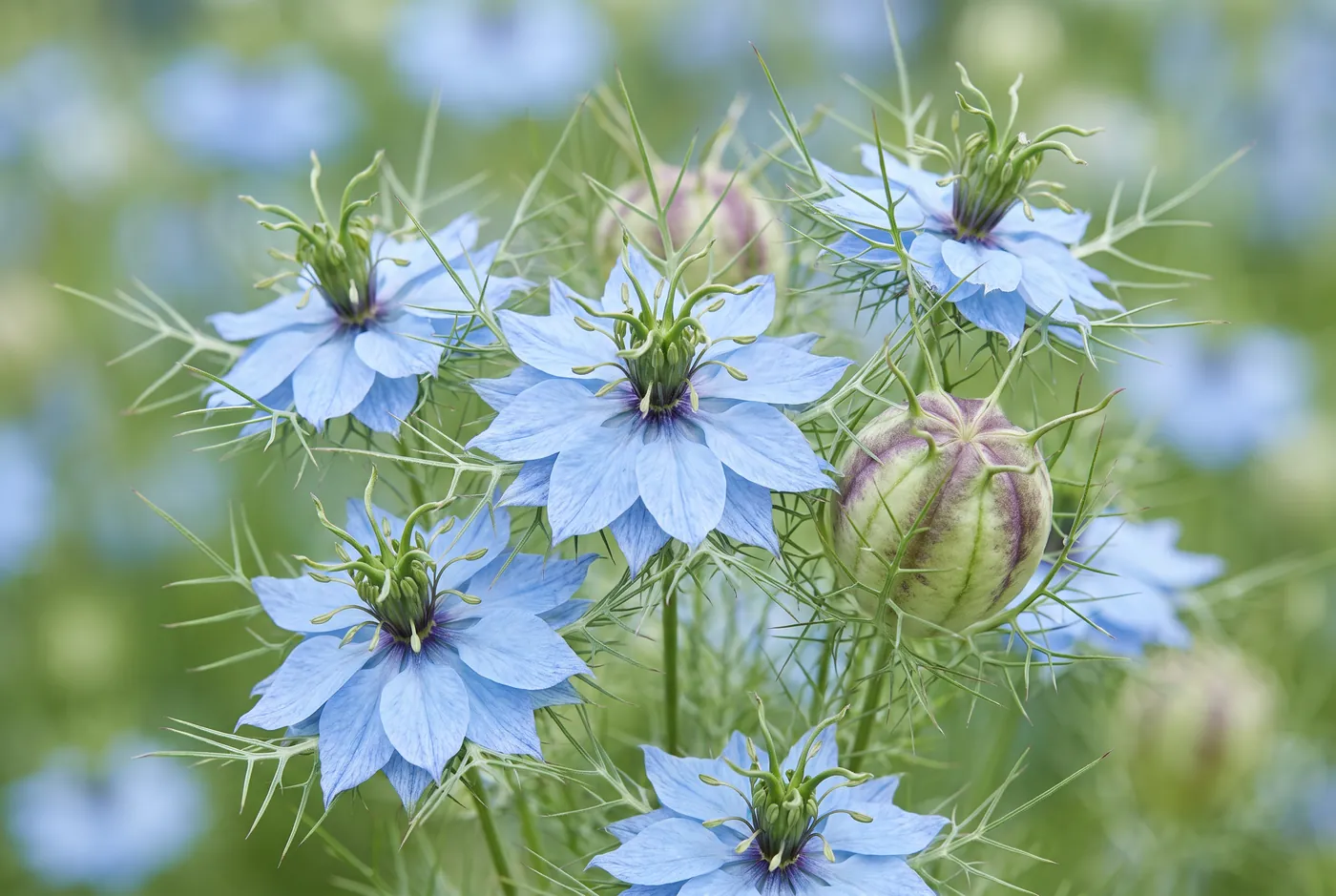
Nigella is called love in a mist because each flower sits inside a haze of fine thread-like foliage, as though it has been wrapped in green smoke. The flowers are usually sky blue, sometimes white or dusty pink, and the effect in a bouquet is unlike anything else.
Then it produces the second product: an inflated papery pod, striped maroon on green, shaped like a small balloon with horns. Florists buy the pods as readily as the flowers, and they dry indefinitely.
Primary Meanings
- Perplexity: The Victorian meaning, from the tangled foliage
- Love in a Mist: The common name is itself the meaning
- Delicacy: From the fine threads surrounding each bloom
- You Puzzle Me: The traditional message it carried
Nigella Colors and Their Meanings
Sky Blue Nigella
The classic and the reason to buy it
White Nigella
Purity; used in bridal work
Dusty Pink Nigella
Soft and increasingly popular
Deep Purple Nigella
The strongest colour available
Striped Pods
The inflated seed pods, sold separately
Popular Nigella Types
Miss Jekyll
The classic sky blue, the standard cut variety
Persian Jewels
A mixed range of blue, pink, white and purple
Nigella orientalis
Grown for its distinctive yellow-green pods
Nigella sativa
Black cumin, grown for the culinary seed
Care Instructions
Cut in Bud
Buy just opening; it goes over fast.
Shallow Water
Fine stems rot in a deep vase.
Cool Room
Heat shortens an already brief life.
Dry the Pods
Hang them and they last for years.
Best Occasions for Nigella
- Summer Weddings: The blue is genuinely hard to find elsewhere
- Cottage Bouquets: With cosmos, ammi and zinnias
- Dried Work: The pods are a staple of dried arrangements
- Cutting Gardens: Easy to grow and self-seeds freely
Interesting Nigella Facts
- Each flower sits inside a collar of thread-fine bracts, hence love in a mist
- The inflated striped pods are sold as a separate product and dry indefinitely
- Nigella sativa is black cumin, the culinary spice, a different species
- The blue is a true blue, which is rare among cut flowers
- It self-seeds so readily that one sowing usually becomes permanent
How to Buy Good Nigella
Buy flowers just opening, because nigella is short-lived and a fully open bloom has a few days at most. The misty collar of bracts should be bright green and intact, since that is most of the effect and it browns quickly. For pods, look for firm inflated balloons with clear maroon striping and no splits, because a split pod sheds its seed and collapses. Pods that rattle are fully dry and will last indefinitely.
Season, Availability and What Drives the Price
Early to midsummer for the flowers, and it is a short window. Like cosmos and zinnias this is largely a local grower's crop rather than an imported one, so availability depends on who is farming near you. The pods are a different matter: they are effectively a dried product, store well and can be bought most of the year. If you want nigella flowers for a wedding, the date has to suit the flower.
What to Use Instead
For genuine blue, delphinium and larkspur are the reliable options and last longer. Scabiosa gives similar airy movement on wiry stems. Ammi provides the same meadow haze in white. For the pods specifically, poppy pods and scabiosa pods do the same job and are easier to source. Nothing else has the collar of green threads, which is the whole character of the flower.
Safety Around Pets and Skin
Nigella damascena is not on the ASPCA toxic list, but the seeds of the genus contain compounds that can cause stomach upset in quantity, and this is a buttercup relative, a family with a general reputation for irritant sap. Treat it as mildly toxic: keep pods away from pets that chew, since the pods look like a toy and rattle. Nigella sativa, black cumin, is a different species and is eaten as a spice.
Florist Tips for Nigella
Buy the pods deliberately
They are a product, not a leftover. Striped nigella pods are a staple of dried work and are worth ordering as their own thing.
The green mist browns first
Judge freshness on the thread-like collar rather than the petals. Once it browns, the flower has lost most of what makes it worth buying.
Let some go to seed in a garden
It self-sows freely and comes back on its own. Leaving a few pods on the plant is the whole propagation method.
Common Questions About Nigella
Why is it called love in a mist?
Because each flower sits inside a collar of extremely fine, thread-like green bracts that surround it like a haze. The name describes exactly what you see.
Are nigella seeds the same as black cumin?
Not from this plant. Culinary black cumin is Nigella sativa, a different species in the same genus. The ornamental love in a mist is Nigella damascena and its seeds are not used in cooking.
What are the striped balloon pods?
The seed heads. After the flower finishes, the ovary inflates into a papery pod striped maroon over green, with horns at the top. They are sold as a cut product in their own right and dry more or less permanently.