About Liatris
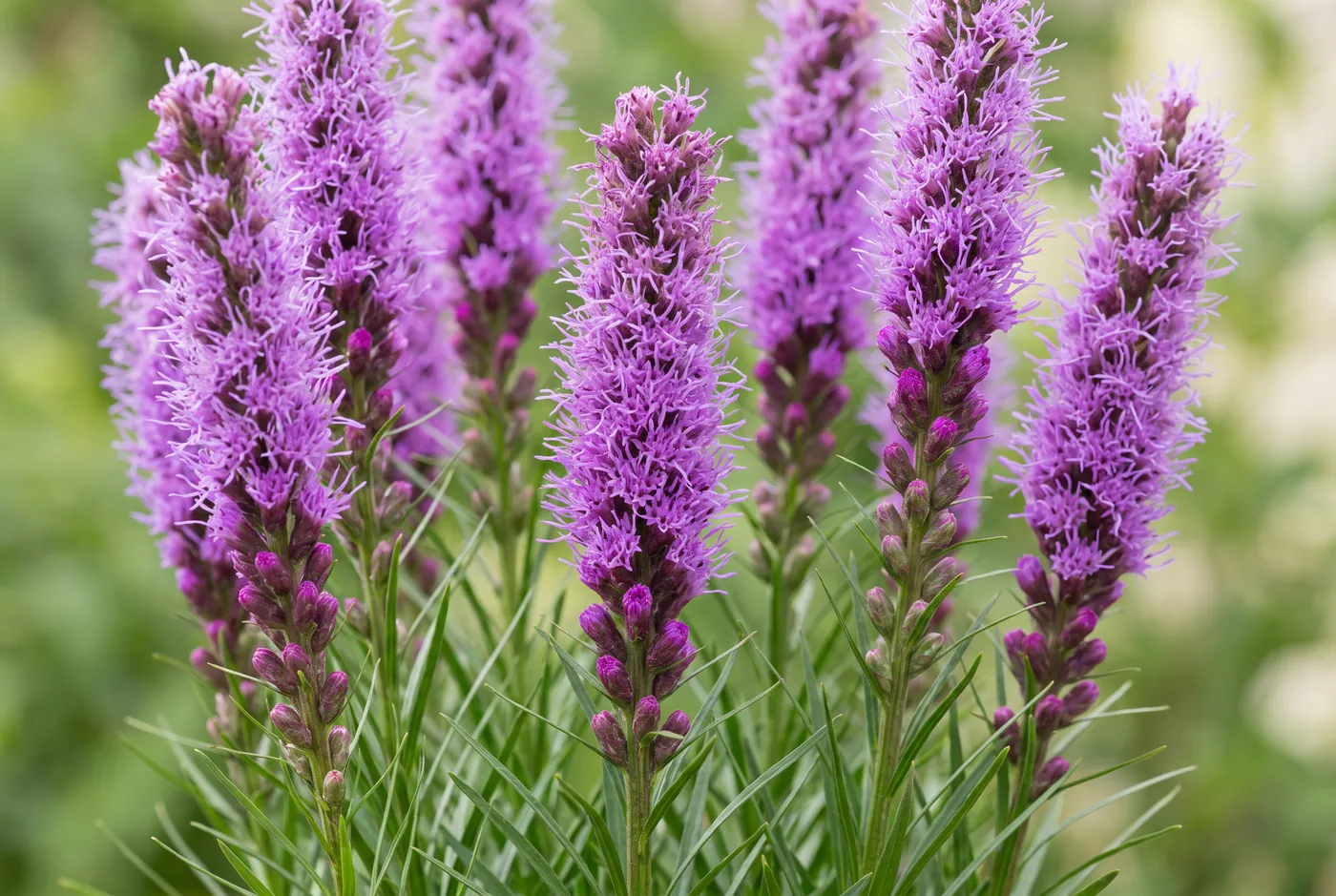
Liatris is a tall narrow spike densely packed with small feathery purple flowers, and it does something almost no other flower does: it opens from the top downward. Every other spike in a florist, snapdragon, gladiolus, stock, delphinium, opens from the bottom up. Liatris goes the other way, and once you know that you can never unsee it.
It is a North American prairie plant, tough and drought-resistant, and it lasts well over a week cut. It also dries and dyes readily, which is why it turns up in every colour imaginable at holidays.
Primary Meanings
- Joy: The common gifting meaning
- Happiness: The Victorian association
- Resilience: It survives drought and prairie fire
- Determination: From its straight upright growth
Liatris Colors and Their Meanings
Purple Liatris
The classic and the natural colour
White Liatris
Floristan White, the main alternative
Rose Liatris
Less common cultivars
Dyed Liatris
It takes dye easily; common at holidays
Popular Liatris Types
Liatris spicata
The commercial cut standard, dense purple spikes
Floristan Violet
Bred specifically for cutting, uniform and long
Floristan White
The white cutting variety
Liatris pycnostachya
Prairie blazing star, taller and looser
Care Instructions
Deep Water
Tall stems drink steadily.
Strip Spent Tops
It finishes at the top first; pick those off.
Recut Midweek
It lasts long enough to need one.
Dries Well
Hang it and it holds its shape.
Best Occasions for Liatris
- Mixed Bouquets: Vertical line at low cost
- Sympathy: Widely used in standing arrangements
- Prairie and Native Planting: A key North American garden plant
- Dried Work: It keeps shape and colour reasonably
Interesting Liatris Facts
- It opens from the top of the spike downward, unlike almost every other spike flower
- It is a North American prairie native and survives fire and drought
- It takes dye readily, so novelty colours are common
- Butterflies and bees favour it heavily
- The corms were used as food and medicine by several Native American peoples
How to Buy Good Liatris
Because it opens downward, judge it at the top of the spike rather than the bottom. You want the upper third open and feathery with the rest still in tight bud below, which gives you a week of flower moving down the stem. A spike already open along most of its length is near the end. Check the top has not gone brown and dry, since that is where it finishes first, and make sure the stem is rigid its whole length.
Season, Availability and What Drives the Price
Midsummer into early autumn for the field crop, with year-round supply from imports and greenhouse growers. It is one of the cheapest ways to get real height into an arrangement, which is why it appears so heavily in sympathy and standing work. Prices barely move seasonally. Dyed liatris shows up around Christmas and St Patrick's Day and costs a little more.
What to Use Instead
Snapdragons and stock give the same vertical line and open the conventional way, bottom to top. Veronica does the same job at a smaller, finer scale. Gladiolus gives far more height for similar money. Delphinium and larkspur cover the blue-purple range with more air. For the specific feathery texture on a narrow spike, liatris is the only real option.
Safety Around Pets and Skin
Liatris is not listed as toxic to cats or dogs by the ASPCA and is treated as safe. It is a good choice for a house with animals, and it is also one of the better garden plants for pollinators, which is a reasonable secondary argument for using the native species rather than a dyed novelty stem.
Florist Tips for Liatris
It opens from the top down
This is genuinely unusual and it changes how you buy it. Look at the top of the spike for freshness, not the bottom, and buy stems where the upper third has opened and the rest is still tight.
Pick off the finished top
As the top browns, snap it off. The stem keeps opening downward and looks far better without a dead crown on it.
Dyed liatris is everywhere at holidays
It takes color readily, so blue, green and red liatris in December is dyed rather than grown. Nothing wrong with it, but that is what you are buying.
Common Questions About Liatris
Does liatris really open from the top down?
Yes, and it is one of very few flowers that does. Snapdragons, gladiolus, stock and delphinium all open from the bottom up. Liatris starts at the tip and works downward, which is why you judge freshness at the top of the spike.
What is blazing star?
Another name for the same plant, along with gayfeather. Liatris is a North American prairie native and the common names come from its wild habitat rather than the florist trade.
Is liatris safe for pets?
Yes. It is not on the ASPCA toxic list for cats or dogs, which makes it a safer choice than many other tall spike flowers such as delphinium or gladiolus.