About Snowdrops
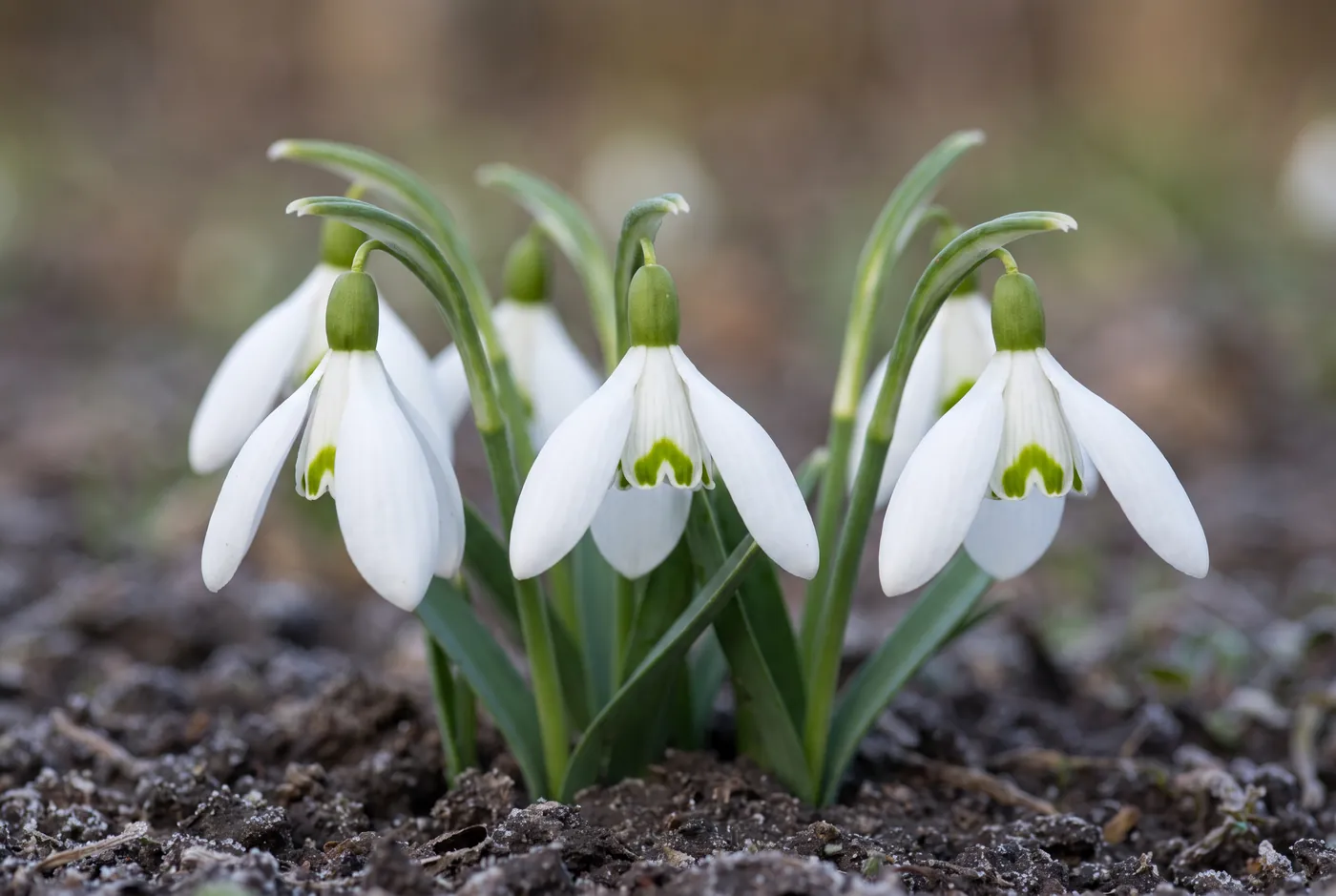
Snowdrops are the first thing to flower each year, often pushing through frozen ground while everything else is still dormant. Three outer white petals hang over three shorter inner ones marked with green, on a stem barely long enough to pick. They are January's birth flower.
They are almost never sold as cut flowers, because the stems are too short and too fragile to be worth handling commercially. What does exist is an extraordinary collector's market: rare varieties change hands for hundreds of pounds a bulb, and the people who buy them are called galanthophiles.
Primary Meanings
- Hope: The classic meaning, from flowering before winter ends
- Consolation: The Victorian association
- Purity: From the pure white flower against bare ground
- Rebirth: The first sign of the year turning
Snowdrops Colors and Their Meanings
White Snowdrop
Hope and purity; effectively the only colour
Green-Marked
The inner petal markings collectors study
Yellow-Marked
Rare yellow ovary forms, highly prized
Popular Snowdrops Types
Galanthus nivalis
The common snowdrop, and what most people mean
Galanthus elwesii
Giant snowdrop, larger flowers and broader leaves
Flore Pleno
The double form, fuller and heavier
Named Cultivars
Hundreds exist, distinguished by tiny marking differences
Care Instructions
Keep Cold
They collapse in a warm room within hours.
Shallow Water
Very short stems need almost nothing.
Tiny Vases
A shot glass is the right scale.
Buy In the Green
Bulbs in leaf transplant far better than dry ones.
Best Occasions for Snowdrops
- January Birthdays: The birth flower for the month
- Sympathy: The consolation and hope associations
- Early Spring: Often the only thing flowering
- Garden Gifting: Given as bulbs in the green rather than cut
Interesting Snowdrops Facts
- It is the birth flower for January
- Rare cultivars sell for hundreds of pounds per bulb to collectors
- Collectors of snowdrops are called galanthophiles
- The leaf tips are hardened to push through frozen ground
- They contain galantamine, used in medicine for Alzheimer's symptoms
How to Buy Good Snowdrops
You are far more likely to buy bulbs than cut stems, and the rule there is to buy them in the green: lifted while still in leaf, in late winter, rather than as dry bulbs in autumn. Dry snowdrop bulbs desiccate easily and establish poorly, which is why so many people find they never come up. If you do find cut stems, look for firm green stems and closed or barely open flowers, and expect to keep them somewhere very cold to get more than a couple of days.
Season, Availability and What Drives the Price
January and February, and in a mild year late December. They are one of the few flowers with essentially no commercial cut trade, because the stems are short, fragile and flower at a time when nobody has set up to harvest them. The market that does exist is in bulbs, and it splits sharply: common Galanthus nivalis costs almost nothing by the hundred, while a single bulb of a sought-after named cultivar can reach several hundred pounds at auction.
What to Use Instead
For small white spring flowers, lily of the valley is the obvious relative in scale and color, arriving several months later. Muscari gives the same delicacy in blue. Paperwhite narcissus covers the same weeks with far more presence and scent. Hellebores flower alongside snowdrops and actually work as a cut flower, which snowdrops largely do not. For a genuine January cut flower the honest answer is hellebores or forced bulbs.
Safety Around Pets and Skin
Snowdrops are toxic to cats, dogs and people. The bulbs are the dangerous part and contain galantamine and related alkaloids, causing vomiting, drooling, diarrhoea and in larger amounts tremors and low blood pressure. Bulbs are occasionally mistaken for onions or shallots by people, which is the main route to serious poisoning. Keep bulbs away from pets and label them if you store them near food.
Florist Tips for Snowdrops
Buy bulbs in the green
Snowdrop bulbs sold dry in autumn establish badly because they dry out. Bulbs lifted in leaf in late winter, sold as in the green, take far more reliably.
Keep cut stems cold or do not bother
In a heated room they last hours rather than days. A cold windowsill or an unheated porch is the difference.
The green markings are the whole hobby
What separates a common snowdrop from a hundred-pound one is the pattern of green on the inner petals. If a variety name is on the label, that is what it refers to.
Common Questions About Snowdrops
Why can't I buy snowdrops as cut flowers?
The stems are very short and fragile and they flower in midwinter, so there has never been a commercial cut trade in them. What is sold instead is bulbs, particularly in the green in late winter, which is also the best way to establish them in a garden.
Why do some snowdrop bulbs cost hundreds of pounds?
Collectors, called galanthophiles, pay for rare named cultivars distinguished by small differences in the green markings on the inner petals. Single bulbs of the most sought-after varieties have sold for several hundred pounds at auction.
Are snowdrops poisonous?
Yes. The bulbs especially contain alkaloids that cause vomiting, drooling and in quantity more serious effects, in people as well as cats and dogs. Bulbs have been mistaken for onions, which is how most serious human cases happen.