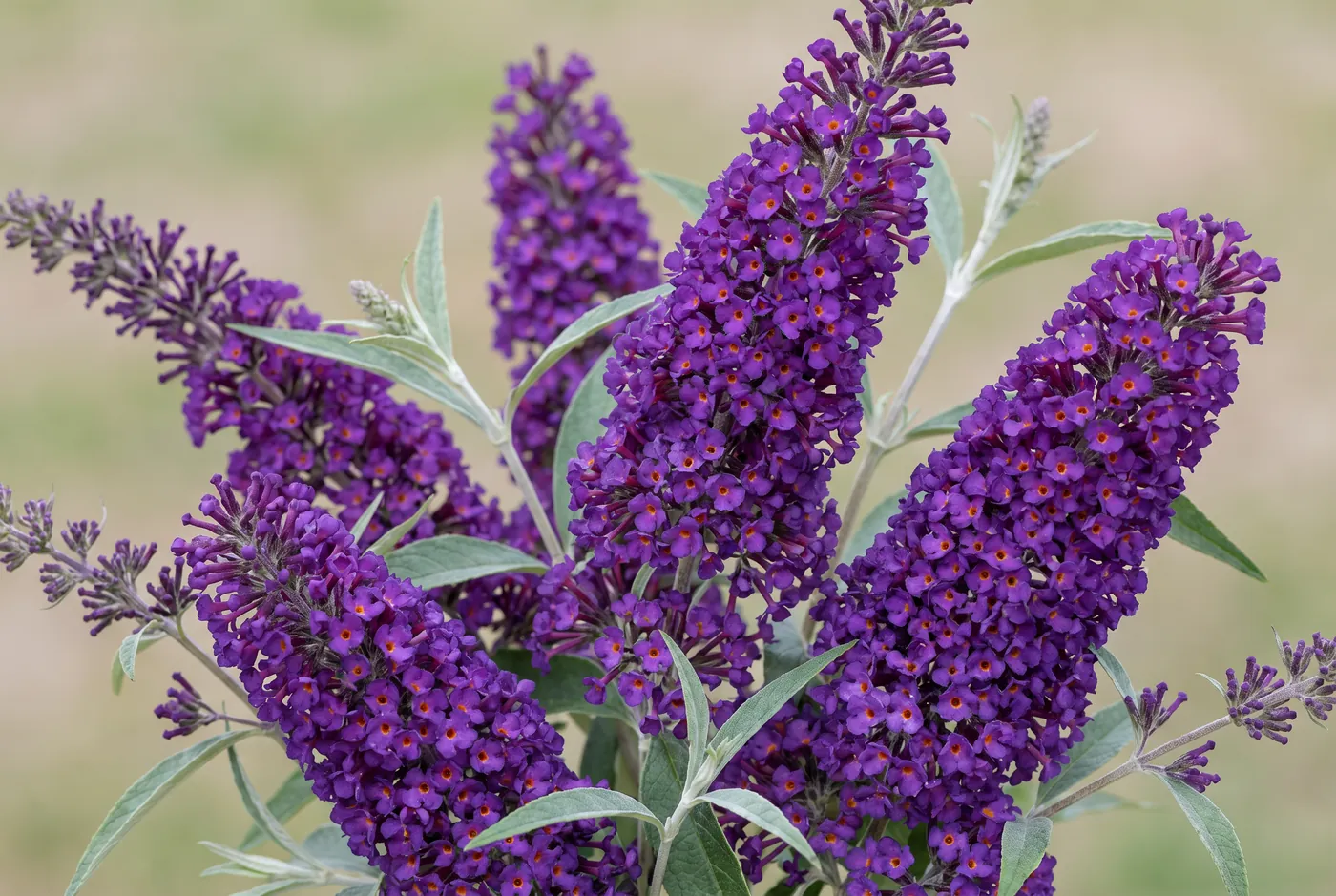
About Buddleia
Buddleia is a long tapering cone of hundreds of tiny flowers, usually purple with an orange eye, carrying a honey scent that draws butterflies in numbers few other plants manage. It flowers from midsummer into autumn and grows anywhere, including out of walls and railway ballast.
That last quality is the problem. Buddleia is invasive across much of the United States, listed as a noxious weed in Oregon and Washington, and it damages masonry and displaces native plants. It genuinely does feed adult butterflies, and it genuinely does not feed their caterpillars, which is the part usually left out.
Primary Meanings
- Rebirth: It colonises damaged and abandoned ground
- Attraction: The obvious association with butterflies
- Resilience: It grows where nothing else will
- Transformation: The butterfly link
Buddleia Colors and Their Meanings
Purple Buddleia
The classic and most common
White Buddleia
White Profusion and similar
Magenta Buddleia
Royal Red, despite the name
Yellow Buddleia
Buddleja globosa; round orange-yellow balls
Popular Buddleia Types
Buddleja davidii
The common butterfly bush and the invasive one
Buddleja globosa
Orange ball tree; spherical flowers, not cones
Sterile Cultivars
Bred seedless specifically to avoid invasiveness
Dwarf Series
Compact forms for containers
Care Instructions
Split the Stem
Woody; split the cut end.
Deep Water
It drinks heavily and wilts fast if dry.
Strip Leaves
The large leaves transpire hard.
Deadhead in the Garden
It prolongs flowering and stops seeding.
Best Occasions for Buddleia
- Late Summer Arrangements: Height and scent in the right season
- Cottage Style: Loose informal bouquets
- Wildlife Gardens: With the caveats below
- Cutting Gardens: One plant supplies endless stems
Interesting Buddleia Facts
- It is invasive across much of the US and a listed noxious weed in Oregon and Washington
- It feeds adult butterflies but is not a host plant for their caterpillars
- It colonises walls, bomb sites and railway ballast, damaging masonry
- Sterile seedless cultivars exist specifically to avoid the problem
- It is named after Adam Buddle, an English botanist who never saw it
How to Buy Good Buddleia
You will be cutting this from a garden, because there is no commercial trade. Take cones where the lower two thirds have opened and the tip is still budded, since they open upward. Cut into water immediately, split the woody end, and strip most of the large leaves, which transpire hard and pull water away from the flowers. Expect three to six days. Cones that have gone brown at the base are finished and will shed.
Season, Availability and What Drives the Price
Midsummer into autumn, and a single established shrub produces an almost unlimited supply. Deadheading prolongs flowering considerably and, more importantly, stops it setting the seed that makes it a problem. If you are planting one, sterile cultivars are widely available and are the responsible choice in most of the United States.
What to Use Instead
Lilac gives a similar panicle and scent in spring. Phlox covers the same season with a domed head and a comparable fragrance. Veronicastrum provides the tapering spire without the invasiveness. For genuinely useful butterfly planting, native asters, milkweed and echinacea feed caterpillars as well as adults, which buddleia does not.
Safety Around Pets and Skin
Buddleia is not listed as toxic to cats or dogs by the ASPCA. The real caution here is ecological rather than medical. In much of the United States it is invasive: it is a listed noxious weed in Oregon and Washington and it displaces native vegetation along riverbanks and disturbed ground. If you want to plant it, choose a sterile seedless cultivar, and check your state's rules first.
Florist Tips for Buddleia
Deadhead it hard
Cutting spent cones off keeps it flowering for weeks longer and stops it setting seed. In the US that second reason matters more than the first.
It feeds butterflies, not caterpillars
Adult butterflies drink from it readily, which is why it looks so good for wildlife. But nothing lays eggs on it, so it supports no life cycle. Native plants alongside it are what actually help.
Buy a sterile cultivar
Seedless varieties exist precisely because of the invasiveness problem and they perform just as well. There is no good reason to plant a seeding one in the US.
Common Questions About Buddleia
Is buddleia bad for the environment?
In much of the United States, yes. It is invasive, a listed noxious weed in Oregon and Washington, and it displaces native plants along waterways and disturbed ground. Sterile seedless cultivars avoid the problem and are the sensible choice.
Does butterfly bush actually help butterflies?
Partly. It provides nectar for adults, which is why it is covered in them. But it is not a host plant, so no butterfly lays eggs on it and no caterpillars feed on it. A garden with only buddleia supports adults passing through and nothing else.
Can you buy buddleia as a cut flower?
Not commercially. It wilts quickly and there is no trade in it. Anyone using it cut is taking it from a garden, where a single shrub provides more than enough.