About Astilbe
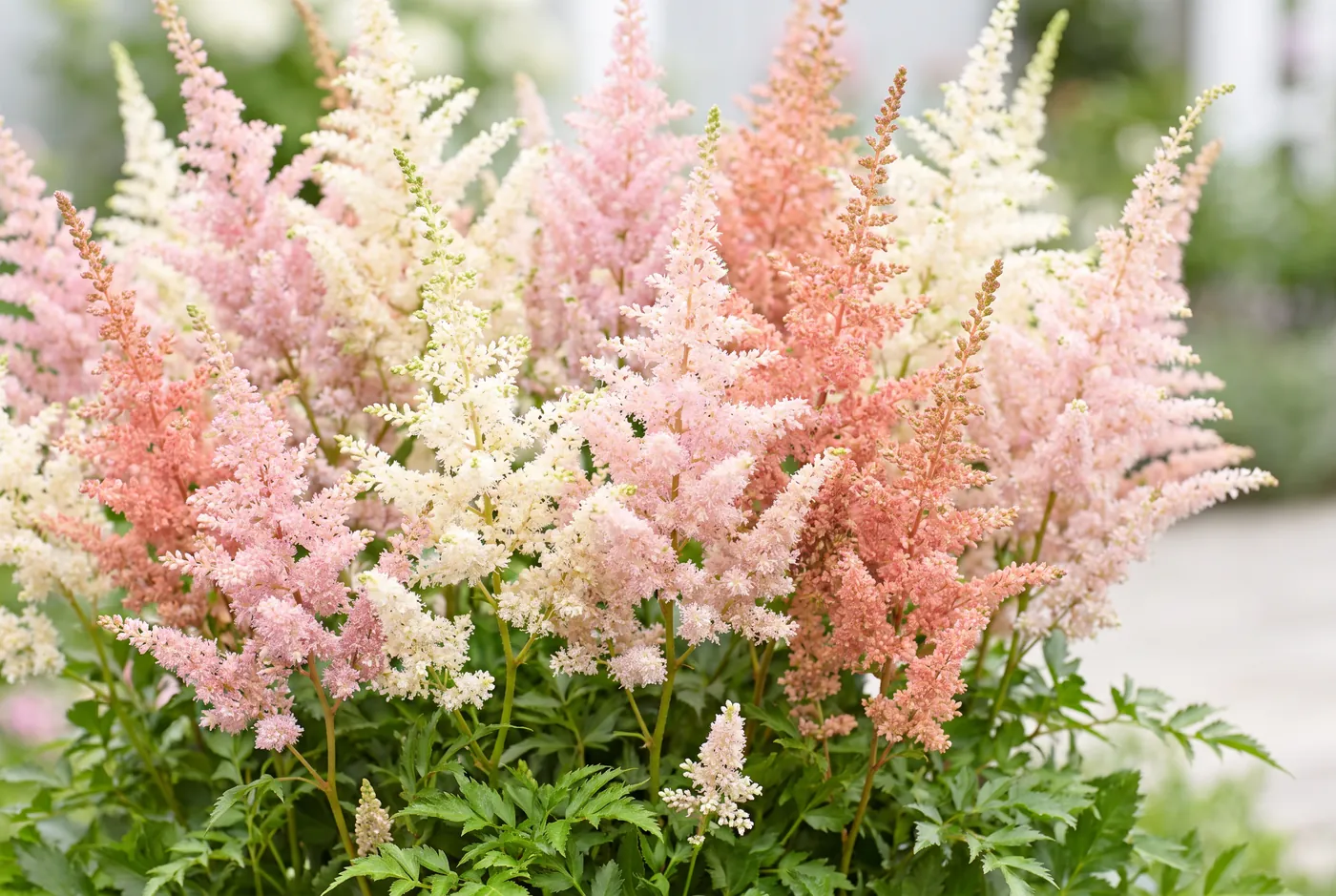
Astilbe is a plume of thousands of tiny flowers, soft as a feather and held on a straight stem above ferny foliage. In pinks, whites, corals and deep reds, it gives a bouquet texture and lift without weight, which is why it turns up constantly in wedding work.
It also drinks harder than almost anything else in the cooler, and a stem allowed to run dry for even a short time will not recover. That single fact is most of what you need to know to use it successfully.
Primary Meanings
- Patience: The traditional meaning, from its slow establishment
- Dedication: Commonly given to mark long commitment
- I Will Still Be Waiting: The Victorian message it carried
- Delicacy: From the featherlike plumes
Astilbe Colors and Their Meanings
White Astilbe
Purity; the bridal standard
Blush Astilbe
Softness; the most requested shade
Coral Astilbe
Warmth and energy
Deep Red Astilbe
Intensity; the darkest varieties
Lilac Astilbe
Grace, less commonly grown
Popular Astilbe Types
Arendsii
The tall hybrid group grown for cutting
Chinensis
Stiffer, more upright plumes, later flowering
Japonica
Compact and early, the forced glasshouse type
Thunbergii
Arching, more open plumes with movement
Care Instructions
Never Let It Dry
The single most important rule. It will not recover.
Deep Water
Fill the vase; it drinks constantly.
Recut Under Water
Air locks in the fine stem are fatal.
Cool Room
Heat pulls water through faster than it can drink.
Best Occasions for Astilbe
- Weddings: Texture and lift without weight; its main use
- Summer Arrangements: Peak season and best quality
- Sympathy: The white forms, for softness
- Dried Work: It dries acceptably, fading to fawn
Interesting Astilbe Facts
- The plumes are made of thousands of individual tiny flowers
- It drinks more water than almost any common cut flower
- A stem left out of water even briefly rarely recovers
- It is a shade plant, unusual among flowers grown for cutting
- The name means without brilliance, a reference to the dull leaves
How to Buy Good Astilbe
Ask when it came in and whether it has been out of water at any point, because the answer decides everything. Look for plumes with most of the tiny flowers open and fluffy but none browning at the tips, which is where age shows. The stem should be firm and the ferny foliage crisp. Any stem that looks even slightly limp in the shop is already finished, and no amount of conditioning at home will bring it back.
Season, Availability and What Drives the Price
Late spring through summer is the field crop, with forced glasshouse stems appearing slightly earlier at higher prices. Peak wedding demand lands squarely on the natural season, particularly for white and blush, so June and July are the busiest and dearest weeks. Out of season it is imported and both shorter and more expensive. It is never a cheap flower, because it takes several years to establish a cutting crop.
What to Use Instead
Solidago gives a similar feathered plume in yellow at a fraction of the price. Lilac provides the same soft mass with scent, in an even shorter season. Spirea reads very similarly and is closely related. For texture without the thirst, limonium and waxflower are far more forgiving. Nothing else gives quite the same weightless lift, which is why florists keep using it despite the handling.
Safety Around Pets and Skin
Astilbe is not toxic to cats or dogs and is not listed by the ASPCA as a hazard. It is a safe choice for a household with animals, which is worth noting since it appears so often in wedding arrangements that end up in family homes afterwards.
Florist Tips for Astilbe
Water is the whole flower
Astilbe drinks harder than almost anything sold. Keep the vase full, top it up daily, and never leave stems lying out while you arrange. A brief dry spell is permanent damage, not a temporary wilt.
Recut under water
The stems are fine enough to air lock immediately. Cutting them submerged avoids it and is worth the mess.
Check for limpness before buying
It is the one flower where a slightly tired stem in the shop is worthless. Firm or walk away.
Common Questions About Astilbe
Why did my astilbe wilt immediately?
It was almost certainly out of water at some point, in the shop or on the way home. Astilbe drinks extremely heavily and a stem that has dried out cannot be revived, unlike roses or hydrangeas which often come back.
Can astilbe be dried?
Yes, though it fades. Hang plumes upside down in a dry place and they hold their shape while the color softens to fawn. It is used this way in autumn arrangements.
Is astilbe safe around pets?
Yes. It is not toxic to cats or dogs and does not appear on the ASPCA hazard list.