About Birds of Paradise
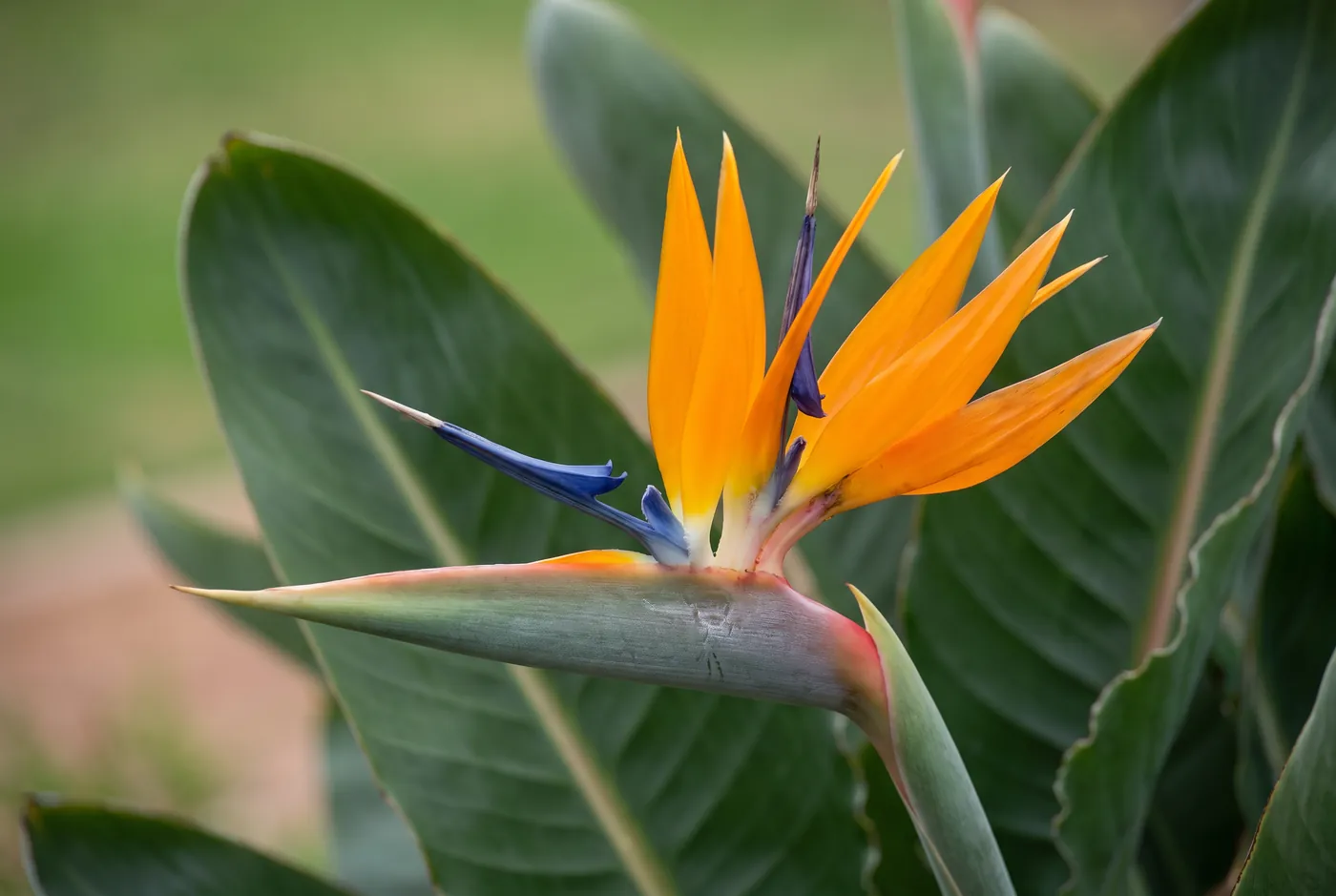
Nothing else in a flower shop looks like this. A hard grey-green beak lying horizontal at the top of a tall stem, from which orange sepals and a blue tongue emerge in sequence, exactly resembling the head of a crane. It is one flower per stem, it is expensive, and it does not need anything else in the vase.
It is the official flower of Los Angeles, it appears on the South African fifty cent coin, and in the wild it is pollinated by birds standing on the blue part.
Primary Meanings
- Freedom: The most cited meaning, from the bird in flight image
- Joy and Paradise: The Victorian association on its arrival in Europe
- Faithfulness: In some traditions, from its long-lasting bloom
- Magnificence: Given to mark something notable
Birds of Paradise Colors and Their Meanings
Orange and Blue
The classic form, Strelitzia reginae
White Bird of Paradise
Strelitzia nicolai, a much larger plant
Yellow Bird of Paradise
Mandela's Gold, a rare bred form
Popular Birds of Paradise Types
Strelitzia reginae
The standard orange and blue cut flower
Strelitzia nicolai
Giant white species, grown mainly as foliage
Mandela's Gold
Yellow-sepalled variety, decades in the breeding
Juncea
Narrow rush-like leaves, the same flower on a leafless plant
Care Instructions
Deep Water
Tall heavy stems need depth and a stable vase.
Never Chill
Tropical. Cold blackens the sepals.
Open It Yourself
Ease the next bloom out of the beak by hand.
Recut Weekly
It lasts long enough to need a second cut.
Best Occasions for Birds of Paradise
- Statement Arrangements: One stem is a whole display
- Tropical Themes: The defining flower of the style
- Congratulations: The freedom and magnificence meanings
- 9th Anniversary: The traditional flower for the milestone
Interesting Birds of Paradise Facts
- Each beak-like bract holds several flowers that emerge one at a time
- In the wild, sunbirds perch on the blue petal and trigger the pollen
- It is the official flower of the City of Los Angeles
- Mandela's Gold took twenty years of breeding to stabilise the yellow
- Its genus honours Queen Charlotte of Mecklenburg-Strelitz
How to Buy Good Birds of Paradise
Buy one with the first flower just emerging rather than fully out, because each beak holds several blooms that come out in sequence and you want that sequence ahead of you. The beak itself should be firm and cleanly gray-green, with no black edges. Black or water-soaked patches are cold damage and the stem will not recover. Check the stem is rigid its whole length and the cut end is not dried and split, which is common on stems that have been standing dry in a display bucket.
Season, Availability and What Drives the Price
Grown commercially in California, Florida, South Africa and Central America, and available all year with a modest peak in the cooler months when the plants flower most freely. Price is high and fairly stable, because this is a single-stem product and there is no volume market to push it around. It is worth thinking of as a sculpture rather than a bunch: one or three stems in a tall vase is the intended purchase, and buying more rarely improves it.
What to Use Instead
Anthurium gives the same tropical, sculptural quality and lasts far longer for less money. Heliconia is the closest true relative in feel, with hanging lobster-claw bracts. Ginger flowers give tropical scale with a softer form. Protea offers the same one-stem-is-enough drama in a completely different, more textural direction. For the specific bird silhouette there is no substitute at all, which is the point.
Safety Around Pets and Skin
Bird of paradise is toxic to cats and dogs. The seeds and the flower are the dangerous parts, containing hydrocyanic acid and tannins, and ingestion causes vomiting, drooling, diarrhoea and drowsiness. Serious cases are uncommon because the flower is unappealing to chew, but the seeds are the real hazard and cut stems occasionally carry them. Keep it away from animals, and note this is a different plant from the shrub also called bird of paradise, Caesalpinia, which is more toxic again.
Florist Tips for Birds of Paradise
Open the next flower yourself
Once the first bloom fades, do not throw the stem away. Slit along the top of the beak with a thumbnail and ease the next folded flower out with your fingers, then fan the sepals. Florists do this routinely and it doubles what you get from a stem.
Never buy one from a chilled display
Cold turns the beak black within days of getting home. Anything tropical should be at room temperature in the shop.
One stem is a display
It reads as deliberate on its own in a tall narrow vase. Mixing it into a bunch usually wastes it.
Common Questions About Birds of Paradise
How do I get the second flower to open?
By hand. Each beak-shaped bract holds several flowers folded inside. When the first one fades, run a thumbnail along the top seam of the beak and gently ease the next one out, then spread the sepals. It is standard florist practice and gets two or three flowers from one stem.
Why did my bird of paradise turn black?
Cold. It is a tropical plant and refrigeration or a cold journey home causes blackening along the beak that shows up over the following days. It cannot be reversed, so buy from an unchilled display and keep it warm.
Are birds of paradise toxic to pets?
Yes. The flower and especially the seeds are toxic to cats and dogs, causing vomiting, drooling and drowsiness. Keep stems out of reach.