About Nerine
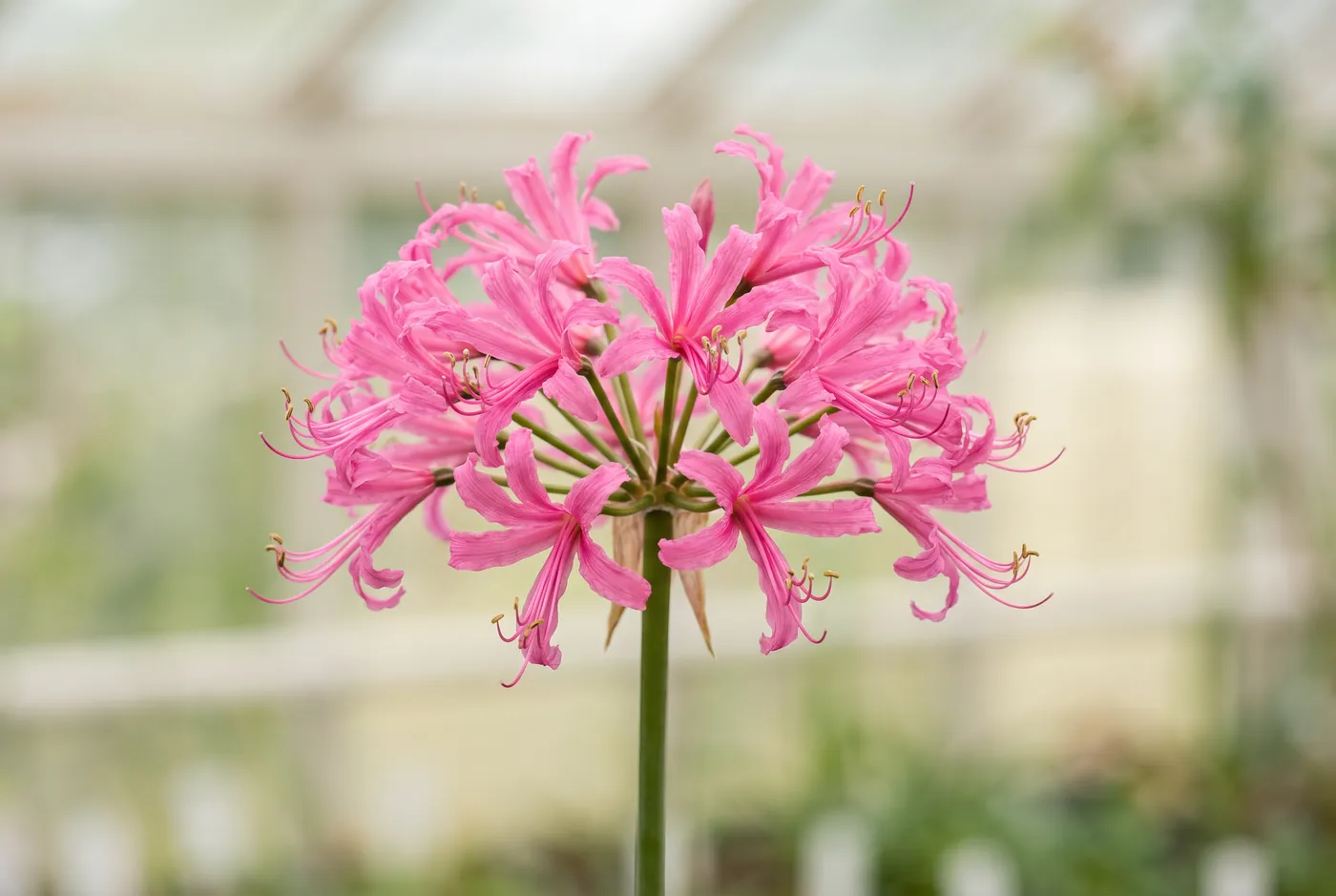
Nerine flowers on a bare stem in autumn, when the garden is finishing and the flower trade has little to offer. An umbel of six or more blooms opens at the top of a leafless stalk, each with narrow recurved petals in vivid pink, coral or white, and the petals genuinely sparkle in direct light because of crystalline cells in their surface.
It is also called Guernsey lily, after a shipwreck: bulbs washed ashore on Guernsey in the seventeenth century and naturalised there, and the island has been associated with them ever since.
Primary Meanings
- Good Fortune: From the accidental arrival on Guernsey
- Freedom: The traditional South African association
- Independence: It flowers on a bare stem with no foliage
- Persistence: It flowers when almost nothing else does
Nerine Colors and Their Meanings
Vivid Pink Nerine
Bowdenii; the classic and hardiest
Coral Nerine
Sarniensis types, more tender
White Nerine
Purity; used in bridal work
Scarlet Nerine
The original Guernsey lily colour
Popular Nerine Types
Nerine bowdenii
The hardy garden and cut-flower standard, bright pink
Nerine sarniensis
Guernsey lily proper; scarlet, tender, glittering
Nerine undulata
Crisped narrow petals, delicate and late
Named Hybrids
A wide colour range bred for cutting
Care Instructions
Clean Water
Change it regularly; hollow stems foul water.
Recut
It lasts weeks, so recut mid-life.
Cool Room
Cool conditions extend an already long life.
Pick Off Spent Blooms
Each umbel opens in sequence.
Best Occasions for Nerine
- Autumn Arrangements: Its whole season, and its main value
- Weddings: Late-season events, where colour is scarce
- Sympathy: The white and pale forms
- Long-Lasting Gifts: Two to three weeks is normal
Interesting Nerine Facts
- The petals contain crystalline cells that make them sparkle in direct light
- Guernsey lily comes from bulbs washed ashore in a seventeenth-century shipwreck
- It flowers on a bare stem, with the leaves arriving separately
- Vase life of two to three weeks is unusually long for an autumn flower
- The genus is South African, not from the Channel Islands
How to Buy Good Nerine
Buy an umbel where two or three flowers have opened and the rest are still in colored bud, since they open in sequence over a week or more. The bare stem should be firm and evenly green with no soft patch just under the head, which is where it collapses. Look at the petals in the light: fresh nerine has a distinct sparkle, and a stem that looks flat and matt has usually been standing a while. Brown papery edges on any open flower date the whole stem.
Season, Availability and What Drives the Price
September into November, and that autumn timing is exactly why the trade values it. It arrives as dahlias finish and before the winter flowers start, in colors that are hard to find at that point in the year. Limited forced supply exists at other times at a premium. Bowdenii is the workhorse and the most affordable; sarniensis, the true Guernsey lily, is tender, glasshouse-grown and considerably dearer.
What to Use Instead
Agapanthus gives a similar umbel on a bare stem earlier in the year. Amaryllis provides scale and drama in winter from the same family. For autumn pink specifically, dahlias and chrysanthemums cover the season at lower cost. Lilies give the recurved petal shape at a much larger size. Nothing else combines a bare stem, an autumn season and that particular vivid pink.
Safety Around Pets and Skin
Nerine is toxic to cats and dogs. It is in the Amaryllidaceae, the same family as amaryllis and daffodils, and contains lycorine and related alkaloids. The bulb is the most dangerous part, causing vomiting, drooling, diarrhoea and lethargy, but the cut stems and flowers are also toxic. Keep it away from animals and wash your hands after handling bulbs.
Florist Tips for Nerine
Look for the sparkle
Fresh nerine petals genuinely glitter in direct light, from crystalline cells in the petal surface. It is the fastest way to judge a stem, and it fades as the flower ages.
Buy it in autumn and use it then
Its whole commercial point is filling the gap between summer and winter flowers. Forced nerine out of season costs far more and looks no better.
Expect three weeks, not one
Nerine is an unusually long-lasting flower and each umbel opens in sequence. Pick off the spent blooms and it keeps going considerably longer than it looks.
Common Questions About Nerine
Why do nerine petals sparkle?
The petal surface contains crystalline cells that reflect light, giving a genuine glitter in direct sun. It is a real optical effect rather than a trick of the photograph, and it fades as the flower ages.
Why is it called Guernsey lily?
Bulbs from a wrecked ship washed ashore on Guernsey in the seventeenth century and naturalised on the island. The plant is South African, but the name stuck and the island still has an association with it.
Is nerine poisonous to pets?
Yes. It is in the same family as amaryllis and daffodils and contains lycorine. The bulb is worst, but flowers and stems are also toxic, causing vomiting, drooling and lethargy in cats and dogs.