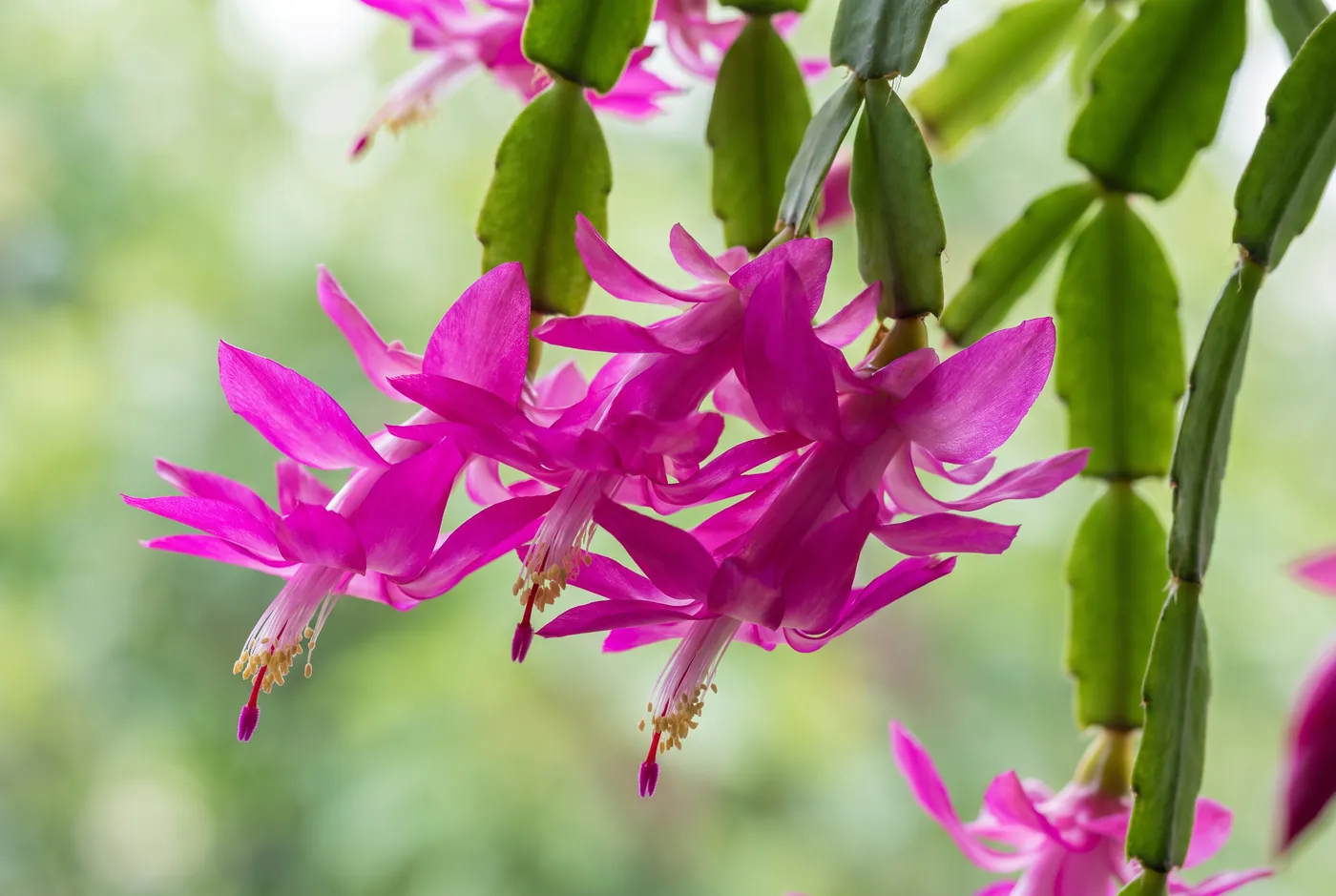
About Christmas Cactus
Christmas cactus is a cactus that grows in trees. It comes from the coastal rainforests of Brazil, not from a desert, and everything people get wrong about it follows from that single fact: it wants humidity, regular water and shade, and treating it like a succulent on a sunny windowsill is what kills it.
Flowers hang from the ends of flat segmented stems in magenta, white, coral or red. Plants routinely live for decades and are handed down through families, which is unusual for anything bought as a seasonal gift.
Primary Meanings
- Endurance: Plants commonly outlive their owners
- Loyalty: From its habit of being passed down families
- Celebration: It flowers precisely at the holidays
- Resilience: It tolerates years of neglect and still flowers
Christmas Cactus Colors and Their Meanings
Magenta Christmas Cactus
The classic and most common
White Christmas Cactus
Elegant; often pink-tipped
Coral Christmas Cactus
Warm, a newer bred range
Red Christmas Cactus
Bred for the Christmas market
Popular Christmas Cactus Types
Christmas Cactus
Schlumbergera buckleyi; rounded stem segments
Thanksgiving Cactus
Schlumbergera truncata; pointed toothed segments, flowers earlier
Easter Cactus
Rhipsalidopsis; a different genus, flowers in spring
Named Hybrids
The wide modern colour range
Care Instructions
Water Properly
Not a desert cactus. Water when the top inch dries.
Bright Shade
Direct sun scorches the segments.
Long Nights to Flower
Twelve to fourteen hours of darkness for six weeks.
Do Not Move It
Moving it in bud makes it drop the buds.
Best Occasions for Christmas Cactus
- Christmas: Its commercial season, hence the name
- Long-Term Gifting: A plant that lasts decades, not weeks
- Inherited Plants: Commonly passed through families
- Low-Light Rooms: One of few flowering plants that tolerates shade
Interesting Christmas Cactus Facts
- It is an epiphyte from Brazilian rainforest, growing on trees rather than in sand
- Plants routinely live fifty years or more
- Flowering is triggered by long nights, not by cold or by feeding
- Thanksgiving cactus has pointed toothed segments; Christmas cactus rounded ones
- Most plants sold as Christmas cactus are actually Thanksgiving cactus
How to Buy Good Christmas Cactus
Buy one covered in tight buds rather than open flowers, because a plant in full bloom will finish within a fortnight and the buds are what you are paying for. Check the segments are plump and firm rather than wrinkled or limp, which means it has been dry too long. Look at where the segments join for shrivelling or brown patches. And handle it as little as possible on the way home: a plant in bud that gets jostled or moved into a different light level will drop the lot.
Season, Availability and What Drives the Price
Plants appear from October through December and are cheap. What is sold as Christmas cactus is usually Thanksgiving cactus, which flowers several weeks earlier and has pointed toothed stem segments rather than rounded ones. Nobody in the trade distinguishes them and it rarely matters, but it explains why a plant bought as a Christmas cactus often flowers in November and is over by the holiday.
What to Use Instead
Cyclamen covers the same winter window in a cool room and flowers for months. Poinsettia is the other Christmas plant and wants warmth. Kalanchoe gives similar long flowering with less fuss. For a plant that lives for decades and flowers reliably, an orchid is the main alternative and costs considerably more. None of them get handed down through families the way a Christmas cactus does.
Safety Around Pets and Skin
Christmas cactus is not toxic to cats or dogs and is one of the few genuinely safe holiday plants, which makes it a much better choice than lilies, amaryllis or holly in a house with animals. Eating a quantity may cause mild stomach upset simply because it is plant material, but there is no toxin and it is not on the ASPCA hazard list. It has no spines either.
Florist Tips for Christmas Cactus
It is a rainforest plant, not a desert one
This single fact fixes most problems. It wants regular water, humidity and bright shade. Treating it like a desert cactus, dry and in full sun, is why so many look shrivelled and never flower.
Long nights make it flower
From about October, give it twelve to fourteen hours of complete darkness a night for six weeks, in a cool room. A spare bedroom or a cupboard in the evenings does it. Feeding and warmth will not substitute.
Do not move it once buds form
Changing its light or position while in bud is the most reliable way to make it drop every one. Decide where it lives before the buds appear.
Common Questions About Christmas Cactus
Why won't my Christmas cactus flower?
It needs long nights. From October it wants twelve to fourteen hours of complete darkness every night for about six weeks, along with cooler temperatures. Light leaking in from a lamp or a street light in the evening is enough to prevent it.
Why did all the buds drop off?
Almost always because it was moved. Christmas cactus drops buds if its light level, position or temperature changes while it is budding. Sudden dryness does the same. Choose a spot before buds form and leave it alone.
Is mine a Christmas or a Thanksgiving cactus?
Look at the stem segments. Thanksgiving cactus has sharply pointed teeth along the edges; Christmas cactus has rounded scalloped ones. Most plants sold as Christmas cactus are in fact Thanksgiving cactus, which is why they often flower in November.