About Garden Roses
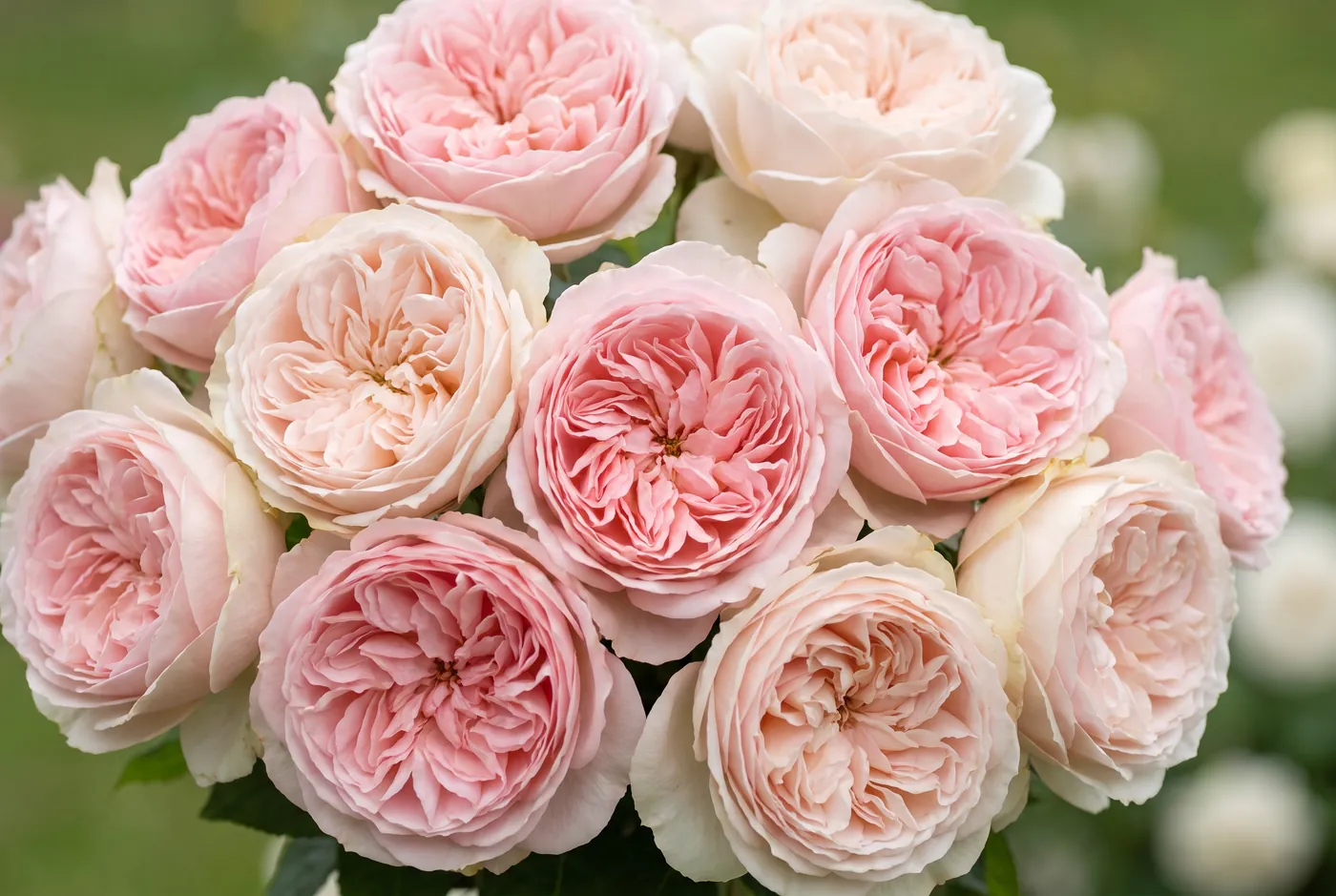
A garden rose is what a rose used to be. Where the standard florist rose has been bred for a long straight stem, a tight symmetrical head and the ability to survive a flight from Ecuador, the garden rose has been bred for the two things that were sacrificed to get there: dense ruffled many-petalled blooms that open flat and wide, and genuine scent.
They cost roughly triple, they last about half as long, and for weddings and anything photographed they are what people actually want. The dominant breeder is David Austin, whose varieties are effectively the industry standard.
Primary Meanings
- Romance: Shared with all roses, but tied to the old-fashioned form
- Nostalgia: From their resemblance to pre-modern rose varieties
- Devotion: The traditional association of a scented rose
- Grace: From the open, unstructured way they bloom
Garden Roses Colors and Their Meanings
Blush Garden Rose
The wedding standard; Keira and similar
Cream Garden Rose
Purity; Patience and Purity varieties
Peach Garden Rose
Warmth; Juliet, the best known of all
Deep Red Garden Rose
Passion; Darcey and Tess
Lavender Garden Rose
Enchantment; unusual and expensive
Popular Garden Roses Types
David Austin
The dominant breeder; Juliet, Keira, Patience, Constance
Cabbage Rose
Centifolia, the historic hundred-petalled form
Spray Garden Rose
Several smaller heads per stem, better value
Scented Standards
Yves Piaget and similar, bred specifically for fragrance
Care Instructions
Recut Under Water
Fine necks air-lock easily; cut submerged.
Deep Clean Water
They drink hard as they open. Change it often.
Cool Room
Warmth opens them fast, and open means finished.
Leave the Guard Petals
Peel only the scruffiest; they protect the bloom.
Best Occasions for Garden Roses
- Weddings: The reason most people buy them
- Anniversaries: Where scent and appearance both matter
- Photography: They open flat and photograph far better than standard roses
- Special Gifting: A small number of stems reads as more generous than a dozen standard
Interesting Garden Roses Facts
- Standard florist roses were bred for shipping, which cost them their scent
- David Austin roses are bred in England and grown under licence worldwide
- Juliet reportedly took fifteen years and a great deal of money to develop
- They open much wider than standard roses, so allow more space per stem
- Vase life is roughly half that of an imported standard rose
How to Buy Good Garden Roses
Buy them further open than you would a standard rose. A garden rose that is still tight has not begun to do the thing you are paying for, and unlike a standard rose it will not hold at that stage for days. You want the outer petals just beginning to reflex. Smell them, because scent varies enormously between varieties and a garden rose without fragrance is a poor bargain. Check the neck just below the head is firm, and expect a few scruffy guard petals, which are normal and protective.
Season, Availability and What Drives the Price
Grown under glass year-round, principally in England, the Netherlands, Ecuador and Colombia, with the best quality and value in summer. The price is roughly three times a standard rose and does not fall much, because these are lower-yielding plants producing fewer stems with more labour. Valentine's Day distorts standard red roses far more than it does garden roses, so in February a garden rose is closer in price to a standard one than at any other time of year.
What to Use Instead
Peonies give the same full ruffled abundance for a fraction of the cost, but only for their few weeks in late spring. Lisianthus is the year-round substitute for the look, at much lower cost and with a longer life, though without scent. Ranunculus, particularly the Cloni types, reads very similarly in photographs. Spray garden roses give the genuine article at better value, with several smaller heads per stem. What nothing substitutes is the fragrance, which is the reason to buy them.
Safety Around Pets and Skin
Roses of every kind are non-toxic to cats and dogs. The only real hazard is mechanical: thorns, and a pet cutting its mouth on a chewed stem. Garden roses often arrive with more thorns intact than commercial roses, which are usually stripped, so take them off before the vase goes anywhere an animal can reach. Rose petals are also edible, though florist roses should never be eaten as they may have been treated.
Florist Tips for Garden Roses
Buy them open, not tight
This is the opposite of the standard-rose rule. A tight garden rose has not started doing what you paid for, and it will not wait for you.
Give them room
They open far wider than a standard rose, often to twice the diameter. An arrangement packed to look right on day one will be crushed by day three.
Expect four to seven days, not twelve
The vase life is roughly half a standard imported rose. That is the trade for the scent and the form, and it is not a fault in the stems you bought.
Common Questions About Garden Roses
Why do garden roses cost so much more?
Lower yields and more labour. The plants produce fewer cuttable stems, the blooms are heavier and more fragile to handle and ship, and the varieties are licensed. Roughly triple a standard rose is normal.
Why don't ordinary roses smell any more?
They were bred for the wrong things. Commercial rose breeding prioritised stem length, head shape, color hold and the ability to survive long-distance shipping, and scent was traded away to get them. Garden roses are the deliberate reversal of that.
How long do garden roses last?
Four to seven days, about half a standard rose. Buy them slightly open, recut under water, keep them cool and change the water often, and you will reach the top of that range.