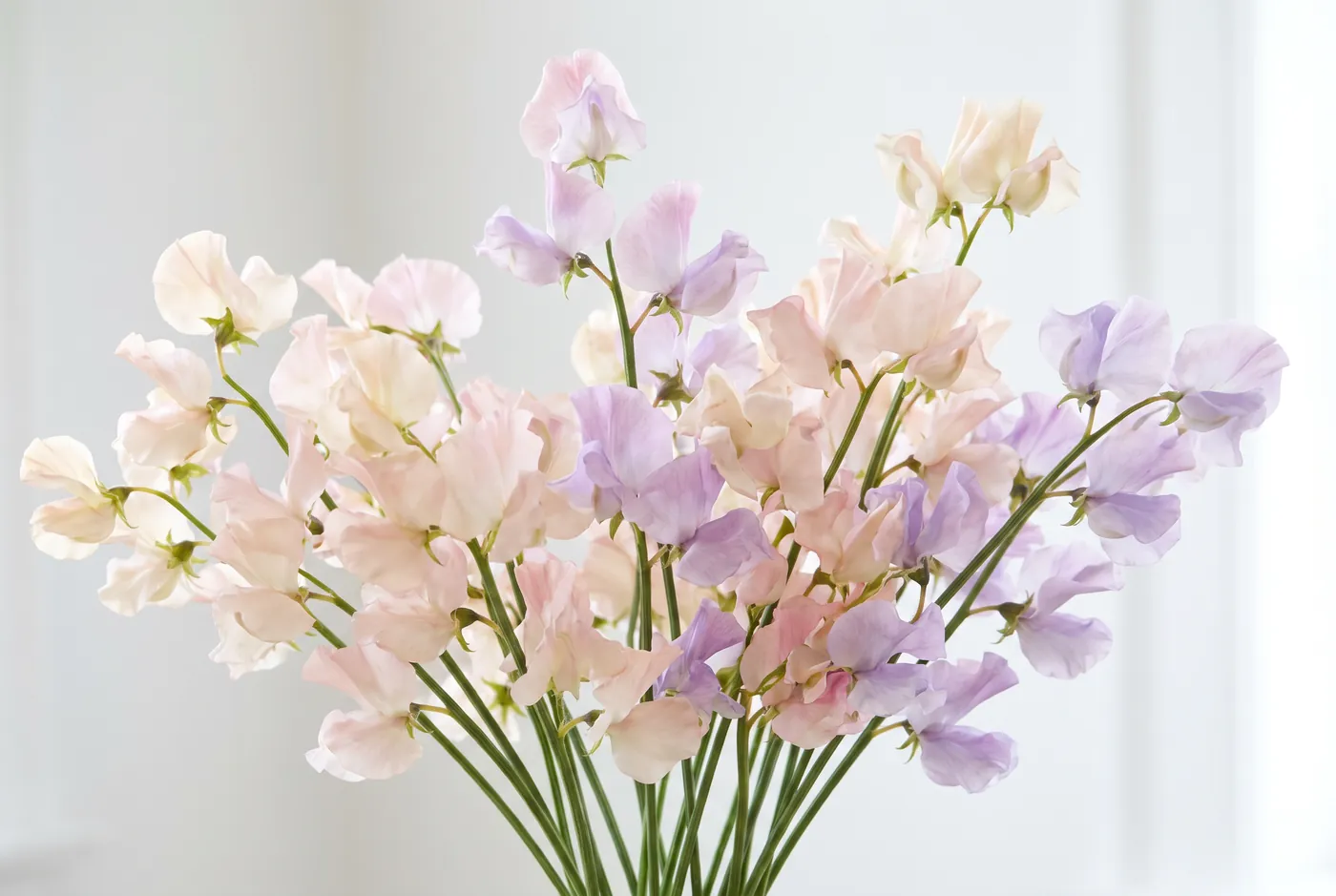
About Sweet Peas
Sweet peas are one of the few flowers you genuinely cannot buy whenever you like. The stems are too fine to survive long-distance shipping and the blooms too fragile to hold in cold storage, so unlike roses or lisianthus they have never been industrialised. What reaches a shop is local, seasonal and short-lived, and the season runs a matter of weeks.
The scent is the reason people wait for them: sweet, honeyed and unmistakable, from a flower barely bigger than a thumbnail. They are one of the two birth flowers for April, and buying them is the closest a florist gets to selling something genuinely seasonal.
Primary Meanings
- Blissful Pleasure: The classic Victorian meaning
- Goodbye: Traditionally given as a departure or thank-you flower
- Gratitude: Sent after being a guest, a long-standing custom
- Delicate Pleasure: From the fragility of the bloom itself
Sweet Peas Colors and Their Meanings
Pale Pink Sweet Peas
The classic; gentleness and affection
White Sweet Peas
Purity, and often the strongest scented
Lavender Sweet Peas
Grace and refinement
Deep Magenta Sweet Peas
Intensity; the heritage varieties
Bicolour Sweet Peas
Flaked and streaked heirloom types
Popular Sweet Peas Types
Spencer
The large ruffled florist type, longest stems
Grandiflora
Smaller flowers, far stronger scent, the heritage choice
Cupani
The original 17th-century variety, bicoloured and intensely scented
Winter Sunshine
Bred to flower early under glass, extending the season slightly
Care Instructions
Shallow Water
Fine stems rot in depth. Two inches is plenty.
Keep Cool
Heat halves their life. A cool room makes a real difference.
No Fruit Nearby
Extremely ethylene sensitive; ripening fruit finishes them.
Pick Off Fading Blooms
Removing spent flowers keeps the rest going.
Best Occasions for Sweet Peas
- April Birthdays: One of the two birth flowers for the month
- Thank You: The traditional gratitude flower after a stay
- Spring Weddings: Prized for scent, but only if the date falls in season
- Mother's Day: Only in years when the season is early enough
Interesting Sweet Peas Facts
- They cannot be shipped long distances, which is why they stay local and seasonal
- The original variety, Cupani, was sent from Sicily in 1699 and is still grown
- The showy modern Spencer types are markedly less fragrant than the older ones
- They are one of two birth flowers for April, with the daisy
- The seeds and pods are poisonous despite the pea name
How to Buy Good Sweet Peas
Buy them with most flowers open, because sweet pea buds rarely open once cut. Look at the stem where it meets the flowers: it should be green and firm, not translucent or yellowing. Petals should feel like tissue and look crisp rather than limp at the edges. Smell them, because scent varies enormously by variety and the big ruffled Spencer types often have far less than the smaller old-fashioned ones. If a bunch has no scent at all it is either a poor variety or several days old.
Season, Availability and What Drives the Price
This is genuinely a six-week flower. Late spring into early summer is the whole window in most of the country, and the exact timing shifts by weeks depending on the weather. They cannot be forced into a year-round crop the way roses and lisianthus have been, because the stems are too fine to ship and the flowers will not hold in cold storage. That makes them expensive for their three to five day life, and it is not a markup: it is a local, hand-picked crop with a short shelf life. If you want them for a wedding, the date has to fit the flower rather than the other way round.
What to Use Instead
For scent at the same delicate scale, freesia is the closest year-round option and lasts far longer. Hyacinth is stronger and earlier in the year. Stock gives a comparable sweetness at a much larger scale. For the ruffled pastel look without the perfume, ranunculus and lisianthus both work and both outlast sweet peas several times over. Nothing reproduces the specific combination of tiny ruffled bloom, fine curling tendril and that scent, which is the whole reason people wait for them.
Safety Around Pets and Skin
The flowers are not considered toxic, but the seeds and pods genuinely are. Sweet pea is not an edible pea despite the name and the family: the seeds contain a compound that causes lathyrism, a neurological condition, when eaten in quantity over time. Cut flowers rarely carry pods, so the practical risk is low, but never let a child treat them as edible peas and keep seed packets away from pets. The flowers themselves are not on the ASPCA toxic list.
Florist Tips for Sweet Peas
Keep them away from the fruit bowl
Sweet peas are among the most ethylene-sensitive flowers sold. A bowl of ripening bananas in the same room will visibly shorten them.
Shallow water only
The stems are fine and rot quickly. An inch or two is enough, topped up daily, and they will last longer than they would standing in a deep vase.
Buy the ugly ones
The older Grandiflora and heritage varieties have smaller, less showy flowers and far more scent than the big ruffled show types. If fragrance is why you want them, ask for the unfashionable ones.
Common Questions About Sweet Peas
Why can't I buy sweet peas all year?
They cannot be shipped. The stems are too fine and the blooms will not survive cold storage or long transit, so unlike roses they have never been turned into a year-round import crop. What you get is local and seasonal, and the season is about six weeks.
Why do my sweet peas only last three days?
That is normal. Three to five days is the realistic life. Keep them cool, in shallow water changed daily, and away from ripening fruit, and you will reach the top of that range rather than the bottom.
Can you eat sweet peas?
No. Despite the name and the pea family, the seeds and pods are poisonous and cause a neurological condition called lathyrism if eaten over time. They are ornamental only, and should never be confused with edible garden peas.