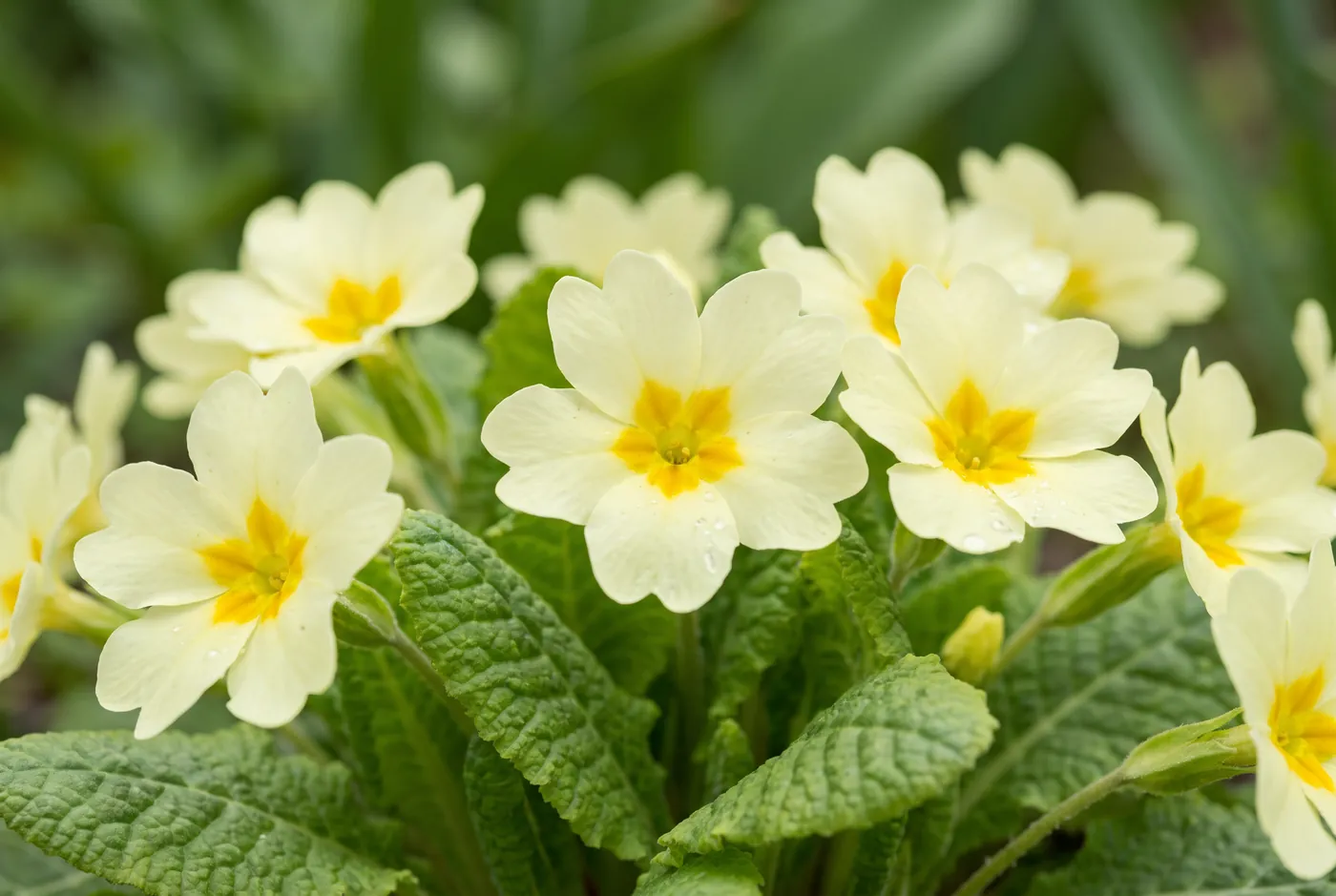
About Primrose
Primrose is one of the first things to flower each year, pale yellow saucers sitting almost directly on a rosette of crinkled leaves, opening in the cold before there is anything else to look at. The name means first rose, and it is one of February's birth flowers.
It also has a genuinely famous piece of biology in it. Primroses come in two flower forms, pin and thrum, with the parts arranged differently so a flower cannot easily pollinate itself. Darwin worked it out and published on it, and it remains one of the classic examples of a plant engineering its own outcrossing.
Primary Meanings
- Young Love: The classic meaning
- I Cannot Live Without You: The Victorian message it carried
- New Beginnings: Among the first flowers of the year
- Youth: From its early, fresh appearance
Primrose Colors and Their Meanings
Pale Yellow Primrose
The wild species; young love
Deep Pink Primrose
Bedding varieties
Purple Primrose
Rich modern bred colours
White Primrose
Purity and simplicity
Cowslip Yellow
Primula veris, the meadow relative
Popular Primrose Types
Primula vulgaris
The wild primrose; pale yellow, faintly scented
Polyanthus
Bedding hybrids, clustered flowers on a stem
Cowslip
Primula veris; nodding yellow bells in meadows
Auricula
Primula auricula; the collector's plant, farina-dusted
Care Instructions
Keep It Cool
It wants cold. A warm room finishes it.
Keep Damp
It hates drying out entirely.
Deadhead
Removing spent flowers extends the display.
Plant It Out After
It is hardy and will come back for years.
Best Occasions for Primrose
- February Birthdays: One of the month's birth flowers
- Early Spring: Among the first flowering plants available
- Easter: Traditional alongside daffodils
- Mothering Sunday: A long-standing British association
Interesting Primrose Facts
- The name means first rose, from its early flowering
- It has two flower forms, pin and thrum, which prevent self-pollination
- Darwin studied and published on that arrangement
- The flowers are edible and were traditionally made into primrose wine
- Auriculas were collected obsessively by eighteenth-century weavers
How to Buy Good Primrose
Buy plants with buds still tucked down in the center of the rosette rather than a plant in full flower, since those buds are the rest of the season. Leaves should be fresh green and crinkled, not yellow or limp at the edges. Check the crown is firm and the compost damp but not waterlogged, because primroses rot at the neck if they sit wet. Avoid anything that has been standing in a heated shop, which stretches them and shortens the display.
Season, Availability and What Drives the Price
Plants appear from January and run through to April, and they are among the cheapest flowering plants of the year. Polyanthus types, with clustered flowers on a stem, arrive earliest and are the ones usually sold as winter bedding. The wild pale yellow primrose is sold less often but is the better garden plant, since it naturalises and spreads where the bedding hybrids often do not.
What to Use Instead
Pansies cover exactly the same window and take weather better. Cyclamen gives winter color indoors in a cool room. Hellebores flower at the same time on a much larger scale. For naturalising under trees, wild primroses and cowslips are the right choice and the bedding hybrids are not. As a cut flower none of them really work; these are plant purchases.
Safety Around Pets and Skin
Primula species are mildly toxic to cats and dogs, causing vomiting and stomach upset, and the foliage causes contact dermatitis in some people. Primula obconica in particular contains primin and is a well-documented cause of skin reactions among florists and gardeners, enough that primin-free varieties are bred specifically to avoid it. Wear gloves if you handle quantities and keep pots away from animals that chew.
Florist Tips for Primrose
Plant it out when it finishes
Supermarket primroses are hardy perennials, not disposable. Put them in the garden when flowering ends and most will come back for years and spread.
Cool, always
They are woodland plants that flower in the cold. A heated room stretches them and the flowers go over in days. A porch, a north windowsill or straight outside is where they belong.
Look for pin and thrum
Peer into two different flowers. One will show a round stigma at the mouth of the tube, the other will show the stamens instead. That is the mechanism Darwin studied, and you need one of each for good seed.
Common Questions About Primrose
What are pin and thrum primroses?
Two flower forms the plant produces. Pin flowers show the round stigma at the mouth of the tube with the stamens below; thrum flowers show the stamens at the mouth with the stigma below. The arrangement makes self-pollination difficult and encourages cross-pollination. Darwin studied and published on it.
Can I plant supermarket primroses in the garden?
Yes, and you should. They are hardy perennials rather than disposable pot plants. Plant them out once flowering finishes and most will return year after year and gradually spread.
Are primroses poisonous?
Mildly, to cats and dogs, causing vomiting and stomach upset. More relevant for people is contact dermatitis: Primula obconica especially causes skin reactions in many people, which is why primin-free varieties are now bred.