About Calendula
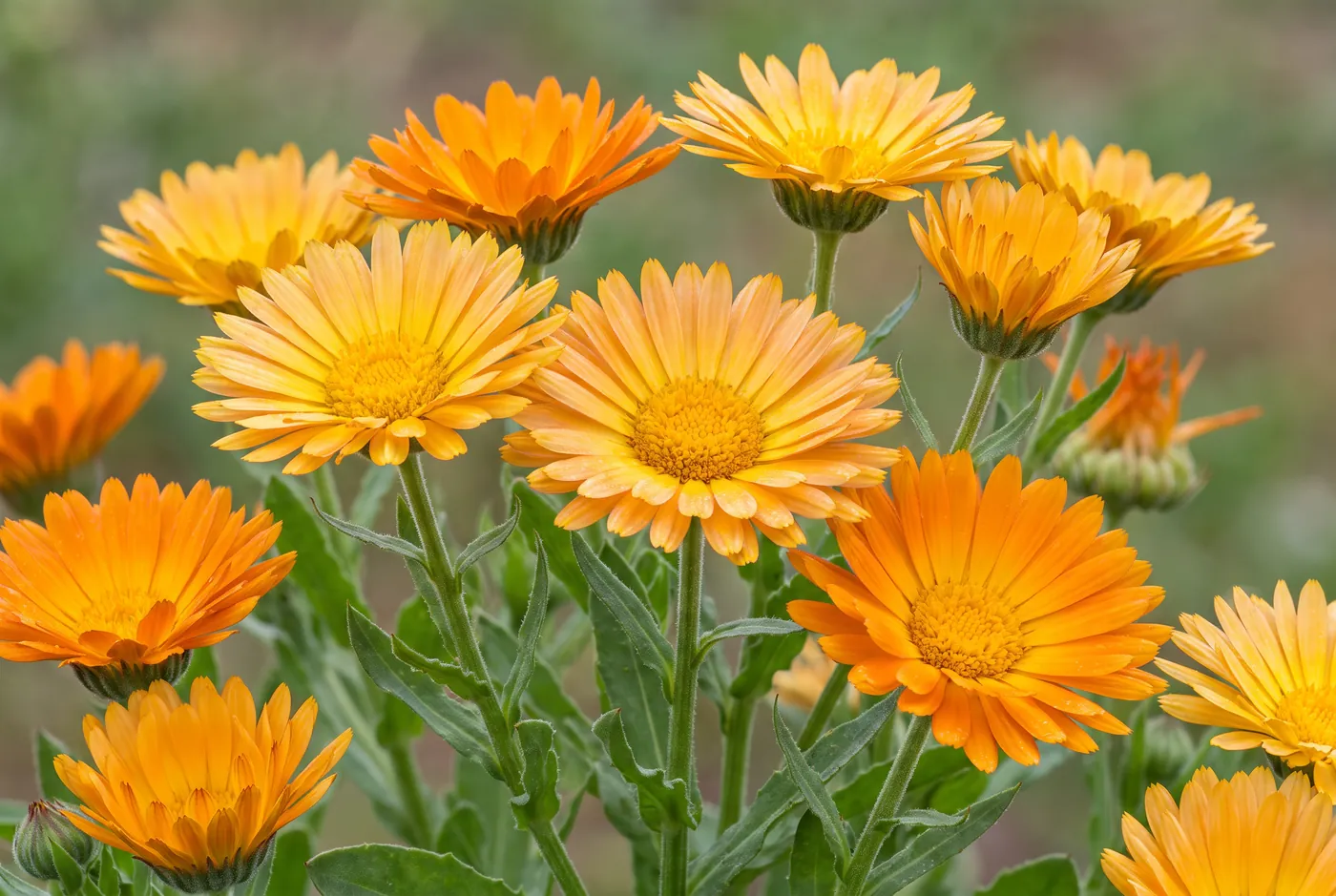
Calendula is a flat orange or yellow daisy on a slightly sticky stem, cheerful and unfussy, and it will flower from late spring until a hard frost if you keep picking it. It is sold as pot marigold, which causes constant confusion, because it is not a marigold: true marigolds are Tagetes, a different genus from Mexico.
The petals are edible and mildly peppery, historically used to colour butter and cheese and earning it the name poor man's saffron. An infusion of the flowers is also one of the oldest skin remedies there is, and calendula cream is still sold in every pharmacy.
Primary Meanings
- Joy: The traditional meaning, from its colour
- Grief: A contradictory older association, from funeral use
- Constancy: It flowers relentlessly all season
- Winning Grace: The Victorian meaning
Calendula Colors and Their Meanings
Orange Calendula
The classic; the strongest colour
Yellow Calendula
Cheer and sunlight
Apricot Calendula
Softer bred shades
Cream Calendula
Snow Princess and similar
Dark-Centred
Bronzed centres, popular with florists
Popular Calendula Types
Calendula officinalis
The species; the medicinal and culinary plant
Pacific Beauty
Long-stemmed cut flower variety
Indian Prince
Deep orange with a bronze reverse
Snow Princess
Cream, unusual and much used in soft palettes
Care Instructions
Cut Constantly
Picking keeps it flowering for months.
Strip Foliage
The sticky leaves foul water fast.
Change Water
Every other day; the stems are resinous.
Cool Room
It closes in the evening and in low light.
Best Occasions for Calendula
- Summer Bouquets: Cheerful colour from a cutting garden
- Edible Flowers: Petals used in salads, rice and butter
- Herbal Use: The basis of calendula skin creams
- Day of the Dead: Sometimes used alongside true marigolds
Interesting Calendula Facts
- It is not a marigold; true marigolds are Tagetes, a different genus
- The petals are edible and were used to colour butter and cheese
- It is called poor man's saffron for that reason
- Calendula cream is still one of the most common herbal skin preparations
- The flowers close at night and in dull weather
How to Buy Good Calendula
Look for flowers fully open with tight centers, since a fluffy powdery center means it is setting seed and nearly finished. The stems are slightly sticky and resinous, which is normal, but they should be firm rather than limp. Because calendula closes in low light, judge it in a bright spot rather than a dim shop corner. Like most cutting-garden flowers you will find it at markets rather than florists, so ask when it was picked.
Season, Availability and What Drives the Price
Late spring until the first hard frost, and it is remarkably persistent: in a mild autumn it will still be flowering in November. It is almost never sold through florists because it does not ship well and there is no wholesale trade in it, so markets, farm stands and cutting gardens are the realistic source. It is cheap where it is sold at all, and it is one of the easiest flowers to grow yourself.
What to Use Instead
True marigolds cover the same color range and last longer cut. Zinnias give a similar flat open face in a wider palette. Rudbeckia provides orange and gold in late summer with a dark center. Cosmos covers the same cutting-garden niche in softer colors. For edible petals specifically, nasturtium and viola are the other common choices and both taste of considerably more.
Safety Around Pets and Skin
Calendula is not toxic to cats or dogs and the petals are edible for people, which makes it one of the safest flowers you can grow. It is not on the ASPCA hazard list. Worth distinguishing from true marigolds, Tagetes, which are mildly toxic to pets, and note that anyone with a serious daisy-family allergy may react to calendula creams and infusions.
Florist Tips for Calendula
Pick it or it stops
Calendula flowers hard as long as you keep cutting. Let it set seed and it winds down within weeks. This is the single thing that decides whether you get two months of flowers or six.
The petals are worth eating
Pull the ray petals off and scatter them into rice, butter or a salad. They are mildly peppery and color anything yellow, which is why it was called poor man's saffron.
It closes at night
Calendula shuts in the evening and on dull days. Nothing is wrong; it will reopen. Do not judge a bunch in a dark corner.
Common Questions About Calendula
Is calendula the same as a marigold?
No, and this is the most common confusion in the flower world. Calendula is sold as pot marigold but is a European plant in its own genus. True marigolds are Tagetes, from Mexico, with pungent foliage and pompom flowers. They are not related closely and behave quite differently.
Can you eat calendula?
Yes, the petals. They are mildly peppery and have been used for centuries to color butter, cheese and rice, which earned it the name poor man's saffron. Pull the petals from the center and scatter them. Never eat flowers from a florist, which may have been treated.
Why do my calendula flowers close up?
They close at night and in dull weather and reopen in bright light. It is normal behavior for the plant, not a sign that anything is wrong with the flowers.