About Leucadendron
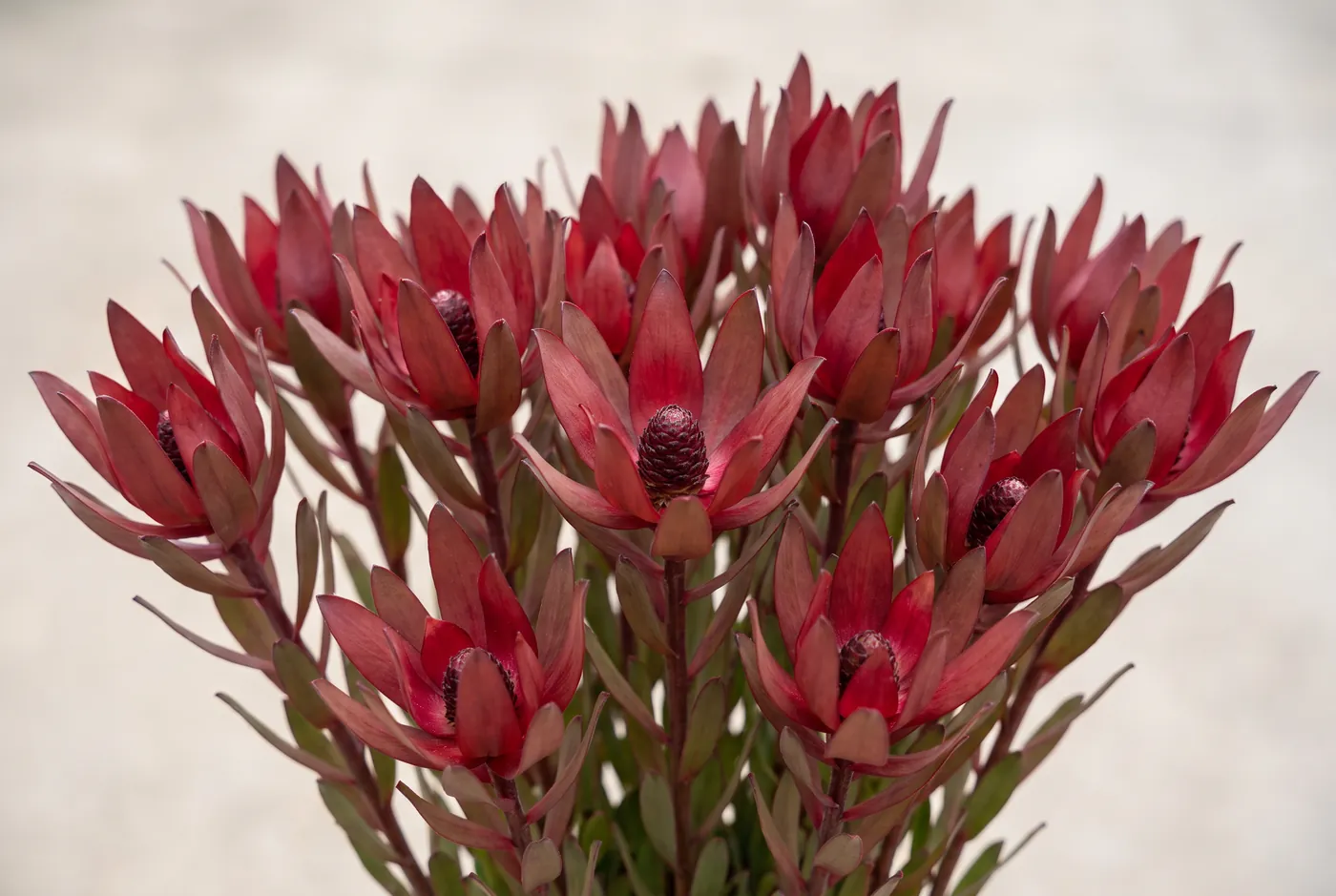
Leucadendron is the workhorse of the protea family: sturdy stems topped with tight cones surrounded by coloured bracts, in crimson, burgundy, cream and yellow-green. Safari Sunset, the deep red variety, is so widely used that most people have had it in an arrangement without ever learning its name.
The colour is in modified leaves rather than petals, which is why it holds for weeks and dries without fading. It is also considerably cheaper than protea and banksia, which makes it the practical way to bring that family's texture into an everyday bouquet.
Primary Meanings
- Transformation: The bracts change colour through the season
- Endurance: From its exceptional vase life
- Confidence: The bold structural form
- Steadfastness: It outlasts everything it stands with
Leucadendron Colors and Their Meanings
Crimson Leucadendron
Safari Sunset; the one everybody uses
Cream Leucadendron
Soft and understated
Yellow-Green Leucadendron
Fresh; the Inca Gold types
Silver Leucadendron
Silver tree, grown for felted foliage
Burgundy Leucadendron
Late-season deepened colour
Popular Leucadendron Types
Safari Sunset
Deep red bracts, the commercial standard
Inca Gold
Yellow-green bracts around a bright cone
Jester
Variegated cream, pink and green foliage
Silver Tree
Leucadendron argenteum; silver felted leaves
Care Instructions
Split the Stem
Woody; split or crush the end.
Strip Lower Leaves
Same blackening risk as protea.
Clean Water
Change regularly; it drinks for weeks.
Dries Well
It becomes a permanent stem, colour intact.
Best Occasions for Leucadendron
- Everyday Bouquets: Structure and colour that lasts weeks
- Weddings: The textural style, at a workable price
- Christmas: Safari Sunset's deep red with eucalyptus
- Dried Work: Colour holds indefinitely
Interesting Leucadendron Facts
- The coloured parts are bracts, modified leaves, not petals
- Safari Sunset is a hybrid bred in New Zealand, not a wild species
- Male and female plants look different; the cones differ noticeably
- It is the least expensive way into the protea family
- The silver tree, a leucadendron, is one of South Africa's most protected plants
How to Buy Good Leucadendron
Look for even, saturated bract colour with no browning at the tips, and a tight central cone that has not begun to open and shed. As with everything in this family, check the lower leaves for the black edging that signals leaf blackening. The stems should be rigid and the foliage tight against them rather than loose. Because it lasts so long, a stem that looks slightly tired in the shop is likely to be genuinely old rather than merely a few days cut.
Season, Availability and What Drives the Price
Grown chiefly in South Africa, with Californian, Australian and Israeli production filling the year, so it is available continuously with the best supply from about May to September. It is markedly cheaper than protea or banksia, which is the reason florists reach for it: it brings the same family texture to a bouquet that could not carry a king protea's price. Demand for Safari Sunset rises sharply at Christmas.
What to Use Instead
Protea and banksia are the same family at higher cost and greater scale. For deep red structure at a lower price, hypericum berries and dried eucalyptus pods do comparable work. Amaranthus gives texture with movement. For grey-silver foliage specifically, dusty miller and eucalyptus are the everyday alternatives to a silver tree stem, which is rare and expensive.
Safety Around Pets and Skin
Leucadendron is not listed as toxic to cats or dogs and is not on the ASPCA hazard list. It is safe around animals, and like the rest of its family it is woody and leathery enough that few pets show any interest. The dried stems are equally harmless.
Florist Tips for Leucadendron
This is the affordable protea
If you want that textural, structural look without a king protea's price, leucadendron is the answer and lasts longer than the protea would.
Strip lower leaves immediately
Same leaf-blackening problem as the rest of the family, and the same fix.
Keep it when the bouquet dies
It routinely outlasts everything around it by a fortnight, then dries with its colour intact. Pull it out rather than binning the lot.
Common Questions About Leucadendron
Is the red part a flower?
No. The coloured parts are bracts, which are modified leaves. The actual flowers are in the small cone at the centre. That is why the colour holds for weeks and survives drying without fading.
What is Safari Sunset?
The most widely grown leucadendron variety, with deep red bracts. It is a hybrid bred in New Zealand rather than a wild species, and it is so common in mixed bouquets that most people have had it without knowing the name.
How long does leucadendron last?
Two to four weeks fresh, which is longer than almost anything it will be bunched with, and then indefinitely if you let it dry. It is one of the best-value stems in a florist for that reason.