About Rudbeckia
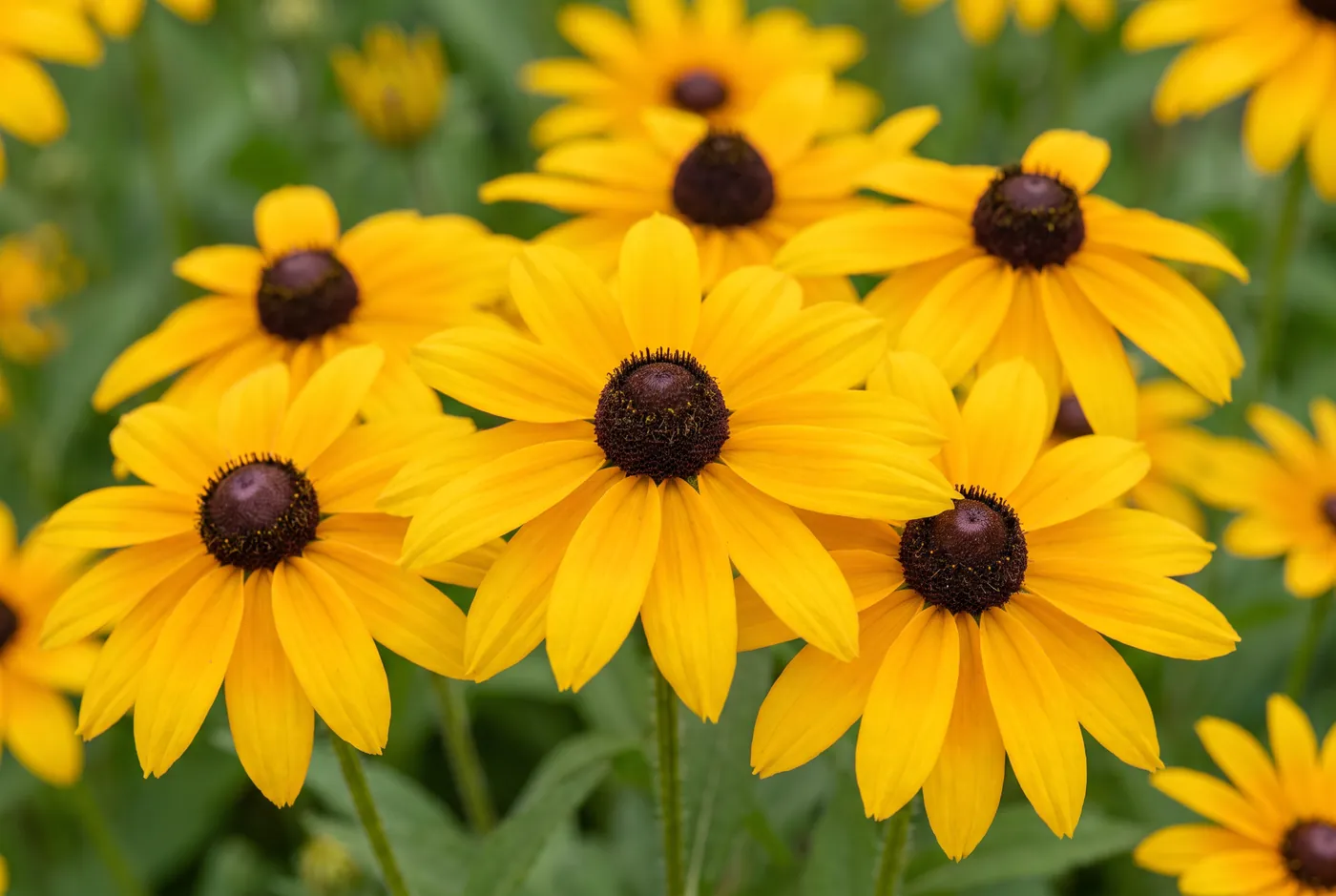
Rudbeckia is a golden daisy with a raised chocolate-brown cone at the centre, and it carries arrangements through the weeks when summer flowers are finishing and autumn has not started. It is tough, it lasts well over a week cut, and it comes in gold, bronze, rust and mahogany as well as the familiar yellow.
It is a North American prairie plant and one of the easiest cut flowers to grow. The dark central cone stays after the petals fall, and those seed heads are worth leaving on the plant, both for the structure and for the goldfinches that strip them through winter.
Primary Meanings
- Encouragement: The traditional meaning
- Justice: A long-standing association with the flower
- Motivation: The common modern gifting meaning
- Resilience: It flowers through heat and drought
Rudbeckia Colors and Their Meanings
Golden Rudbeckia
The classic black-eyed Susan
Bronze Rudbeckia
Autumn Colours and similar
Mahogany Rudbeckia
Cherry Brandy; deep red
Lime Rudbeckia
Green-centred Prairie Sun
Brown Seed Cones
The structure after the petals drop
Popular Rudbeckia Types
Rudbeckia hirta
Black-eyed Susan; the annual cutting standard
Goldsturm
Rudbeckia fulgida; the perennial garden classic
Cherry Brandy
Deep mahogany red, a florist favourite
Prairie Sun
Green-centred rather than dark, unusual and popular
Care Instructions
Strip Foliage
The hairy leaves foul water fast.
Change Water
Every couple of days.
Cut Deep
In the garden, cut low to prompt more stems.
Keep the Cones
Seed heads dry and last through winter.
Best Occasions for Rudbeckia
- Late Summer Bouquets: Its peak and its purpose
- Autumn Arrangements: The bronze and mahogany varieties
- Country Style: With sunflowers, zinnias and solidago
- Wildlife Gardens: Seed heads feed finches through winter
Interesting Rudbeckia Facts
- The dark cone is a mass of tiny disc flowers, not a seed pod
- It is a North American prairie native, tough and drought-tolerant
- It is the state flower of Maryland
- Goldfinches strip the seed cones through winter
- Cutting it hard makes the plant produce more stems
How to Buy Good Rudbeckia
Look at the cone. It should be tight and evenly dark rather than fuzzy and shedding pollen, which means the flower is mature and closer to the end. Petals should be firm and evenly coloured with no translucent patches at the base. The stems and leaves are hairy, which is normal, but they should be stiff rather than limp. Strip the foliage before it goes in water, because it breaks down quickly.
Season, Availability and What Drives the Price
Midsummer into autumn, and it is one of the best-value flowers of that window. It is largely a local grower's crop rather than an import, so markets and farm stands are the main source. Prices are low throughout. The unusual varieties, particularly Cherry Brandy and the green-centred Prairie Sun, cost more and are worth asking for specifically since most growers plant plain gold.
What to Use Instead
Sunflowers give the same golden daisy at a much larger scale. Zinnias cover the same season in a wider colour range. Echinacea, the coneflower, is a close relative with a more prominent cone and softer colours. Solidago gives yellow as a plume rather than a face. For late-summer gold with a dark centre, rudbeckia is the standard and there is little reason to substitute.
Safety Around Pets and Skin
Rudbeckia is not listed as toxic to cats or dogs by the ASPCA and is regarded as safe. It is a good choice for gardens with animals, and it is one of the better plants for pollinators and seed-eating birds, which is a reasonable argument for leaving the seed heads standing rather than cutting everything.
Florist Tips for Rudbeckia
Cut it hard and it gives you more
Rudbeckia responds to deep cutting by producing more stems. Taking short stems off the top gets you less over the season than cutting properly low.
Leave the last cones standing
Once flowering finishes, the dark seed cones hold their shape all winter and goldfinches strip them. It is one of the easiest things you can do for winter birds.
Ask for the unusual colours
Most growers plant plain gold. Cherry Brandy in deep mahogany and the green-centred Prairie Sun are far more interesting in an arrangement and are worth requesting.
Common Questions About Rudbeckia
What is the dark centre made of?
Hundreds of tiny disc flowers packed together, not a seed pod. Each one is a complete flower in its own right, which is true of every member of the daisy family including sunflowers and asters.
Is rudbeckia the same as echinacea?
They are close relatives and both are called coneflowers. Rudbeckia usually has golden petals and a dark brown cone; echinacea tends toward pink and purple with a spikier orange cone. They behave similarly as cut flowers.
How long does rudbeckia last in a vase?
One to two weeks, which is excellent for a garden flower. Strip the hairy foliage and change the water every couple of days and you will reach the top of that range.