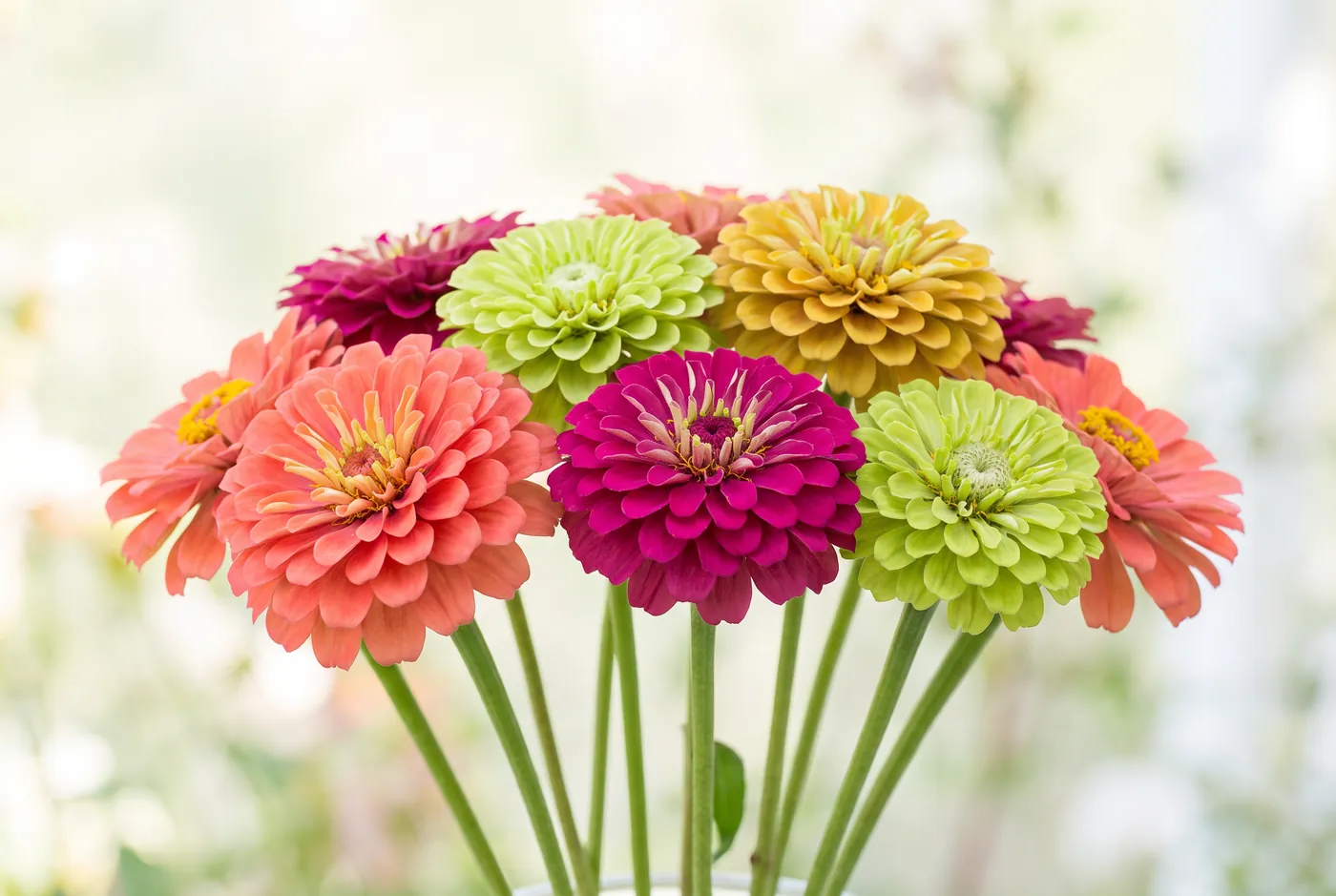
About Zinnias
If you have bought flowers from a farm stand, a market or a subscription box in summer, you have bought zinnias. They are the backbone of American small-scale cut flower growing: they crop heavily all season, come in colours no imported flower offers, and cannot be shipped far, which is exactly why local growers plant them and supermarkets do not.
They are also the flower most likely to arrive with a wobbly neck, which is a handling problem rather than a quality one and is worth understanding before you blame the grower.
Primary Meanings
- Thoughts of Absent Friends: The classic Victorian meaning
- Lasting Affection: From how long the plant keeps producing
- Endurance: It flowers relentlessly through heat until frost
- Daily Remembrance: Traditionally sent to someone far away
Zinnias Colors and Their Meanings
Coral Zinnia
The colour local growers are known for
Magenta Zinnia
Intensity; the strongest shade in the range
Lime Zinnia
Envy variety; unusual and much used by florists
Gold Zinnia
Warmth and high summer
White Zinnia
Simplicity, and useful for cooling a hot palette
Popular Zinnias Types
Benary's Giant
The commercial cut flower standard, large and dahlia-like
Queen Lime
Muted antique shades, the florist favourite
Oklahoma
Smaller heads on long stems, good for mixed bunches
Cactus Flowered
Quilled, spiky petals; an unusual texture
Care Instructions
Strip Every Leaf
Zinnia foliage fouls water faster than almost anything.
Change Water Daily
They are heavy drinkers and dirty the vase quickly.
Recut Midweek
A fresh cut after a few days visibly revives them.
Out of the Sun
Direct sun wilts them within hours.
Best Occasions for Zinnias
- Summer Bouquets: The season they exist for
- Farm Stands and Markets: The backbone of local cut flower growing
- Casual Gifting: Cheerful rather than formal
- Cottage Weddings: Increasingly used where a garden-grown look is wanted
Interesting Zinnias Facts
- They cannot be shipped far, which is why they are almost always locally grown
- The Queen Lime series in antique shades transformed their standing with florists
- Cutting them makes the plant produce more, so growers cut hard all season
- A zinnia was among the first flowers grown in space, aboard the ISS in 2016
- They come from Mexico and thrive in heat that stops most cut flowers
How to Buy Good Zinnias
Do the wiggle test, which is what growers do. Hold the stem and shake it gently: if the head wobbles loosely on its neck, the stem was cut immature and it will never hold up in an arrangement. A properly mature zinnia holds its head rigid. Beyond that, look for a center that is still tight rather than showing a ring of fluffy yellow pollen, which means it is past its best, and check the foliage is clean, because mildew on zinnia leaves is common and spreads.
Season, Availability and What Drives the Price
Zinnias are high summer into first frost and that is the whole story. They are not imported in any quantity because the stems do not survive long-distance shipping and cold storage damages them, so unlike almost every other flower on this site there is no year-round version. That makes them one of the few genuinely seasonal, genuinely local flowers in the American market. In season they are among the cheapest things you can buy; out of season they simply do not exist.
What to Use Instead
Dahlias cover the same season with more drama and a shorter life. Asters take over as autumn arrives. Gerbera daisies give a similar bold single face year-round if you need it in winter. Spray chrysanthemums are the reliable substitute in the same colors. What none of them offer is the specific muted antique range of the Queen Lime varieties, which is why florists buy zinnias from local growers rather than ordering something similar from a wholesaler.
Safety Around Pets and Skin
Zinnias are not toxic to cats, dogs or horses and are not on the ASPCA hazard list. They are one of the safest flowers you can bring into a house with animals, and the petals are edible, though bland. This is worth knowing because they turn up constantly in mixed summer bunches from markets where nothing is labeled.
Florist Tips for Zinnias
Wiggle the stem before you buy
A zinnia cut too young has a soft neck and the head flops permanently. Shake it gently: a rigid head means a mature stem. This one test tells you more than anything else about the bunch.
Strip the leaves and change the water daily
Zinnia foliage rots faster than most and the water goes cloudy and smelly within a day or two. This is the main reason they underperform in a vase.
Buy local and buy in season
There is no imported zinnia worth having. A market bunch cut that morning will outperform anything else you could pay more for.
Common Questions About Zinnias
Why does my zinnia head flop over?
It was cut before the stem matured. Zinnias have to be cut at the right moment or the neck never firms up, and no amount of conditioning fixes it afterwards. Shake the stem before buying and reject anything with a wobbly head.
Why can't I buy zinnias in winter?
They cannot be shipped or cold-stored the way roses can, so there is no import trade in them. They are grown locally, cut locally and sold locally, which means the season is the season.
Are zinnias safe around pets?
Yes. They are non-toxic to cats, dogs and horses, which makes them a good choice for a summer bunch in a house with animals.