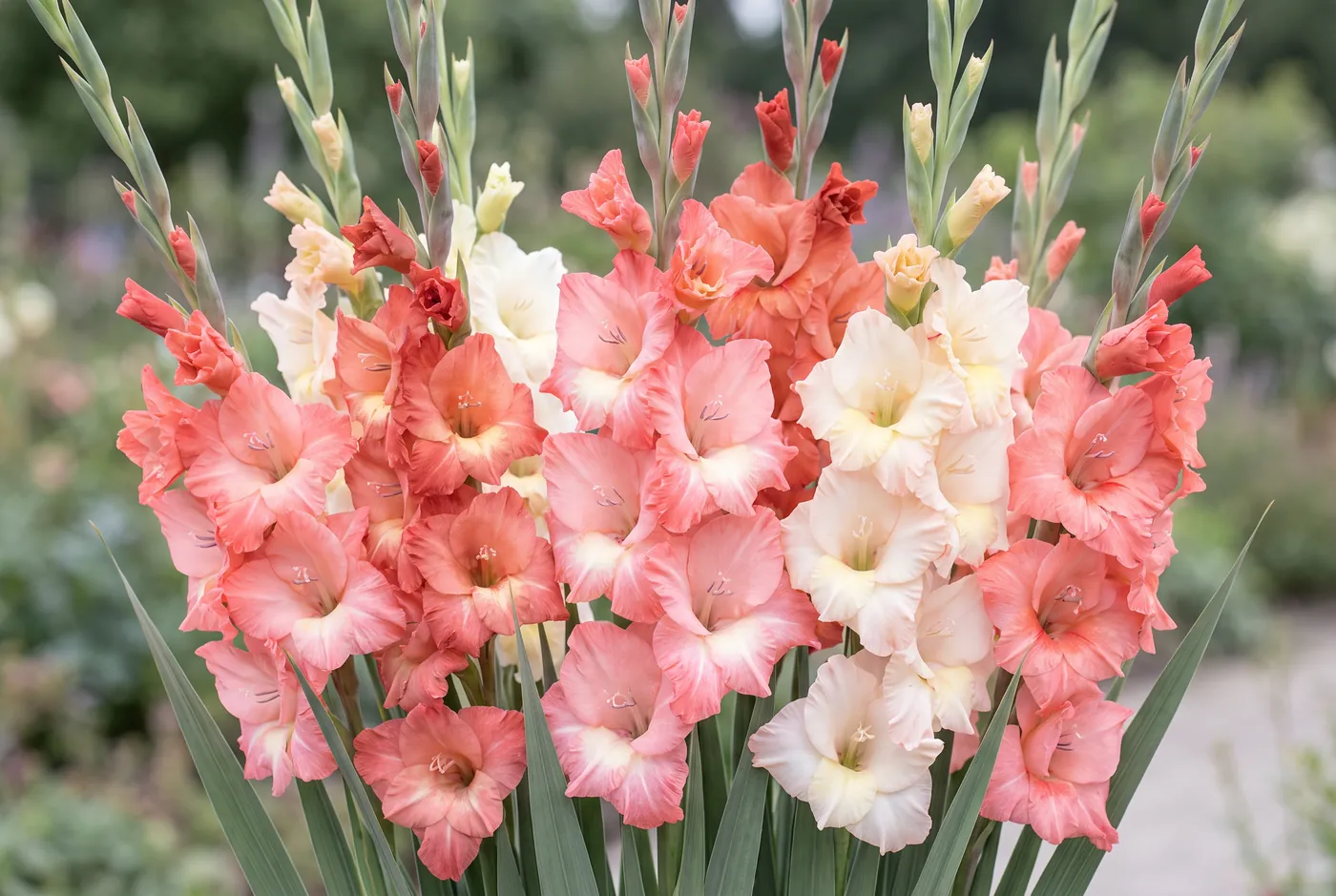
About Gladiolus
Gladiolus is the cheapest height in the flower trade. A single spike can stand well over a metre and carry twenty or more blooms opening in sequence from the bottom up, which is why it has been the backbone of large pedestal arrangements and funeral tributes for a century. The name comes from gladius, the Roman short sword, after the shape of the leaves.
It carries a strong association with sympathy and formal arrangement in the United States, which is worth knowing before sending it for a happier occasion. It is also the birth flower for August.
Primary Meanings
- Strength of Character: The best known meaning, from the sword-like form
- Remembrance: Why it appears so consistently at funerals
- Faithfulness: Traditionally given to convey loyalty
- Integrity: Associated with moral uprightness, playing on the upright spike
Gladiolus Colors and Their Meanings
Red Gladiolus
Love and strength
White Gladiolus
Remembrance; the standard sympathy colour
Pink Gladiolus
Compassion and motherly affection
Yellow Gladiolus
Cheer and generosity
Peach Gladiolus
Warmth; the most modern-looking of the range
Popular Gladiolus Types
Grandiflora
The tall large-flowered standard, the type most people mean
Nanus
Dwarf gladiolus, shorter and looser, better for home vases
Abyssinian Gladiolus
White with a dark throat and genuinely fragrant, unlike the rest
Primulinus
Smaller hooded blooms spaced along the spike
Care Instructions
Pinch the Tip
Snap off the top few buds so the rest open properly.
Store Upright
Like snapdragons, the tips curve if laid flat.
Deep Water
Tall heavy stems need depth and a weighted vase.
Remove Spent Blooms
Strip the finished lower flowers as it works upward.
Best Occasions for Gladiolus
- Sympathy and Funerals: The traditional US arrangement flower
- August Birthdays: It is the birth flower for the month
- Large Displays: Church pedestals, hotels, anywhere needing scale
- 40th Anniversary: The traditional flower for the milestone
Interesting Gladiolus Facts
- The name comes from gladius, the Roman short sword, after the leaf shape
- Blooms open from the bottom of the spike upward over about a week
- The top buds usually never open at all unless the tip is pinched out
- It is the birth flower for August and the flower for a 40th anniversary
- Most species originate in South Africa, not the Mediterranean
How to Buy Good Gladiolus
Buy a spike with the bottom two or three blooms just opening and everything above in colored bud. Green tight buds all the way up will often stall and never open, and a spike already open halfway has less than a week left. Run a hand up the stem: it should be rigid, because a gladiolus that has softened cannot hold its own weight and will bow in the vase. Check the tip has not been snapped in transit, and look for brown papery edges on the lowest blooms, which dates the stem.
Season, Availability and What Drives the Price
Gladiolus is a summer crop and mid-July through September is when it is tallest, strongest and cheapest. Out of season it is imported and the stems are noticeably shorter for the money. It is one of the few flowers where the price barely moves at the big holidays, because the demand behind it is funeral work rather than Valentine's or Mother's Day, and that demand is steady all year. If you want height on a budget in August, nothing else in the shop comes close.
What to Use Instead
For the same vertical line at a smaller scale, snapdragons and stock both work and stock brings scent. Delphinium gives more height and a far airier effect for more money. Liatris is the modern spiky alternative and lasts well. Curly willow or bare branches will give structure without flowers if the budget is tight. Where gladiolus cannot be replaced is sheer scale for the price: no other flower gives you a metre of color this cheaply.
Safety Around Pets and Skin
Gladiolus is toxic to cats, dogs and horses, and the corm at the base of the plant is the most dangerous part rather than the flower. Eating it causes drooling, vomiting, diarrhoea and lethargy. Cut stems are lower risk than planted corms in the garden, but this is not a flower to leave within reach of an animal that chews. Handling the corms also causes contact dermatitis in some people.
Florist Tips for Gladiolus
Pinch the top off and the rest opens
The topmost buds on a gladiolus spike usually never open, and they hold the stem back. Snap off the top two or three and the lower flowers open larger and faster. Florists do this as a matter of course.
Use a heavy vase
A metre of wet gladiolus will pull a light vase straight over as the top blooms open and the weight moves upward.
Cut it down if it is too tall
There is no rule that says you must keep the full length. Cutting a spike to a third of its height makes a completely different, much more modern arrangement.
Common Questions About Gladiolus
Why won't the top buds on my gladiolus open?
They usually do not. The spike opens from the bottom up and runs out of energy before it reaches the tip. Pinch out the top two or three buds when you get it home and the remaining flowers open better and larger.
Is gladiolus only a funeral flower?
In the United States it carries a strong sympathy association, largely because its height suited the standing tributes used at funerals for decades. It is not inherently sombre, and short-cut stems in peach or yellow read very differently, but be aware of the association before sending a tall white spray.
Are gladiolus poisonous to pets?
Yes, mildly. All parts are toxic to cats and dogs, with the underground corm being the worst. Eating it causes vomiting, drooling and diarrhoea rather than anything life-threatening, but keep cut stems away from animals that chew.