About Pansies
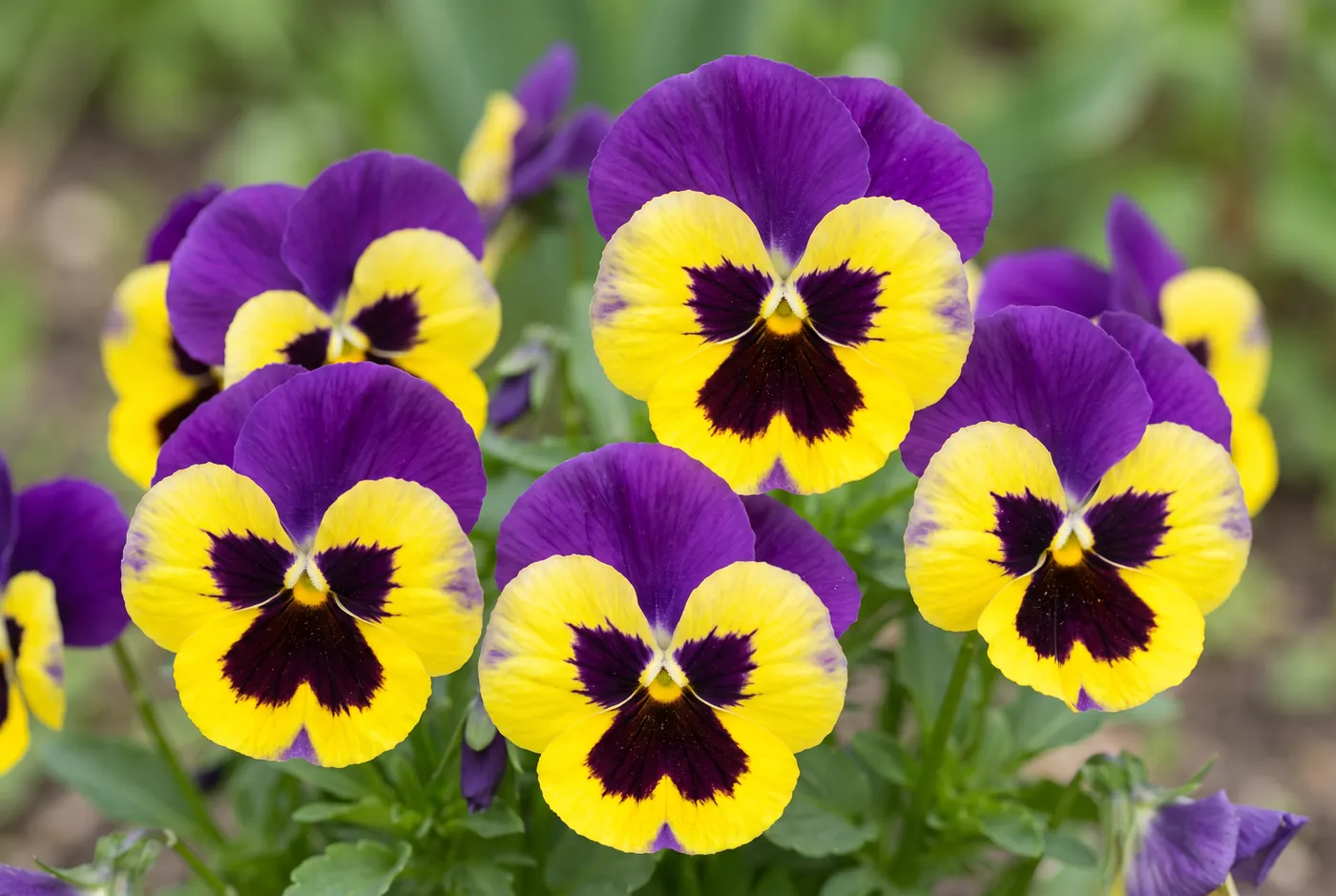
Pansies are the flowers with faces: broad overlapping petals in almost every colour, marked with dark blotches that read unmistakably as eyes and a mouth. They were bred in the early nineteenth century from wild violas, largely by two English gardeners, and the face is entirely a product of that breeding.
They also flower through cold that stops everything else. A tray of pansies planted in autumn will still be going in February, which is why they dominate winter bedding across most of the country.
Primary Meanings
- Thoughts: The name comes from the French pensée, meaning thought
- Remembrance: Traditionally given to say think of me
- Consideration: The Victorian meaning
- Free Thinking: A later association, particularly in America
Pansies Colors and Their Meanings
Purple Pansy
The classic; thoughts and remembrance
Yellow Pansy
Cheer, and the brightest in low winter light
White Pansy
Purity and simplicity
Near-Black Pansy
Bowles' Black and similar, dramatic
Orange Pansy
Warmth; modern bred shades
Popular Pansies Types
Garden Pansy
Viola x wittrockiana; the large-flowered bedding type
Viola
Smaller flowers, more of them, tougher in bad weather
Winter-Flowering Pansy
Bred to flower in cold and low light
Heartsease
Viola tricolor; the wild ancestor, small and tricoloured
Care Instructions
Deadhead Constantly
Removing spent flowers doubles the season.
Water at the Base
Water on the flowers marks and rots them.
Cold Is Fine
They tolerate frost; heat is what finishes them.
Pick for Eating
Flowers are edible and crystallise well.
Best Occasions for Pansies
- Winter Bedding: The dominant cold-season bedding plant
- Remembrance: The think of me association
- Edible Decoration: Crystallised on cakes, scattered in salads
- Container Displays: Window boxes and pots through winter
Interesting Pansies Facts
- The name comes from pensée, French for thought
- The face markings are a product of nineteenth-century breeding, not the wild plant
- They flower through frost that stops most bedding plants
- The flowers are edible and are commonly crystallised for cake decoration
- Heartsease, the wild ancestor, is small and tricoloured with a much less obvious face
How to Buy Good Pansies
Buy plants with plenty of buds rather than plenty of open flowers, because the buds are what you get for the next three months. The foliage should be dark green and compact; pale stretched growth means it was grown too warm and will flop. Check underneath for aphids, which pansies attract badly, and avoid trays that have been standing in water. As cut flowers they are barely viable at two to four days, so treat them as a plant purchase.
Season, Availability and What Drives the Price
Plants appear from late summer for autumn planting and run through to spring. Winter flowering varieties are bred specifically to keep going in cold and low light and are worth asking for by name. They are among the cheapest plants sold anywhere, which is why they dominate municipal bedding. Summer pansies exist but struggle in heat, and in most of the country violas handle warmth better than large-flowered pansies do.
What to Use Instead
Violas are the smaller-flowered relatives and are genuinely tougher in bad weather, flowering harder for longer. Primrose covers the same late-winter window with a different form. Cyclamen gives winter colour in a cool room indoors. For edible flowers, violas and nasturtiums do the same job. Nothing else flowers this reliably through frost at this price.
Safety Around Pets and Skin
Pansies and violas are not toxic to cats or dogs and the flowers are edible for people. They are among the safest plants you can have in a garden with animals or children, and are widely used crystallised on cakes and scattered into salads. Do not eat plants bought as bedding from a garden centre, which may have been treated with pesticides; grow your own if you intend to eat them.
Florist Tips for Pansies
Deadhead relentlessly
Pinch off every spent flower with its stalk. Pansies stop flowering the moment they start setting seed, and a tray deadheaded weekly flowers roughly twice as long as one left alone.
Violas are tougher than pansies
If you want reliable winter flowering in a hard climate or a windy spot, buy violas. The flowers are smaller but there are more of them and they take weather far better.
Water the compost, not the flowers
Water sitting on the broad petals marks them and encourages rot in cold weather. Aim at the base.
Common Questions About Pansies
What is the difference between a pansy and a viola?
Pansies have larger flowers, usually with a pronounced dark face, and were bred from violas in the nineteenth century. Violas have smaller flowers, produce far more of them, and are noticeably tougher in cold and wind. Both are the same genus.
Can you eat pansies?
Yes. The flowers are edible with a mild lettuce-like taste and are commonly crystallised for cake decoration or scattered into salads. Only eat flowers you have grown yourself or bought as food, since bedding plants may have been treated.
Why did my pansies stop flowering?
Usually because they set seed. Deadhead every spent flower and they keep producing. Heat is the other cause: large-flowered pansies struggle once summer arrives, while violas keep going longer.