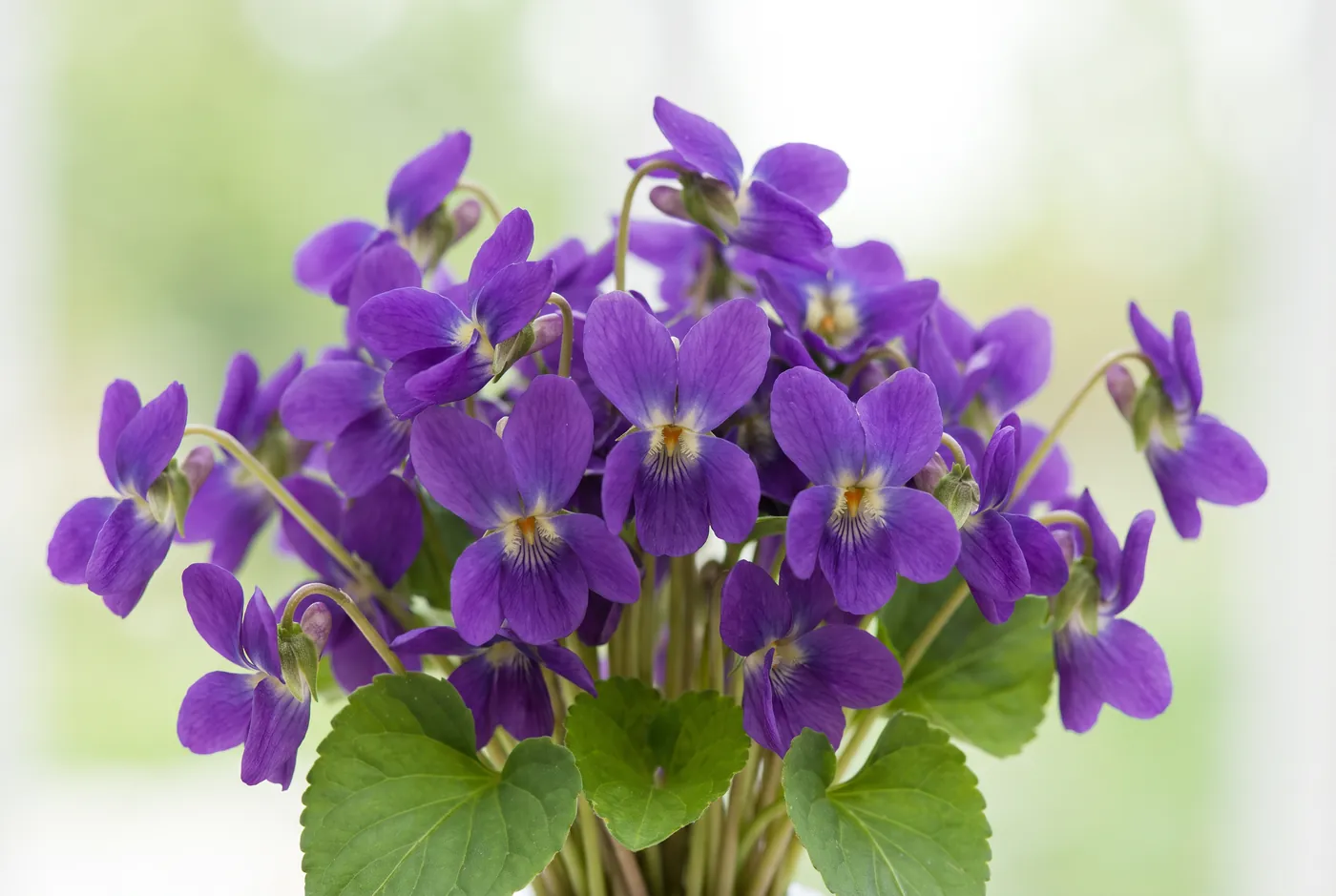
About Violets
Violets are barely a commercial cut flower any more, which is a pity, because for centuries they were one of the most traded in Europe. They are tiny, deep purple, intensely scented and sold in small tied posies rather than stems. They are February's birth flower.
They also do something genuinely strange that no other flower does: the scent contains a compound that temporarily switches off your ability to smell it. You get a burst of fragrance, then nothing, then it returns. It is not your imagination and it has been understood for over a century.
Primary Meanings
- Modesty: The classic meaning; shrinking violet comes from it
- Faithfulness: Traditionally exchanged between lovers
- Remembrance: Napoleon's emblem, and a symbol of his return
- Watchfulness: In the Victorian language of flowers
Violets Colors and Their Meanings
Purple Violet
The classic; modesty and faithfulness
White Violet
Innocence and candour
Blue Violet
Watchfulness and loyalty
Yellow Violet
Rural species, rarely sold
Popular Violets Types
Sweet Violet
Viola odorata, the scented one and the only one that matters
Parma Violet
Double-flowered, powerfully scented, historically prized
Dog Violet
Common wild species with no scent at all
Pansy
Bred from violas; a much larger garden relative
Care Instructions
Shallow Water
Very short stems; an inch is plenty.
Mist Them
They absorb water through the petals and revive from misting.
Keep Cold
They last far longer somewhere cool.
Handle Minimally
The flowers bruise from handling alone.
Best Occasions for Violets
- February Birthdays: The birth flower for the month
- Valentine's Day: A traditional token long before roses took over
- Sympathy: The remembrance association
- Vintage Styling: Small posies for period and heritage arrangements
Interesting Violets Facts
- Ionone in the scent temporarily switches off the smell receptors detecting it
- It is the birth flower for February
- Napoleon used the violet as his personal emblem
- Sweet violet flowers are edible and are traditionally crystallised for cake decoration
- Toulouse in France built an entire industry on Parma violets in the 1800s
How to Buy Good Violets
You will rarely find them in a general florist, so a specialist grower or a farmers' market is the realistic source. They are sold as small tied posies with the leaves wrapped around the outside rather than as stems. Look for flowers that are deep and evenly colored with no translucency at the petal edges, and leaves that are crisp rather than limp. Smell them: only Viola odorata and the Parma types are scented, and an unscented posy is dog violet, which is a wild plant rather than the real thing.
Season, Availability and What Drives the Price
Late winter into early spring, and the commercial supply is a shadow of what it was. A century ago violets were a major crop in France and southern England; today they are grown by a handful of specialists and are genuinely hard to buy. That scarcity, rather than any difficulty in growing them, is why a small posy costs what it does. If you want them for February, order ahead, because no florist keeps them in stock on the chance someone asks.
What to Use Instead
For scent at a small scale, freesia and sweet peas are far easier to buy and both carry a comparable delicacy. Muscari gives the same deep blue-purple in a small spring stem. Pansies and violas, which are bred from the same genus, look similar and are widely available as plants, though they have almost no scent. For the traditional posy form specifically, a small tied bunch of anemones reads similarly and lasts considerably longer.
Safety Around Pets and Skin
Sweet violets are not toxic and the flowers are edible. They are traditionally crystallised in sugar for decorating cakes, and appear in syrups and liqueurs. They are not on the ASPCA hazard list for cats or dogs. Note the name confusion though: African violet is an entirely unrelated houseplant, and dog violet is a scentless wild species. Neither is dangerous either, but neither is the flower described here.
Florist Tips for Violets
Mist them, do not just water them
Violets take up water through their petals as well as their stems, which is unusual. A posy that looks tired will often revive from a light misting when a fresh cut would do nothing.
The vanishing scent is real
Ionone in the fragrance binds to your smell receptors and temporarily shuts them down, so the scent seems to disappear and then come back. Nothing is wrong with the flowers and nothing is wrong with you.
Order them ahead
Almost no florist stocks violets speculatively. If you want them for a February birthday, ask several weeks out.
Common Questions About Violets
Why can I only smell violets for a few seconds?
Because of ionone, a compound in the scent that binds to your olfactory receptors and temporarily desensitises them. The fragrance appears to vanish and then returns a short time later. Violets are the classic example of this and it has been documented for well over a century.
Are violets the same as African violets?
No, and they are not even related. African violet is Saintpaulia, a houseplant from East Africa with furry leaves. True violets are Viola odorata, a small hardy scented plant from Europe and Asia.
Can you eat violets?
Sweet violets, yes. The flowers are edible and are traditionally crystallised for decorating cakes or made into syrup. Be certain of the species before eating any flower, and never eat one from a florist, which may have been treated.