About Wisteria
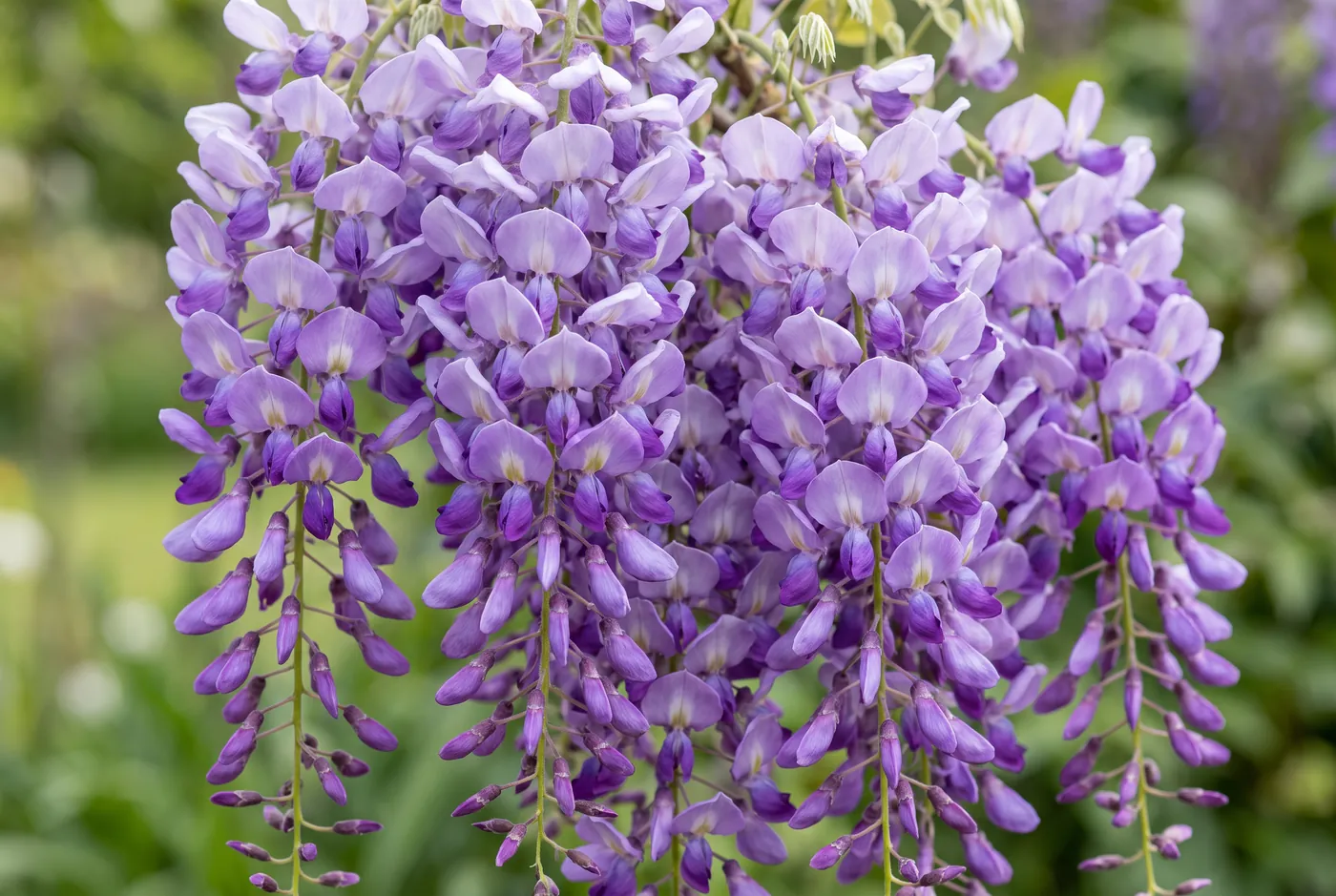
Wisteria hangs. Long racemes of pea-shaped flowers in lilac, violet or white drip downward from woody vines, sometimes a metre or more in the Japanese varieties, with a sweet scent that carries across a garden. It flowers for about two weeks in late spring and then it is over.
It is barely sold as a cut flower, because the racemes wilt fast and the vines are not farmed for cutting. When florists use it, it is usually from a garden, and it is worth the trouble for the two weeks it exists.
Primary Meanings
- Long Life: Vines routinely live for over a century
- Devotion: From how tightly it clings and how long it persists
- Playfulness: The Japanese association with the flower
- Welcome: Traditionally planted over an entrance
Wisteria Colors and Their Meanings
Lilac Wisteria
The classic; the colour most people picture
Deep Violet Wisteria
Japanese varieties, richer colour
White Wisteria
Purity; Alba forms
Pink Wisteria
Rosea; less common and softer
Popular Wisteria Types
Japanese Wisteria
Wisteria floribunda; the longest racemes, twines clockwise
Chinese Wisteria
Wisteria sinensis; shorter racemes, opens all at once, twines anticlockwise
American Wisteria
Wisteria frutescens; shorter, later, far less vigorous
Alba
The white form of either Asian species
Care Instructions
Split the Stem
Woody vine; split the cut end.
Cut Into Water
Carry a bucket to the plant; it wilts in minutes.
Keep Cool
Heat finishes it in a day.
Wash Hands
Seeds and pods are toxic.
Best Occasions for Wisteria
- Late Spring Weddings: If the date lands in the two-week window
- Statement Installations: Hanging from arches and ceilings
- Garden Events: Where it can be used on the vine
- Japanese Garden Tradition: Fuji, celebrated with its own festivals
Interesting Wisteria Facts
- Japanese wisteria twines clockwise and Chinese anticlockwise, which identifies them
- Japanese racemes can exceed a metre in length
- Vines commonly live over a hundred years; some are far older
- All parts are toxic, and the seeds especially so
- A single wisteria in Sierra Madre, California covers about an acre
How to Buy Good Wisteria
You will almost certainly be cutting this rather than buying it. Take racemes where the top third has opened and the lower flowers are still in bud, because they open downward in sequence and that gives you the most life. Cut into a bucket of water at the plant, not afterwards, since wisteria wilts within minutes out of water. Split the woody end. Anything already open along its whole length is a day from finishing and not worth carrying indoors.
Season, Availability and What Drives the Price
Two weeks in late spring, and the exact fortnight moves with the weather. Chinese wisteria opens all at once and slightly earlier; Japanese opens progressively down each raceme and runs a little later, which extends the usable window. There is essentially no commercial cut trade, so if you want it for an event the honest answer is to find someone with an established vine and hope the timing works.
What to Use Instead
Lilac flowers at the same time with a similar color and scent and is at least sold commercially. Amaranthus gives the hanging drape without the flowers or the season. Hanging amaranthus and trailing jasmine are what florists actually use when asked for a wisteria look out of season. Buddleia gives similar racemes in high summer. For the specific dripping purple curtain, nothing substitutes properly.
Safety Around Pets and Skin
All parts of wisteria are toxic to people, cats and dogs, and the seeds and pods are the worst of it. They contain wisterin and lectins, and eating even a couple of seeds can cause severe vomiting, abdominal pain, diarrhoea and dehydration. The pods look like edible pea pods, which is precisely the problem, and children have been hospitalised after eating them. Cut flowering racemes carry no pods, which lowers the risk considerably, but wash your hands and keep the plant away from children.
Florist Tips for Wisteria
Take a bucket to the plant
Wisteria wilts within minutes of being cut. Cutting straight into water at the vine is the difference between three days and none.
Cut when the top has opened
Racemes open from the top downward. Taking one with the top third open and the rest in bud gives you the whole sequence indoors.
Tell the two species apart by the twist
Japanese wisteria twines clockwise, Chinese anticlockwise. It is the quickest reliable way to identify which you have, and it decides when it will flower.
Common Questions About Wisteria
Can you buy wisteria as a cut flower?
Very rarely. It is not farmed for cutting, the racemes wilt within minutes out of water and last only a few days in a vase. Almost all cut wisteria comes from a garden. If you want it for an event you need access to a vine and luck with the timing.
Is wisteria poisonous?
Yes, all parts, and the seeds and pods most of all. They contain wisterin and lectins, and a small number of seeds can cause severe vomiting and dehydration in people as well as pets. The pods resemble edible pea pods, which is how most accidents happen.
What is the difference between Japanese and Chinese wisteria?
Japanese wisteria has much longer racemes that open gradually from the top down, and it twines clockwise. Chinese wisteria has shorter racemes that open all at once, and twines anticlockwise. The twist direction is the easiest way to tell them apart.