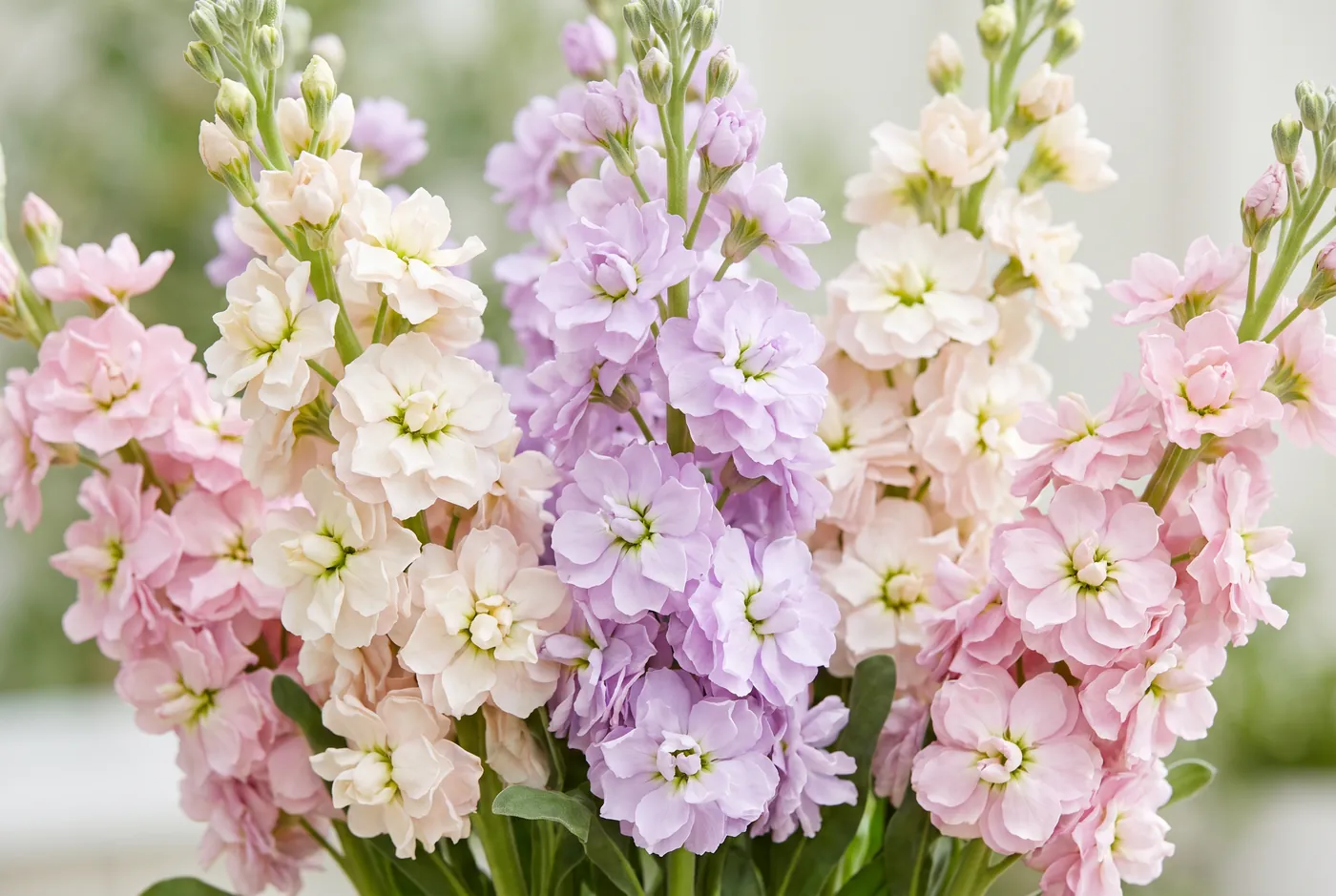
About Stock
Stock is bought for its scent before anything else. A single stem carries a dense column of small ruffled flowers and a clove-and-honey fragrance strong enough to fill a room, which almost nothing else in a modern flower shop does. Roses have largely been bred away from scent in favour of shipping; stock never was.
It is also called gillyflower, an old name that still turns up in seed catalogues. The trade-off for the scent is a shorter vase life and water that turns unpleasant quickly, both of which are manageable if you know about them in advance.
Primary Meanings
- Lasting Beauty: The traditional meaning, from its long flowering
- Contented Existence: The Victorian association, given to wish someone happiness
- Bonds of Affection: Commonly given between close friends
- Promptness: An old and now obscure meaning attached to the flower
Stock Colors and Their Meanings
White Stock
Purity; the strongest scented of the range
Pale Pink Stock
Affection and gentleness
Lavender Stock
Grace, the most common shade sold
Deep Purple Stock
Devotion and depth
Apricot Stock
Warmth; a newer and scarcer colour
Popular Stock Types
Column Stock
Single tall unbranched spike, the florist standard
Katz Series
Greenhouse variety bred for winter cutting
Quartet
Double-flowered, fuller and more ruffled
Night-Scented Stock
A garden relative, plain by day and powerfully scented after dark
Care Instructions
Change Water Daily
The stems foul water faster than any common flower.
Trim Hard
Cut an inch off and strip every leaf below the waterline.
Keep Cool
Heat shortens it sharply and intensifies the smell.
Remove Spent Florets
Pick off browning flowers at the base of the spike.
Best Occasions for Stock
- Weddings: Used where scent is wanted, especially in churches
- Sympathy: White and lavender stock is a traditional funeral flower
- Mother's Day: Peak season and heavily used
- Home Scent: One bunch perfumes a whole room, unlike most cut flowers
Interesting Stock Facts
- Its old English name, gillyflower, comes from the same root as clove
- It is a brassica, related to cabbage and mustard, which explains the water smell
- Double-flowered seedlings can be identified as seedlings by their paler leaves
- Night-scented stock is deliberately plain and releases its scent only after dusk
- It was one of the most popular Elizabethan garden flowers in England
How to Buy Good Stock
Smell it first, which you cannot do with most flowers and absolutely can with this one. A bunch with no scent has been sitting too long or was cut too green. Look for spikes with the lower half open and firm buds above; open all the way to the tip means it is nearly done. The stems should be pale and clean at the cut end, not brown and slimy, and this is the flower where that matters most because the stems break down fast. Yellowing leaves are a reliable sign of age.
Season, Availability and What Drives the Price
Stock is at its best from late winter through spring, which is why it turns up so heavily around Mother's Day. That is also when the scent is strongest and the stems are longest. Greenhouse crops carry it through the rest of the year at a higher price and with noticeably less fragrance. Because it is a cool-season crop, a warm spring shortens the supply and pushes the price up. Buying it in high summer is usually a waste of money: it will be dearer, weaker scented and shorter lived.
What to Use Instead
For scent above all, hyacinth is stronger still in late winter, and freesia is the closest year-round option. Sweet peas give a comparable perfume at a much smaller scale and a much shorter life. Carnations are the honest substitute for the clove note specifically, and last three times as long. For the shape without the scent, snapdragons give the same vertical spike. Nothing gives you both the column form and that particular fragrance, which is why stock stays in the trade despite the fuss.
Safety Around Pets and Skin
Stock is not toxic to cats or dogs. As a brassica it is in the same family as cabbage and mustard, and a pet eating a quantity may be sick, but there is no specific toxin and it is not on the ASPCA hazard list. The practical warning is the water rather than the flower: it goes foul quickly and a pet drinking from the vase is the more likely problem.
Florist Tips for Stock
Change the water every single day
Stock stems rot faster than almost anything else in the shop and the smell is genuinely unpleasant. Daily fresh water is the difference between five days and eight, and it is not optional with this flower.
Strip every leaf below the water
Brassica foliage in water is what creates the smell and the bacteria that blocks the stems. Take it all off.
One bunch is enough
The scent is much stronger than people expect. Two bunches in a small room is overwhelming rather than luxurious.
Common Questions About Stock
Why does my stock water smell so bad?
Stock is a brassica, related to cabbage, and the stems break down quickly in water. The smell is the stems rotting, not the flowers. Change the water daily and strip every leaf below the waterline and it stays manageable.
Why does some stock have no scent?
Either it was cut too green, or it is a summer greenhouse crop. Stock is a cool-season flower and the fragrance is strongest on spring-grown stems. Always smell a bunch before buying it.
What is the difference between stock and night-scented stock?
They are relatives. Florist stock is showy and scented all day. Night-scented stock is a straggly, plain garden plant that looks like nothing and releases a powerful perfume only after dusk. It is grown to be smelled, not seen.