About Honeysuckle
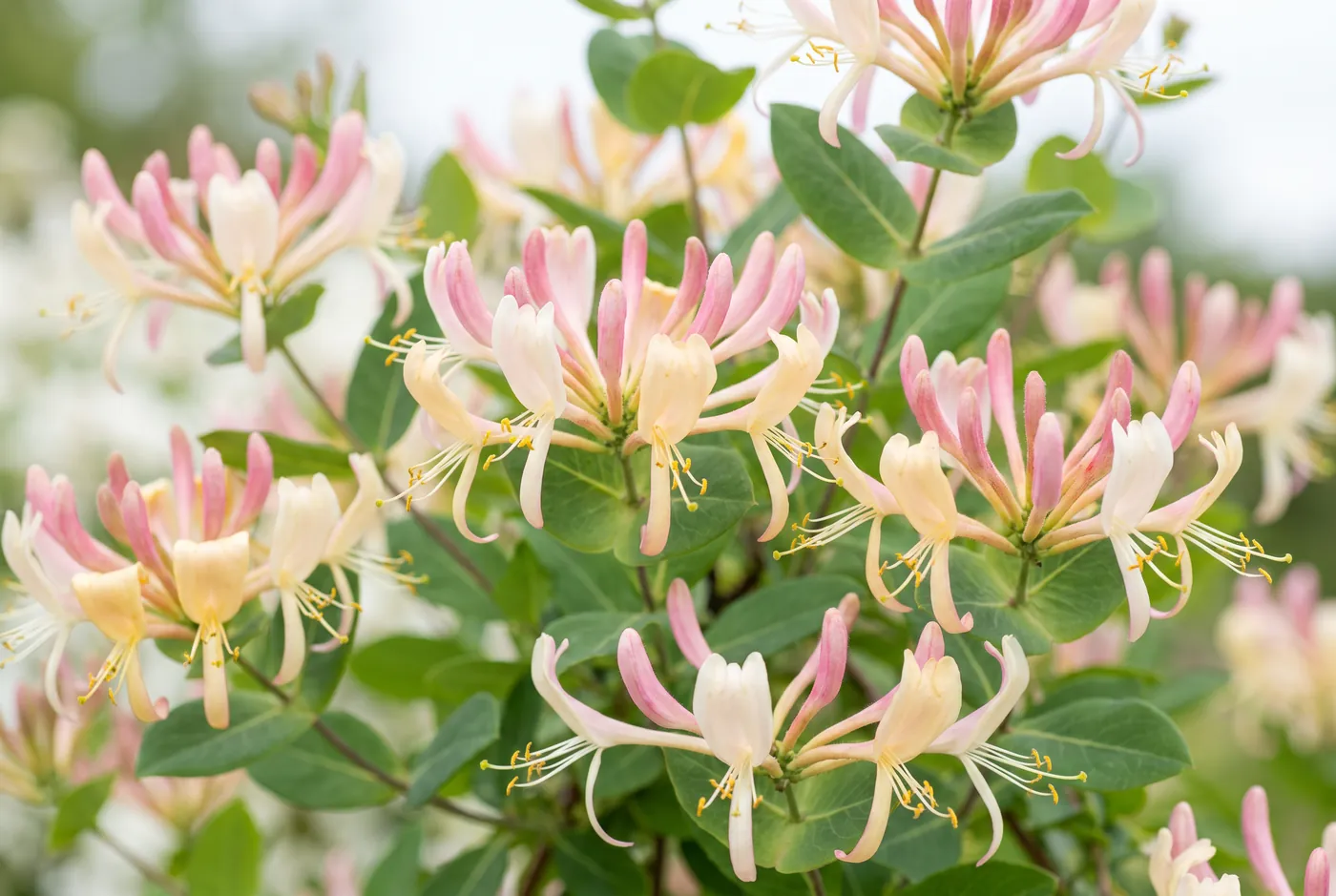
Honeysuckle is a twining climber carrying whorls of long curved trumpets in cream, gold and pink, and it produces one of the great scents of an English summer evening. It is the second birth flower for June, alongside the rose.
It is barely sold as a cut flower. The stems wilt fast, the flowers drop, and there is no commercial trade to speak of. What people actually do with it is grow it over a door and open the windows in July.
Primary Meanings
- Devoted Affection: The classic meaning, from how tightly it twines
- Bonds of Love: The Victorian association
- Generosity: From its abundance of scent and nectar
- Happiness: The traditional gifting meaning
Honeysuckle Colors and Their Meanings
Cream and Gold
The wild species; flowers age from white to gold
Pink Honeysuckle
Serotina and similar garden forms
Coral Honeysuckle
Lonicera sempervirens, the American species
Deep Red Honeysuckle
Dropmore Scarlet; unscented but showy
Popular Honeysuckle Types
Lonicera periclymenum
Common honeysuckle; the scented European climber
Lonicera japonica
Japanese honeysuckle; heavily scented and invasive in the US
Lonicera sempervirens
Coral honeysuckle; American, showy, little scent
Winter Honeysuckle
Lonicera fragrantissima; small flowers, powerful winter scent
Care Instructions
Cut Into Water
It wilts within minutes out of water.
Split the Stem
Woody vine; split the cut end.
Keep Cool
Heat finishes it in a day.
Judge It in the Evening
The scent builds after dusk.
Best Occasions for Honeysuckle
- June Birthdays: The month's second birth flower
- Summer Weddings: Only where it can be cut on the day
- Garden Planting: Its real use; over a door or a window
- Evening Gardens: Planted specifically for the scent after dark
Interesting Honeysuckle Facts
- It is the second birth flower for June, with the rose
- The flowers age from white to gold, so a plant shows both at once
- It is moth-pollinated, which is why the scent peaks at dusk
- Japanese honeysuckle is seriously invasive across much of the United States
- The berries are toxic although the flower nectar is famously sucked by children
How to Buy Good Honeysuckle
You will be cutting this rather than buying it, because there is essentially no commercial trade. Take stems where the whorl has several trumpets open and more in bud, cut straight into a bucket of water at the plant, and split the woody end. Expect one to three days indoors at best. If someone offers you honeysuckle for a wedding, ask when it will be cut, because the answer needs to be the morning of.
Season, Availability and What Drives the Price
Early to midsummer for the common climbing species, with winter honeysuckle flowering in the cold at the opposite end of the year. There is no supply chain: it is not farmed for cutting anywhere at scale, because the stems will not travel. This is a plant to grow rather than to buy, and a single established vine over a doorway produces more flower and far more scent than any bunch would.
What to Use Instead
Jasmine covers the same night-scented white-flowered role and is at least sometimes available. Stephanotis gives waxy trumpets for bridal work with far better handling. Clematis provides a climber's flower that also barely lasts cut. For scent in a June arrangement, stock, sweet peas and garden roses are the realistic answers, and for a June birth flower a rose is the obvious one.
Safety Around Pets and Skin
Honeysuckle berries are toxic to cats, dogs and people, causing vomiting, diarrhoea and in larger amounts more serious effects, and Lonicera species are on the ASPCA list. The flowers themselves are low risk and generations of children have sucked nectar from them without harm, which is exactly why the berry warning matters: the plant teaches people it is safe and then fruits. Keep berried stems away from children and pets.
Florist Tips for Honeysuckle
Grow it, do not buy it
There is no real cut trade and there never will be. One vine over a door gives you six weeks of scent every evening, which no bouquet can do.
Do not plant Japanese honeysuckle in the US
Lonicera japonica is invasive across much of the country and smothers native vegetation. The European and American species give you the same effect without the damage.
Winter honeysuckle is the underrated one
Lonicera fragrantissima flowers in midwinter on bare wood with tiny inconspicuous flowers and a scent you can smell from several metres. Worth a corner of any garden.
Common Questions About Honeysuckle
Can you buy honeysuckle as a cut flower?
Effectively no. It wilts within minutes of cutting and lasts a day or two at best, so there is no commercial trade in it. If you want honeysuckle you grow it, and if you want a June birth flower for a bouquet, the rose is the practical answer.
Is honeysuckle poisonous?
The berries are, to people and pets, causing vomiting and diarrhoea. The flowers are not, and sucking nectar from them is a traditional childhood habit, which is precisely why the berries catch people out later in the season.
Why does honeysuckle smell strongest in the evening?
It is pollinated by moths, so it releases its scent after dusk when they are active. The same is true of jasmine and tuberose. At midday it smells of comparatively little.